

























Review: Vicini Vicini, Stretti Stretti (2026)

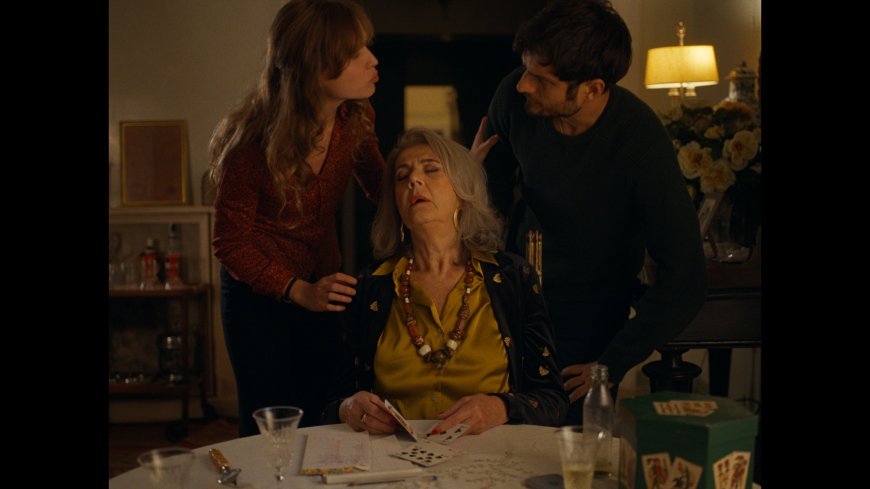
In Vicini Vicini, Stretti Stretti, a romantic escape to Venice is supposed to bring Lucie and Gianni closer to the future they imagine for themselves. Instead, the arrival of Gianni’s mother turns their holiday into an exercise in endurance. In this light-hearted indie comedy, the pursuit of parenthood becomes an awkward negotiation between personal desire and familial responsibility.
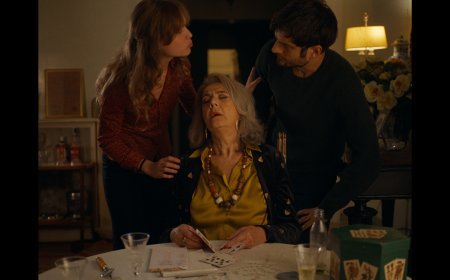
Lucie, a French literary translator struggling to establish her own voice, and Gianni, a 37-year-old film editor surviving on precarious work, arrive in the Italian city hoping to conceive a child. Their plans are upended when Beatrice, Gianni’s recently heartbroken mother, decides to accompany them. Wrestling with loneliness and an uncertain sense of identity, she quickly assumes the role of an unofficial fertility coach, monitoring their meals, moods and even their bedsheets. What ought to be an intimate retreat becomes an increasingly ridiculous domestic arrangement in which everybody seems to know what is best for everyone else.
The comedy derives largely from the contrast between the couple’s need for privacy and Beatrice’s determination to make herself indispensable. Her interference is exasperating, but there is an understandable vulnerability beneath it. Having lost the relationship that gave her life its familiar shape, she appears to have found a new purpose in her son’s prospective parenthood. Gianni, meanwhile, is caught between the woman he loves and the mother whose expectations he has never quite learnt to resist. His attempts to keep the peace reveal how easily affection can become a means of control.
When Gianni announces that Lucie is pregnant, the lie offers an expedient solution to an otherwise unbearable situation. Beatrice suddenly has something to celebrate, and the atmosphere brightens. Yet the reprieve also exposes the extent to which the family’s happiness depends on a future that has not materialised. The premise is familiar, and the film’s comic complications do not always escape the predictable rhythms of domestic farce. Still, the deception gives the characters’ strained relationships a useful dramatic focus, allotting the humour to emerge from their emotional evasions rather than from mere misunderstanding.
The film is more interesting when it considers the assumptions underlying the couple’s predicament. Parenthood is often treated by older generations as a mandatory stage of adult life, while younger couples must weigh it against unstable employment, financial insecurity and the desire to preserve a life of their own. The pressure becomes especially fraught when ageing enters the equation, turning what might once have been a private decision into a source of apprehension and inspection. Here, the prospect of having a child is less a straightforward romantic aspiration than a test of how much of themselves Lucie and Gianni are willing to surrender to other people’s suppositions.
Lucie’s position is particularly important. As someone whose professional life involves translating other people’s words, she is also struggling to articulate her own desires within a family determined to supply the answers for her. The parallel is suggestive, even if the film does not always develop it with sufficient subtlety. Her uncertainty gives the story a counterweight to Gianni’s habitual indecision, reminding us that the couple’s future cannot be reduced to his ability to stand up to his mother.
The romantic associations of Venice promise escape, but the city cannot shield the characters from the less glamorous demands of everyday life. The setting occasionally threatens to do too much of the emotional work, offering an attractive backdrop where a more distinctive visual approach might have sharpened the film’s observations.
Cinematographer Alex Grigoras lends the film a visual atmosphere that complements Venice’s fading grandeur and the characters’ emotional unease, while production designer Anna Sedino makes effective use of the city’s weathered interiors to reflect the fragile domestic arrangements at the heart of the story. Editor Nick Calori maintains a steady rhythm between the domestic comedy and more introspective moments, keeping the escalating tensions engaging.
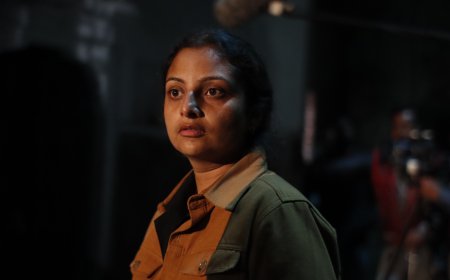
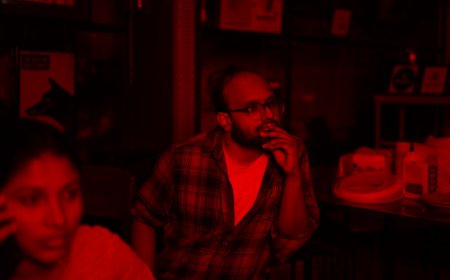
Betti Pedrazzi brings an amusing blend of overbearing enthusiasm and underlying vulnerability to Beatrice, making her meddling more than a source of comic irritation. Claudio Colica captures Gianni’s indecision and emotional dependence with an understated performance, while Jessica Cressy lends Lucie a quiet frustration that conveys the strain of navigating her own desires amid the family’s expectations.
Ultimately, Vicini Vicini, Stretti Stretti is a modest comedy-drama whose insights are more appealing than profound. Its characters sometimes remain within familiar types, and its exploration of generational conflict rarely ventures beyond recognisable territory. But there is warmth in its recognition that families can suffocate one another without ceasing to care, and that solitude need not amount to abandonment. The film’s gentler achievement is to suggest that growing up may involve disappointing the people who love us, particularly when their idea of happiness leaves too little room for our own.
What's Your Reaction?