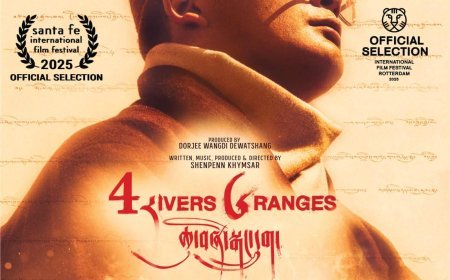
Nawazuddin Siddiqui Lends His Voice to the Hindi Version of ‘4 Rivers 6 Ranges
There are films that tell us a story, and there are films that make us wonder why we had not heard that story before. Shenpenn Khymsar’s ‘4 Rivers 6 Ranges’ (Chushi Gangdruk) belongs, for me, to the second category. What stayed with me after watching the film was not merely its action, its mountains or its scale, but the feeling that I had encountered a chapter of modern Asian history that has remained remarkably distant from mainstream cinematic memory.
The film centres on Chushi Gangdruk—the Tibetan resistance movement whose name means “Four Rivers, Six Ranges”—and its role in the dangerous journey surrounding the Dalai Lama’s escape from Tibet to India in 1959. Khymsar draws on Flight at the Cuckoo’s Behest, the memoir of Kunga Samten Dewatshang.
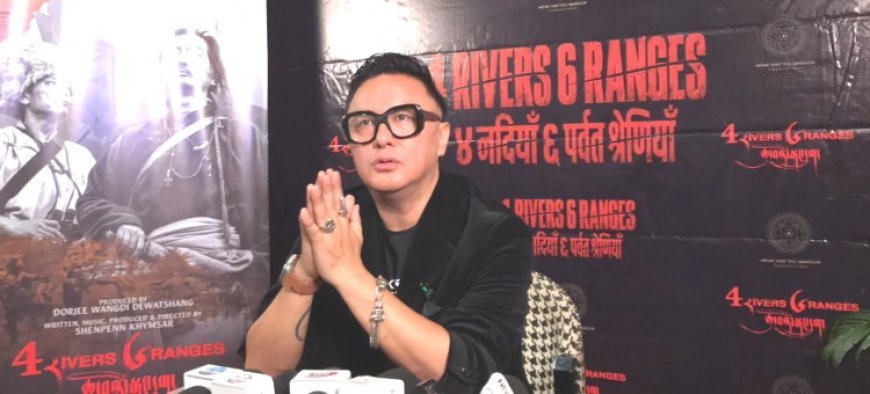
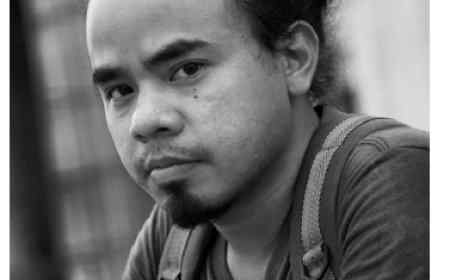
Filmmaker Shenpenn Khymsar
Historically, the background is complex. The People’s Republic of China was established in 1949, while the PLA’s major military advance into Tibet began in 1950. The Tibetan government subsequently signed the Seventeen Point Agreement in 1951, and the relationship between Tibet and the Chinese government deteriorated further during the following years. The uprising in Lhasa began in March 1959, and the Dalai Lama left Lhasa on 17 March, reaching the Indian border on 31 March.
I mention this because 4 Rivers 6 Ranges is not simply a historical reconstruction in the conventional documentary sense. It is history remembered and narrated from a distinctly Tibetan perspective. That distinction is important. The film does not attempt to stand outside the political memory of its characters. Instead, it enters that memory and experiences history through resistance, fear, faith, displacement and survival.
And this is perhaps where the film's greatest cinematic strength begins. A story that has waited to be told. When I first watched the film, I was immediately conscious of the unusual nature of its subject. Tibetan history has appeared on screen before, but much of the international cinematic representation has tended to focus on exile, spirituality, Buddhism or the Dalai Lama. Self-taught filmmaker, Khymsar chooses another route. He places armed resistance at the centre. The International Film Festival Rotterdam, where the film had its world premiere in 2025, described it as an action-driven historical film portraying the armed Tibetan resistance. IFFR also drew attention to its widescreen cinematography, high-altitude action sequences and the scale of its visual language.
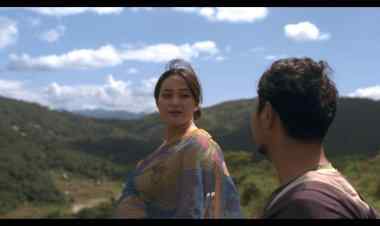
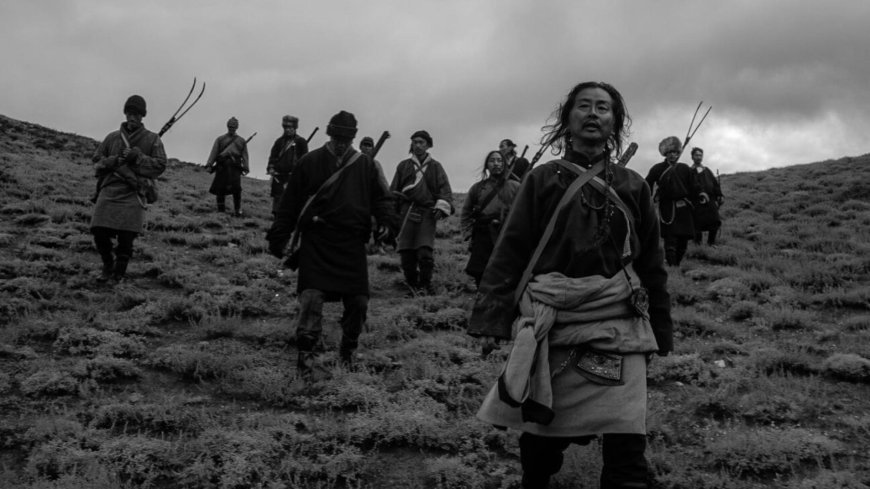
That description immediately made sense to me while watching the film. I was struck by the large canvas on which Khymsar chooses to paint his story. There are moments when the film reminded me of the visual ambition of a large Hollywood historical epic—not because it imitates Hollywood mechanically, but because it thinks in terms of landscape, movement, scale and spectacle.
The mountains are not merely locations. They become part of the narrative architecture. The enormous Himalayan landscape constantly places the individual against something physically and historically larger than himself. The warriors appear small within that landscape, but their journey gives the landscape dramatic meaning.
The extraordinary opening
One of the first things I discussed with Shenpenn Khymsar was the film's opening. Filmmaker Khymsar told me, “We had to do a long plan to do the opening sequence of the sequence which is almost 5 mins duration. It was also in single take.” That information changed the way I looked at the opening. What initially feels like an effortless movement of the camera gradually reveals itself as a remarkably complicated piece of choreography. The camera does not simply record the action; it travels with it. Bodies, movement, geography and danger are introduced through a continuous visual flow. Instead of cutting the scene into numerous fragments to manufacture excitement, Khymsar allows movement itself to generate tension.
A review published during the film's festival journey similarly singled out its opening and camera movement, describing the experience as immediately immersive. Another detailed response to the film noted the elaborate choreography of its tracking shots and the way the camera movement integrates performers and landscape.
For me, this opening establishes an important principle of Khymsar's cinema: history should not always arrive as information; sometimes it should arrive as experience.
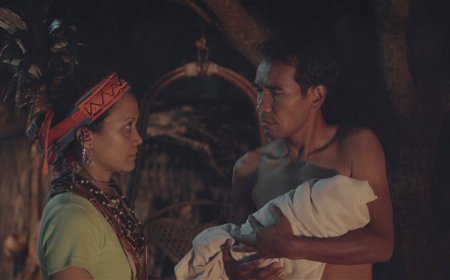
Film still
The scale of a historical epic
The most immediately impressive aspect of 4 Rivers 6 Ranges is its visual ambition. Brandon Cox's cinematography gives the film a breadth that allows the mountains, horses, villages, forests and battlefields to coexist within the same dramatic space. The IFFR itself compared the film's visual texture and sweep to a prestigious Hollywood Western. I found that comparison useful, particularly because Khymsar seems to understand that a historical film requires more than costumes and period details. It needs a world. The film creates that world through its production design, costumes, landscapes and movement. Mercy Azem Simick's production design and Akhilesh Rai's editing contribute to this sense of physical reality, while the action choreography gives the film its kinetic energy.
I was especially impressed by the colour grading. The images possess a density and tonal consistency that gives the film a distinctive visual identity. The colours do not merely beautify the Himalayan landscape; they often make it appear harsh, cold and threatening. The darkness inside interiors and the openness of the mountains create two contrasting visual worlds.
This was one of the areas where I felt Khymsar's ambition most clearly. He was attempting to create not simply a Tibetan story, but a cinematic world large enough for that story to exist.
From monks to warriors
The film's most significant departure from familiar representations of Tibet is perhaps its treatment of the warrior. The Chushi Gangdruk emerged as a Tibetan resistance organisation in the 1950s, formally organised in 1958. Its name refers to the geographical region of Kham, associated with four major rivers and six mountain ranges. Khymsar does not present these men merely as historical footnotes. They become the dramatic centre of the film.Farmers, traders, monks and ordinary men are transformed by circumstances into fighters. This transformation is important because the film is less interested in the mythology of the professional soldier than in the psychology of ordinary people forced into extraordinary circumstances.
The question underneath the action is therefore not simply: How do these men fight? It is: What happens to ordinary human beings when the world they know begins to disappear? That gives the film an emotional dimension beyond the battlefield.
History through Kunga Samten
The decision to tell the story through Kunga Samten is also important. Apart from constructing the film as a grand historical chronicle populated only by non actors, Khymsar gives the audience an individual point of entry. Kunga becomes a witness to a historical transformation that is larger than himself. This approach also comes from the source material. Flight at the Cuckoo's Behest is specifically described as the life story of Kunga Samten Dewatshang, a Tibetan freedom fighter. Through his eyes, the film can move between the intimate and the monumental—between a man's immediate fear and the fate of a people.That is where the film becomes more than a conventional war adventure.
Sound as memory
The film's music deserves particular attention. Khymsar co-composed the score with Rohit Shakya, and the soundtrack combines orchestral elements with Tibetan musical textures. Reports on the film have noted the use of Buddhist horns, strings, percussion and stretches of silence. The music does not always behave like conventional action-film music. At several points, it feels as though the sound is carrying historical memory. This becomes especially effective when silence interrupts violence.
In a film filled with horses, gunfire, explosions and movement, silence acquires its own dramatic weight. The absence of sound can suggest fear more effectively than another explosion.
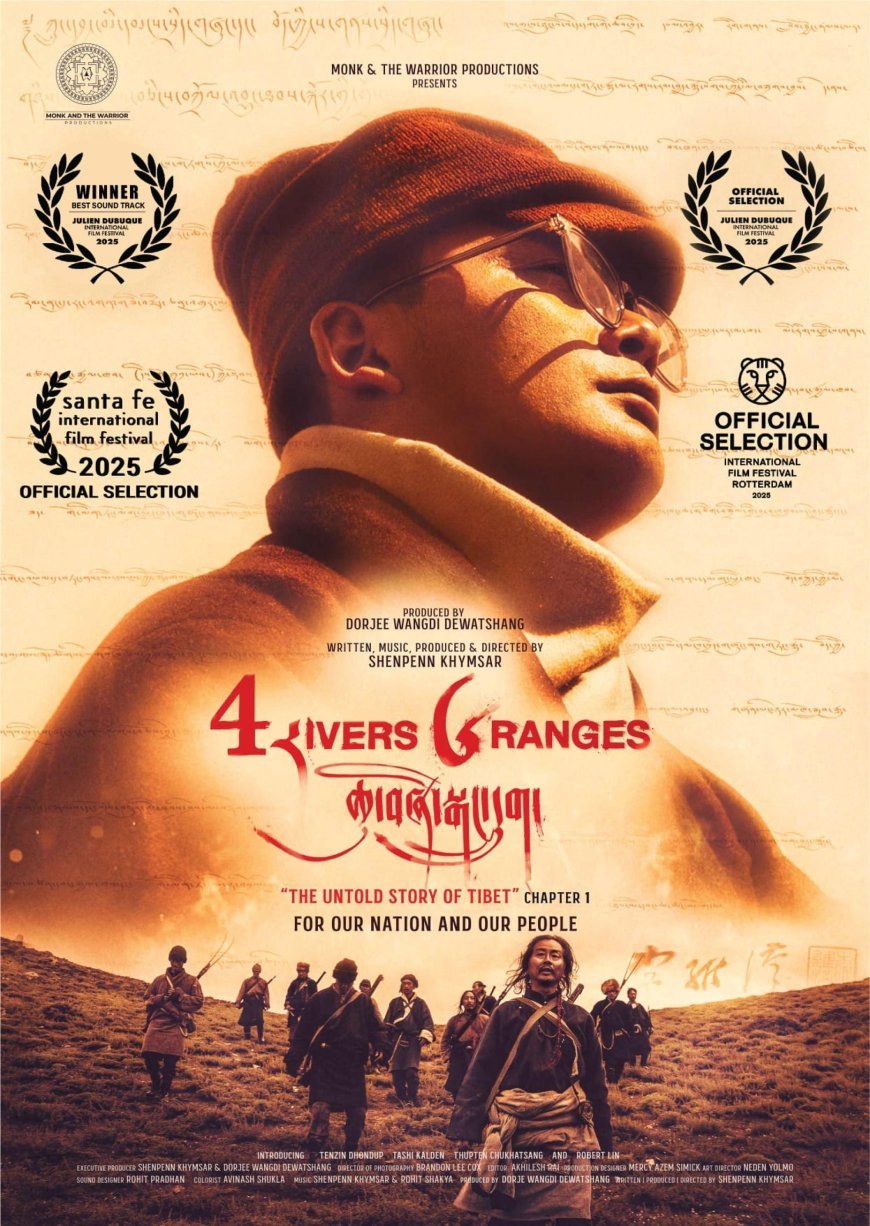
The film's soundtrack also received the Best Soundtrack award at the Julien Dubuque International Film Festival in 2025.
A film shaped by personal history
Perhaps the most interesting dimension of 4 Rivers 6 Ranges is the relationship between the filmmaker and his subject. Shenpenn Khymsar was born in Darjeeling as a Tibetan refugee and spent years working as an activist before turning fully toward filmmaking. IFFR describes him as largely self-taught, having left his corporate career to pursue cinema. The film took about twelve years of his life to bring to the screen. Its production itself was extraordinary: much of it was shot at very high altitude in Nepal, with a largely inexperienced cast and a compressed 19-day schedule. Khymsar has also described shooting almost the entire film on horseback.
I began to see 4 Rivers 6 Ranges not only as a historical film but also as a filmmaker's attempt to recover something from cultural memory. Khymsar is not approaching this history as a distant academic subject. It is connected to his own identity, exile and understanding of Tibet. That inevitably gives the film a strong point of view. And that point of view is both its strength and something a critical viewer should remain conscious of.
The politics of memory
The film is unapologetically sympathetic to the Tibetan resistance. It is not constructed as a detached examination of competing historical narratives. IFFR itself characterised it as a militant and assertive expression of Tibetan nationalism. For me, this does not make the film less interesting. Rather, it makes it necessary to understand what kind of historical cinema it is. 4 Rivers 6 Ranges is a film of memory and statement, not a neutral textbook.
That also means that some of its characters and conflicts are drawn in deliberately strong moral lines. General Tan, in particular, functions less as a psychologically complicated historical personality and more as an embodiment of authoritarian power. Khymsar has explained that he consciously sought a different visual way of expressing the character's cruelty rather than repeating familiar cinematic images of Chinese oppression.
At times, this directness can make the film feel closer to an epic resistance narrative than a finely balanced historical drama. But that seems inseparable from the filmmaker's intention: he wants a history that has largely remained outside mainstream cinema to occupy the screen with confidence.
Why the film matters to me
What I loved most about 4 Rivers 6 Ranges is therefore not simply its grand scale. It is the fact that someone chose to make this film at all. There are countless historical events that have been transformed into cinema repeatedly because audiences already recognise their names. Tibet's modern history, particularly the story of the ordinary men who became part of the Chushi Gangdruk and the dangerous journey surrounding the Dalai Lama's escape, has received far less mainstream cinematic attention. The film gives that history a visual body. Its international journey—from its 2025 Rotterdam world premiere to subsequent festival and cultural screenings—has already allowed audiences outside the Tibetan community to encounter this story.
Its arrival in Hindi in India also changes the film's potential audience. The Hindi theatrical release is on September 18; the film has received a Hindi UA certificate from the CBFC.
That transition from the international festival circuit to Indian commercial cinemas is significant. For an independent filmmaker from the Tibetan community to attempt a historical action epic of this scale, largely outside the conventional machinery of mainstream cinema, is itself an interesting cinematic phenomenon. I also think the presence of Richard Gere at the Dharamshala screening brought additional international attention to the project, although the film ultimately has to stand on its own cinematic terms.
A cinema of remembrance
As I finished 4 Rivers 6 Ranges, I kept returning to the title. Four rivers. Six ranges. It sounds geographical, but gradually it becomes metaphorical. Rivers move. Mountains remain. Between them, people live, fight, migrate and remember. Perhaps that is what Khymsar's film is ultimately attempting to do: to turn geography into memory and memory into cinema. The film does not ask us simply to look at a historical event from a distance. It asks us to enter the landscape in which that history was lived—to hear the horses, the gunfire, the wind and the silence; to see the enormous mountains against which ordinary men made extraordinary decisions.
For me, the most lasting image is therefore not one of battle. It is the image of human beings moving through an immense landscape while carrying a history that could easily have disappeared from the world's cinematic memory.
That is where 4 Rivers 6 Ranges finds its particular significance. It takes a story known intimately by one community and places it on a much larger cinematic canvas. And in doing so, Shenpenn Khymsar reminds us of something that cinema can do better than almost any other medium: it can give a forgotten memory a face, a landscape, a voice—and finally, a place in the imagination of others.
Editor's comment: Shenpenn Khymsar is an emerging yet formidable filmmaker who has already carved out a distinctive niche on the international film festival circuit, marking his presence with a distinctive cinematic voice.