










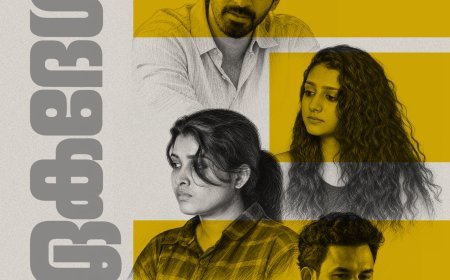


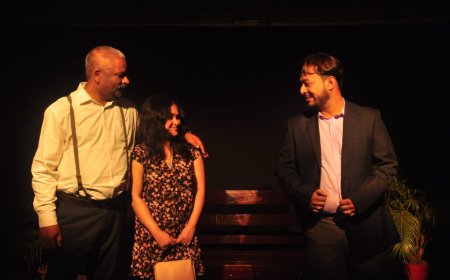

Don Palathara’s Ekadesham Set to Screen at Filmfest Aachen, Germany
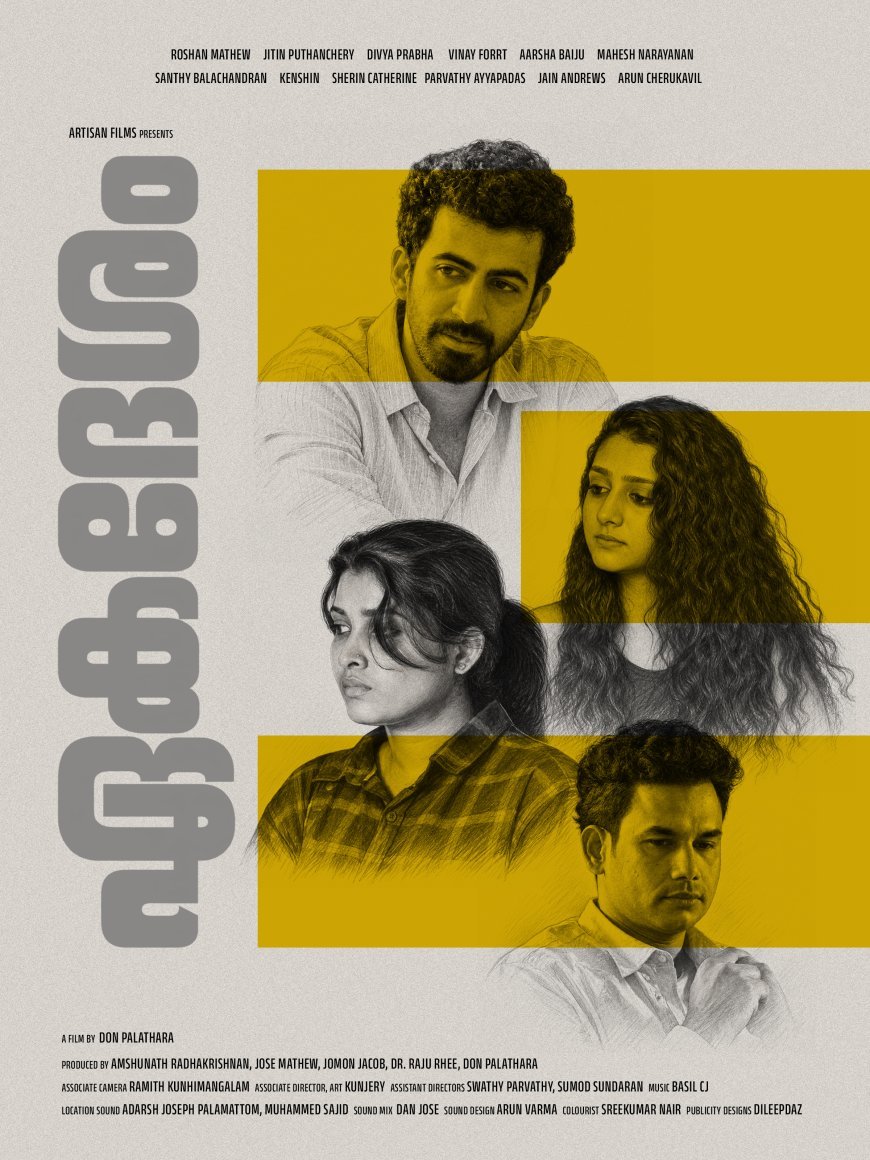
In Kochi, careers remain precarious, relationships are fragile, and the choices that appear insignificant can gradually alter the course of a life. For the characters at the centre of Ekadesham (The Uncertainty Principle), it is part of everyday life.
Against this backdrop, filmmaker Don Palathara’s latest Malayalam feature follows a group of young people trying to find their place in the world of independent cinema, while negotiating the less cinematic demands of work, love and survival.
The film is set to screen at Filmfest Aachen 2026 in Germany in the coming days, taking its distinctly Kochi-based story to an international audience.
At the centre of Ekadesham is an aspiring filmmaker who begins making a film inspired by the people around him. But as the project develops, the distinction between what has actually happened and what is being recreated for the screen begins to become increasingly difficult to define.
For Palathara, that ambiguity was not simply a narrative device. It emerged from his own experience of making films and observing people.
“There is certainly a personal element to Ekadesham, though I wouldn't call it autobiographical in the conventional sense,” he says.
The film, he explains, grew from his experiences of watching people, making films and becoming conscious of how easily ordinary life can become cinematic material. Some situations and emotions came from his own experiences; others were borrowed, transformed or imagined.
“Over time, the distinction became less important to me,” he says. “The film is perhaps more interested in that uncertain space between what is lived and what is constructed.”
That tension gives Ekadesham its premise: cinema is not merely something the characters make. It becomes a way of looking at their own lives.
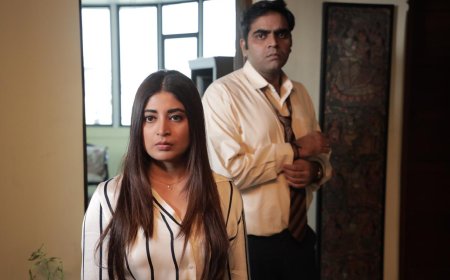
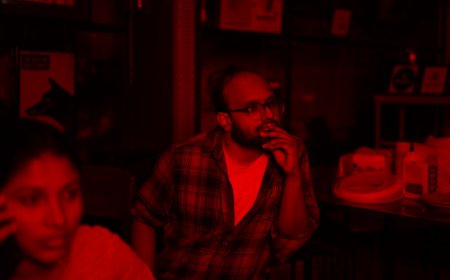
The film moves through film locations, audition rooms, shared apartments, coffee shops and the streets of Kochi, adopting an intimate observational style. Rather than presenting uncertainty as a single dramatic crisis, it appears to be woven into the rhythms of everyday existence.
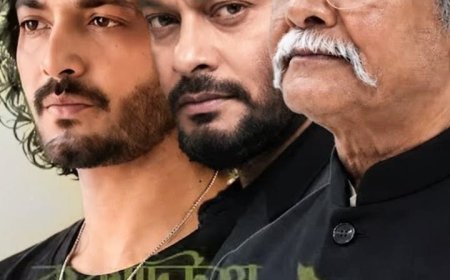
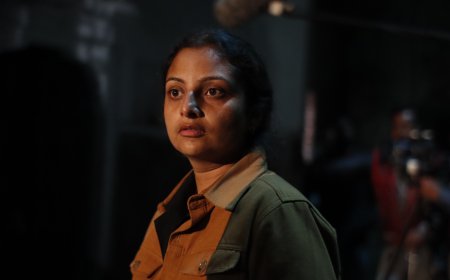
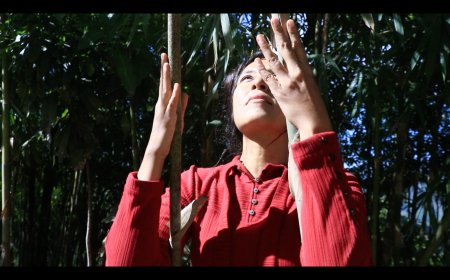
The ensemble reflects that world. Roshan Mathew, Jitin Puthanchery, Divya Prabha, Santhy Balachandran, Kenshin, Aarsha Baiju, Vinay Forrt and filmmaker-actor Mahesh Narayanan are among those who appear in the film.
Palathara says his casting was guided less by the conventional idea of an actor disappearing completely into a role than by what each performer could bring to the character.
“I wasn't looking simply for people who could perform a character, but for people whose presence could complicate the character,” he says.
That distinction is particularly interesting in the case of Mahesh Narayanan, himself a filmmaker. His presence introduces another layer of self-awareness into a film already concerned with filmmaking and the relationship between reality and fiction.
“There is something inherently interesting about having a filmmaker enter a film that is partly concerned with filmmaking,” Palathara says.
Palathara was also interested in allowing the actors to retain elements of their own personalities rather than pursuing complete transformation.
“I find that often more interesting than complete transformation,” he says.
The approach extends to the production itself. Palathara wrote the film over approximately four months, although the ideas behind it had been developing for considerably longer. Once filming began, however, the script was not treated as a fixed blueprint.
For Palathara, shooting the film was another stage of writing.
“Once you are in a real location, with real people, unexpected things begin to happen, and sometimes those things are more truthful than what you had planned,” he says.
As a result, Ekadesham changed during production. Some scenes became quieter. Others became less explicit. Certain moments that existed in the original script eventually became unnecessary.
The process, he says, allowed the film to become “a little less certain about itself”.
That may be one of the film's defining ideas. Ekadesham appears to resist the pressure to provide easy resolutions — whether about careers, relationships, creative ambitions or the stories people construct about themselves.
Even the filmmaking process followed a similar path. Palathara describes the making of the film as “a constant editing process” stretching from the moment the initial idea occurred to the final cut.
Now, the film is entering another stage of that process as it travels beyond Kerala.
Its screening at Filmfest Aachen will place a film deeply rooted in Kochi — its language, people, spaces and rhythms — before audiences separated from much of that immediate context.
Palathara does not have specific expectations from the festival. What interests him instead is what happens when the film is removed from the circumstances in which it was made.
“A film is made within a very specific place, language and set of circumstances,” he says. “Once it travels, you lose some of the context that you took for granted while making it.”
For him, that loss is not necessarily a disadvantage. It creates another possibility: a chance to discover what survives when the familiar references disappear.
“What interests me is seeing what remains when that context is no longer there, and what different readings emerge from that distance,” he says.
For Ekadesham, that distance may prove particularly revealing. A film about young people trying to make sense of uncertain lives is now travelling from Kochi to an international audience — carrying with it the particularities of one city while asking questions that are less easily confined to a place.
Perhaps that is the paradox at the heart of Palathara's film: the more uncertain its boundaries become — between life and fiction, actor and character, script and reality, local experience and international interpretation — the more possibilities it leaves open.
And for a film whose English title is The Uncertainty Principle, that may be precisely the point.
What's Your Reaction?