















Anza Borrego Sunrise to Sunset: Finding Meaning in the Art of Sitting

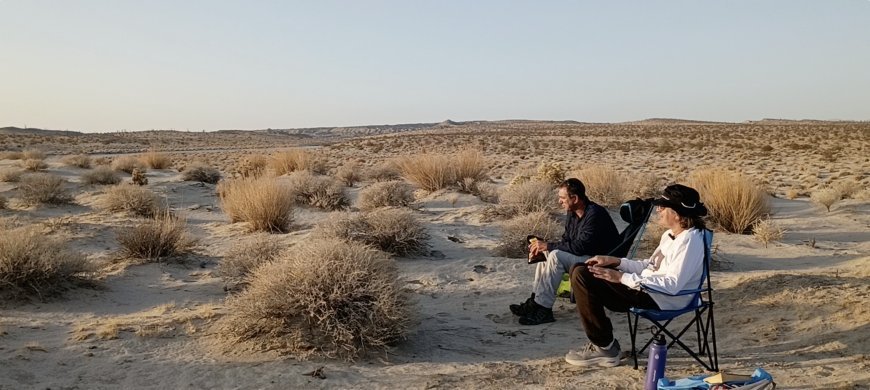
Peter Wick’s Anza Borrego Sunrise to Sunset turns an apparently simple activity—sitting in the desert for an entire day—into a quietly amusing meditation on endurance, friendship and our relationship with the natural world. There’s something especially poignant about watching people deliberately slow down in a culture that so often equates movement with productivity. As the hours pass, the desert becomes less a backdrop than a space for reflection, where stillness begins to reveal its own rhythms and rewards.
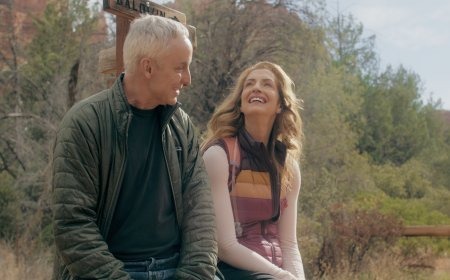
The film follows world traveller and writer Robert Silk as he attempts his sixth full-day “sit,” this time in California’s Anza-Borrego Desert. His aim is straightforward: sit from sunrise to sunset and watch the sun travel across the sky. Wick joins him for part of the experience, initially with some hesitation. As someone who prefers the water and comes from Seattle, the prospect of spending hours in a 100-degree desert is hardly appealing to him. Yet his curiosity gradually wins out.
Much of the film’s charm comes from the easy friendship between Wick and Silk. Their conversations move freely between serious reflections and completely pointless trivia. They talk about getting lost while kayaking, Silk’s travels around the world, Keanu Reeves, directions, books, music and even the shapes they begin to see in the desert as the heat and exhaustion set in. The humour prevents the film from becoming too solemn about an activity that, from the outside, can look rather ridiculous.
Silk describes “extreme sitting” as a sport with its own rules, while also allowing for a recreational version for those unwilling to commit to an entire day. The film plays with this idea without insisting that sitting must have a grand purpose. Instead, it gradually reveals what Silk finds valuable in it: an opportunity to immerse himself in the landscape and experience an ecosystem without constantly moving through it.
The desert becomes increasingly important to this experience. Its harsh heat, vast openness and sparse landscape create an environment that demands patience. Silk describes the desert as possessing both “brutality” and beauty, and the film captures this contradiction through long stretches of stillness, punctuated by their conversations and the recurring refrain of “Heat.”
Wick also gives the documentary a personal quality by allowing his own doubts and discomfort to remain part of the story. His presence makes the film feel less like an observation of an eccentric traveller and more like two friends trying to understand why anyone would willingly spend nearly fourteen hours sitting in the desert.
By the time the sun disappears behind the mountains, the apparent absurdity of the exercise has acquired a quieter significance. Anza Borrego Sunrise to Sunset does not offer a grand revelation about life. Instead, it suggests that sometimes simply staying still, paying attention and sharing the experience with another person can be meaningful enough.
Anza Borrego Sunrise to Sunset received an award at the Documentaries Without Borders International Film Festival.
What's Your Reaction?