


















Purabi Sarma: The Gentle Eclipse of a Radiant Star
A heartfelt tribute by Prantik Deka honoring the life, cinematic legacy, and mobile theatre contributions of the beloved Assamese actress, Purabi Sarma.


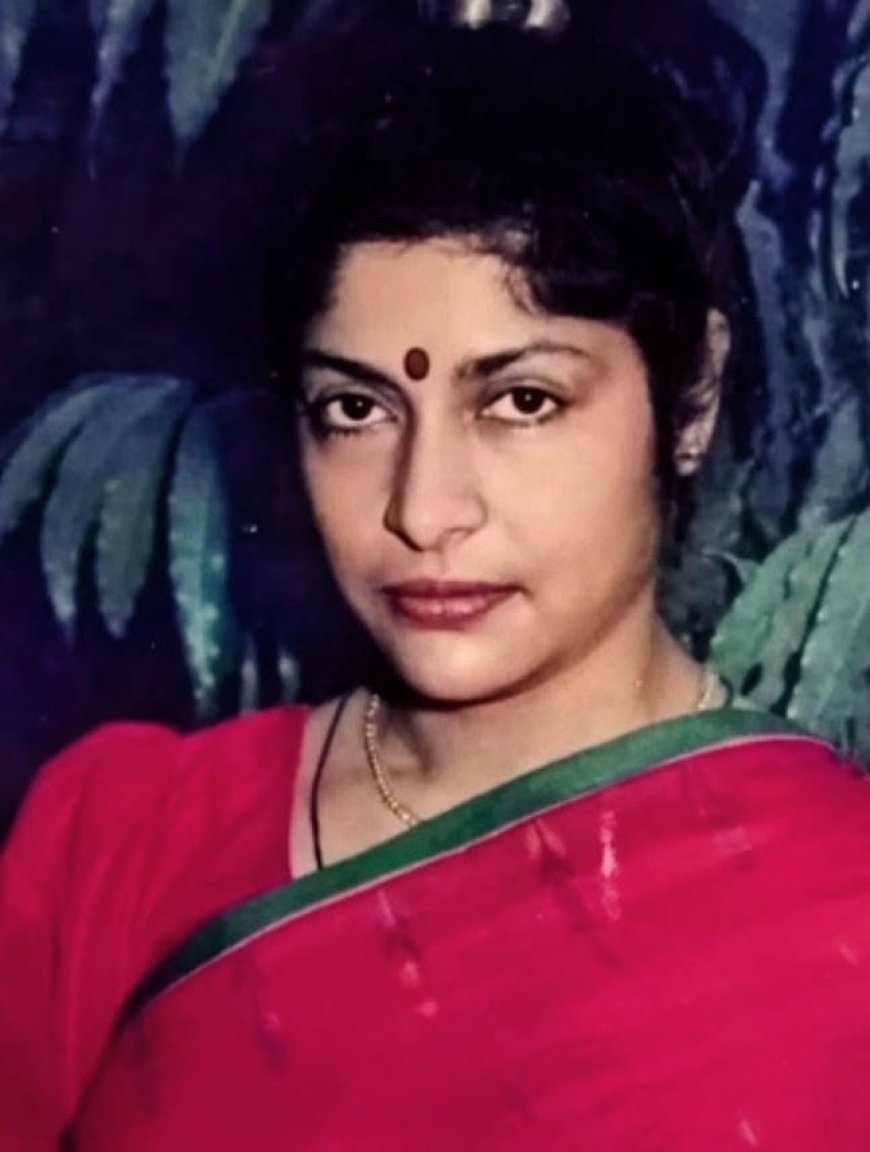
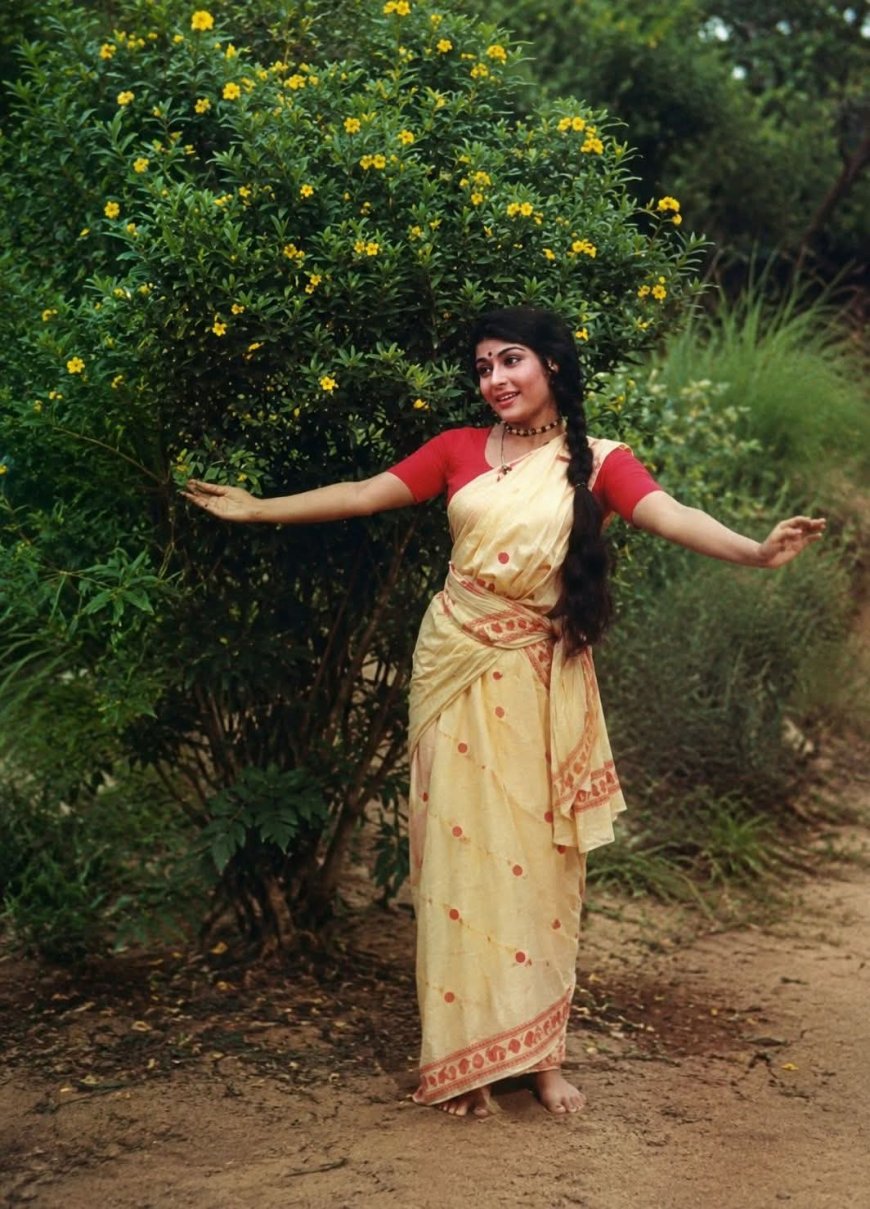
The Assamese cultural firmament has lost one of its finest luminaries. Purabi Sarma, a beloved and versatile actress who graced cinema, theatre, and radio plays, has passed away, leaving behind a void that will be deeply felt by generations of art lovers. Affectionately known within the film fraternity as ‘Baby’, her transition from a promising debutante to a revered veteran is a testament to her enduring talent.
Purabi Sarma began her acting career with a brilliant, genuine spark. Her overnight rise to stardom across Assam came with her cinematic debut in the iconic Assamese film Ajali Nabou, the first mainstream Assamese feature film shot entirely in Eastman colour, released on February 22, 1980. She instantly captured the hearts of the audience with her graceful screen presence and performance in the song “Chaku Meli Nachaba”. Sung by Runjun Phukan, the melody became a sensational hit, perfectly complemented by Purabi Sarma’s elegant lip-syncing and dance choreography. Besides “Chaku Meli Nachaba”, the film features another evergreen hit titled “Kak Bulilo Kone Nije Gat Pati Lole Cha”. Rendered by Dwipen Barua and Runjun Phukan, this track showcases Purabi Sarma with Pranjal Saikia. Their delightful, comedic, and expression-driven onscreen banter makes the song truly entertaining. In fact, every track composed by Ramen Baruah for this film became an evergreen hit.
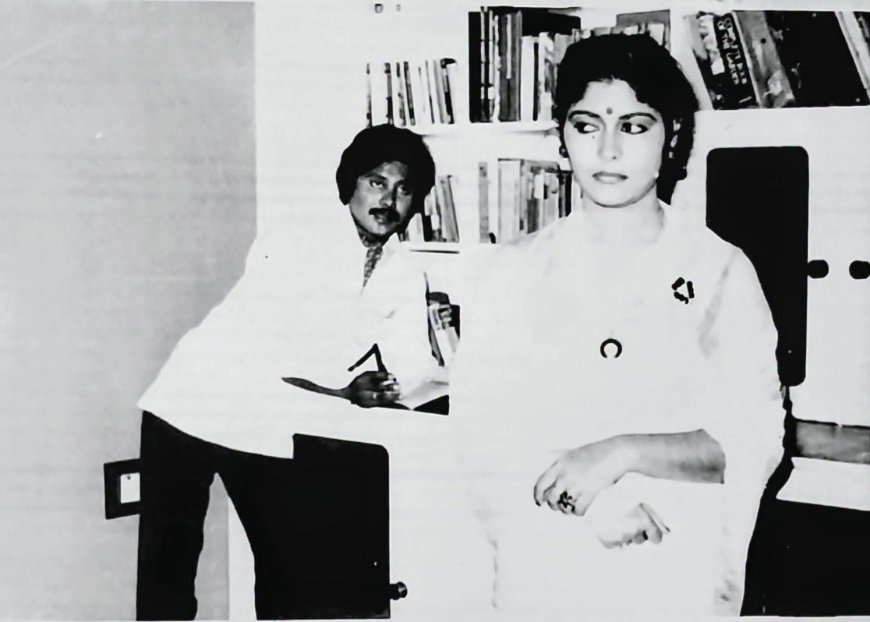
Purabi Sarma with Brajen Borah in "Puja"
Interestingly, the legendary film director Nip Barua, who introduced Purabi Sarma to Assamese cinema, officially credited her as ‘Newcomer Baby’ in this landmark film. The moniker endured throughout her decades-long career, and close friends, colleagues, and fans within the cultural fraternity continued to affectionately call her ‘Baby ba’.
Following her spectacular debut, she became a mainstay of Assamese cinema throughout the 1980s and 1990s. Her sharp dialogue delivery, confident presence, and emotional control made her performances stand out. She moved effortlessly from one project to the next, consistently delivering compelling performances in a string of films. Her rich filmography includes Son Maina (1984), Puja (1985), Madhuchanda, Sankalpa, and Anthony Mor Naam (1986), Pratham Ragini (1987), Pita Putra and Siraj (1988), Sewali and Bhai Bhai (1989), Pahari Kanya and Abhiman (1990), Bangshadhar and Prabhati Pokhir Gaan (1992).
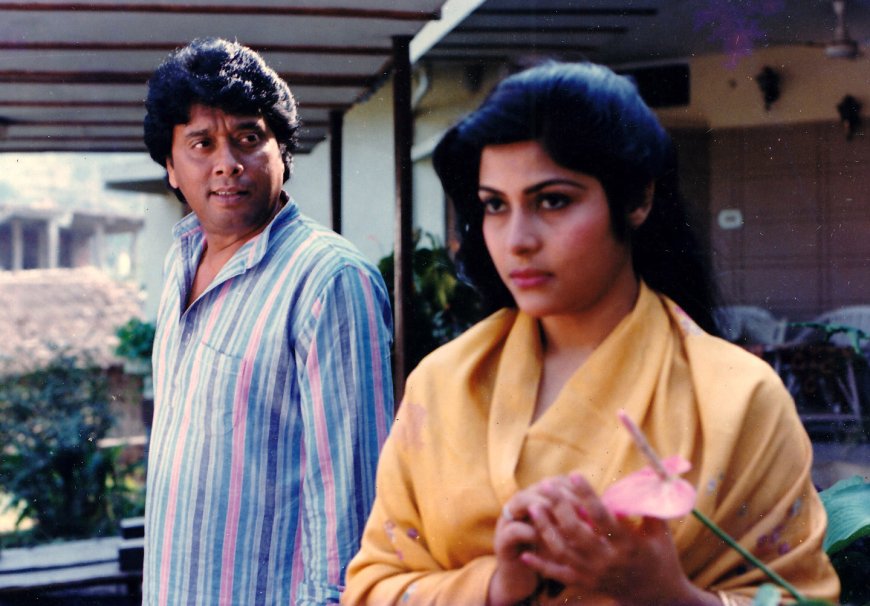
Upon wrapping up her work on Munin Barua’s 1990 release Pahari Kanya, Purabi Sarma immediately joined the sets of Abhiman. It was during the production of this film that the bond between Tapan Das and Purabi Sharma profoundly deepened. Indeed, Abhiman served as the pivotal catalyst that brought the two closer together. Their relationship became a major talking point and garnered significant public attention at the time. Eventually, their love culminated in marriage, marking the beautiful beginning of their lifelong journey together.
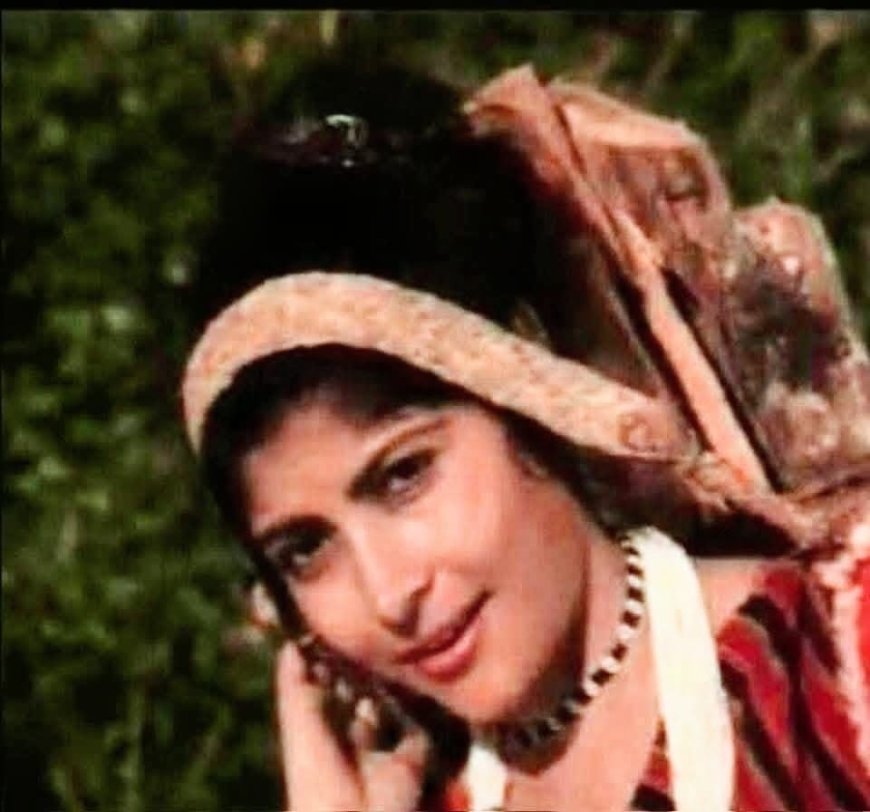
In Pahari Kanya
Following her appearance in the 1994 film Ashanta Prahar, Purabi Sarma stepped away from the silver screen for a long time, spanning nearly seven years, rarely taking on roles or finding the right opportunities to showcase her talent. However, true talent cannot be kept away from the spotlight for long. Acknowledging her exceptional talent and enduring appeal, director Taufique Rahman cast her in his upcoming film, Ei Moram Tomar Babe. Released in 2001, this movie marked her triumphant return to cinema, breaking her seven-year silence and reaffirming her position in the industry. This career comeback launched a highly successful phase for her in Assamese cinema, marked by impactful performances in several films such as Nayak (2001), Kanyadaan and Jiban Nadir Duti Paar (2002), Bidhata (2003), Hridoy Kapowa Gaan and Barood (2004), Kadam Tale Krishna Nache, Astarag and Ringa Ringa Mon (2005), Ahir Bhairav (2007), Lakhimi (2009), Raktabeez (2018) and under-Production Smriti. Her collaborations with eminent directors like Dhiru Bhuyan and Siva Prasad Thakur produced milestone performances that defined her career arc and coincided with a shift toward realistic cinema. Often hailed as the crowning jewel of Purabi Sarma’s acting career, Dhiru Bhuyan’s 1987 film Pratham Ragini, based on Rama Das’s short story Osol Toka, earned the National Film Award for Best Assamese Feature Film that same year. She delivered a nuanced performance chronicling a young woman’s navigation of profound grief, isolation, and transformation amid crisis. Her understated yet powerful portrayal traced the character’s evolution from devastating loss to a renewed sense of purpose through selfless service. In Astarag (2005), Sarma collaborated with three-time National Award-winning director Siva Prasad Thakur to explore the delicate intricacies of human relationships. Based on the celebrated novel by the legendary Assamese writer and journalist Homen Borgohain, the film offers a poignant and profound exploration of the physical, psychological, and social dimensions of aging, death, and human existence. Purabi Sarma’s compelling performance perfectly captured the painful choices and emotional vulnerabilities born from family drift, rendering her character deeply relatable to middle-class Assamese audiences. Ahir Bhairav (2007), directed by Siva Prasad Thakur, stands out as a unique cinematic exploration of mental health within the diaspora. Marking a historic milestone as the first Assamese feature film shot almost entirely in the United Kingdom, this poignant drama explores the devastating emotional and psychological toll of schizophrenia. The narrative follows an expatriate professor whose life is upended when both his wife and daughter receive the diagnosis. Anchoring the film’s emotional weight, Purabi Sarma delivered a grounded, standout performance as Manisha, a pivotal character who drives the heart of the story. She shares the screen with a talented ensemble cast that includes Kopil Bora, Zerifa Wahid, and Bidyut Chakravarty.
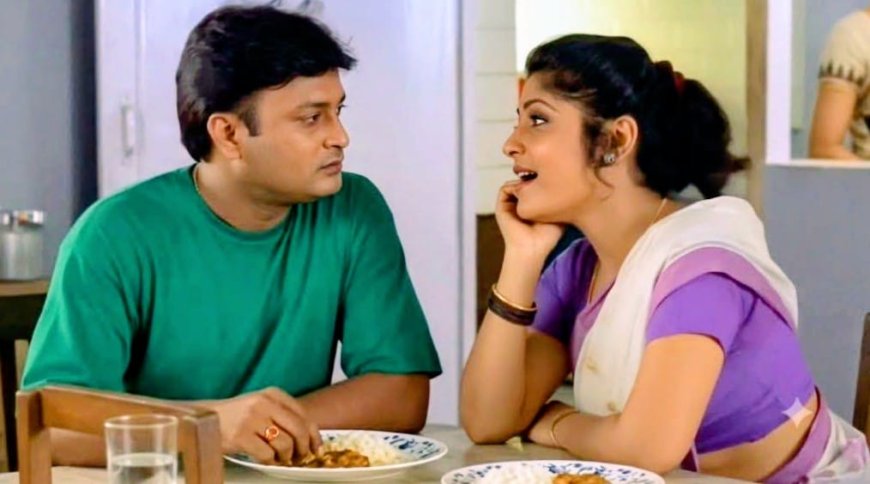
Jatin Bora and Purabi Sarma in Kanyadaan
Few people know that Purabi Sarma carried a quiet but lingering regret for missing out on a major film. She had initially been signed to play the lead in director Pulok Gogoi’s major commercial success, Sendur. However, due to unforeseen domestic obligations, she had to decline the offer at the last moment. That missed opportunity left a lasting shadow of regret, and the role was ultimately played by Bidya Rao.
Purabi Sarma also starred in the 1988 Hindi film Door Nahi Savera, produced by the Films Division. Directed by Charu Kamal Hazarika, the two-hour feature was filmed in Palashbari and showcased a stellar cast, including Tapan Das and Pranjal Saikia. However, due to language requirements, professional dubbing artistes re-recorded the Hindi dialogues for everyone except Tapan Das. The film was later screened in various villages and towns across the country.
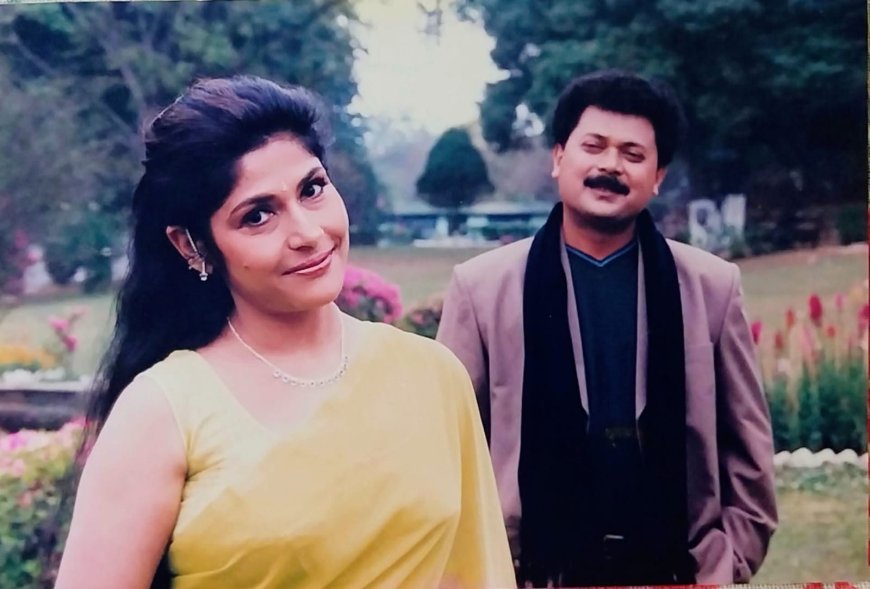
Purabi Sarma and Debajit Mazumdar in 'Hridoy Kapowa Gaan'
Apart from her silver screen roles, actress Purabi Sarma acted in numerous video films and TV serials. She notably starred as ‘Gosani’ alongside Ramayan fame Arun Govil in Mrityunjay, a Hindi serial directed by Charu Kamal Hazarika based on the 1979 Jnanpith Award-winning novel by Birendra Kumar Bhattacharya. Initially planned for 21 episodes, unforeseen circumstances reduced the Hindi series to 7 episodes, which were ultimately broadcast via Doordarshan’s PPC instead of the national network. Sarma also acted in Hazarika’s 5-episode Hindi serial Grahananta, based on Kanchan Barua’s novel of the same name, which was also aired on Doordarshan PPC. Additionally, she was a prominent figure during the heyday of the video film era, starring in multiple popular releases such as Lakhimi.

Purabi Sarma in Kanyadaan
Following her marriage to eminent actor Tapan Das, Purabi Sarma graced the mobile theatre stage, with the iconic couple starring together in Kohinoor Theatre. Recognising their unmatched star power, the visionary producer Ratan Lahkar signed Assam’s most celebrated onscreen romantic duo for a historic contract worth several lakh rupees for the 1993–94 theatrical season. At that time, the romance between Tapan Das and Purabi Sarma was a major talking point, prompting mobile theatre groups to eagerly stage plays based on their love story. Driven by a keen artistic intuition, producer Lahkar enthusiastically cast the leading duo in the play Anarkali, which went on to become a massive success. Audiences surely still cherish the memories of Tapan Das and Purabi Sarma’s unforgettable performances in Hamlet and Ratir Jui, both staged by Kohinoor that very same year. Following her stint at Kohinoor Theatre, Purabi Sarma signed an exclusive contract for the 1994-95 season with Hengool Theatre, produced by Prasanta Hazarika. That year, she shared the stage with popular actor Jatin Bora. Her stellar performance in Mahendra Barthakur’s play Majnishar Siyor (Midnight Cry) during that season remains etched in the audience’s memory to this day. Subsequently, for the 1997–98 theatre season, Biswa Saikia, the producer of Srimanta Sankardev Theatre, brought the celebrated duo of Tapan Das and Purabi Sarma back to the mobile theatre stage. That year, the producer staged a play titled Laila Majnu, which was based on yet another timeless love story. Featuring the duo in the lead, the production proved to be immensely popular and a massive commercial success. Following this, the duo took a long hiatus from sharing the mobile theatre stage.
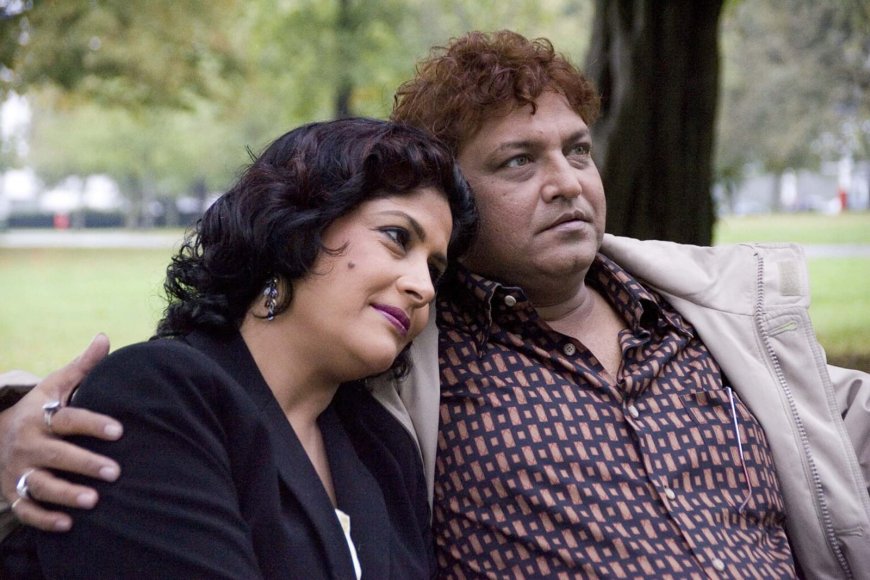
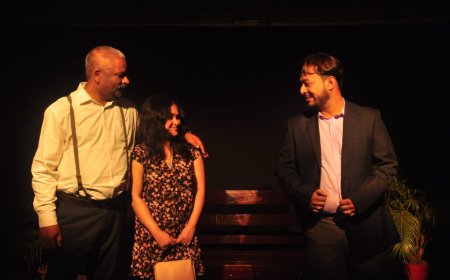
Bidyut Chakravarty with Purabi Sarma in 'Ahir Bhairav'
However, during its second season in 2007–08, Rajtilak Theatre reunited Tapan Das and Purabi Sarma, signing them on to perform as a lead pair once again. That year, they captivated audiences on the Rajtilak stage with their performances in plays like Taal, Kabuliwala, Swahid Khargeswar, and Jilmil Torar Dore. The creative partnership continued into the 2008–09 season with Rajtilak Theatre as well. During this consecutive year, the duo starred together in popular productions such as Shesh Nixar Prem, Rudrasagar, and Mokora Manov.
After that, Tapan Das and Purabi Sarma never shared the mobile theatre stage again. Tapan Das, however, kept his passion for theatre alive. Das stands as a profound testament to the unwavering dedication of a true artiste. Merely days after the heartbreaking loss of his beloved wife, esteemed actress Purabi Sarma, he returned to the Mirza-based Itihas Theatre camp for the 2026–27 season. Demonstrating profound dedication, he immersed himself fully in rehearsals, channeling his grief into his craft.
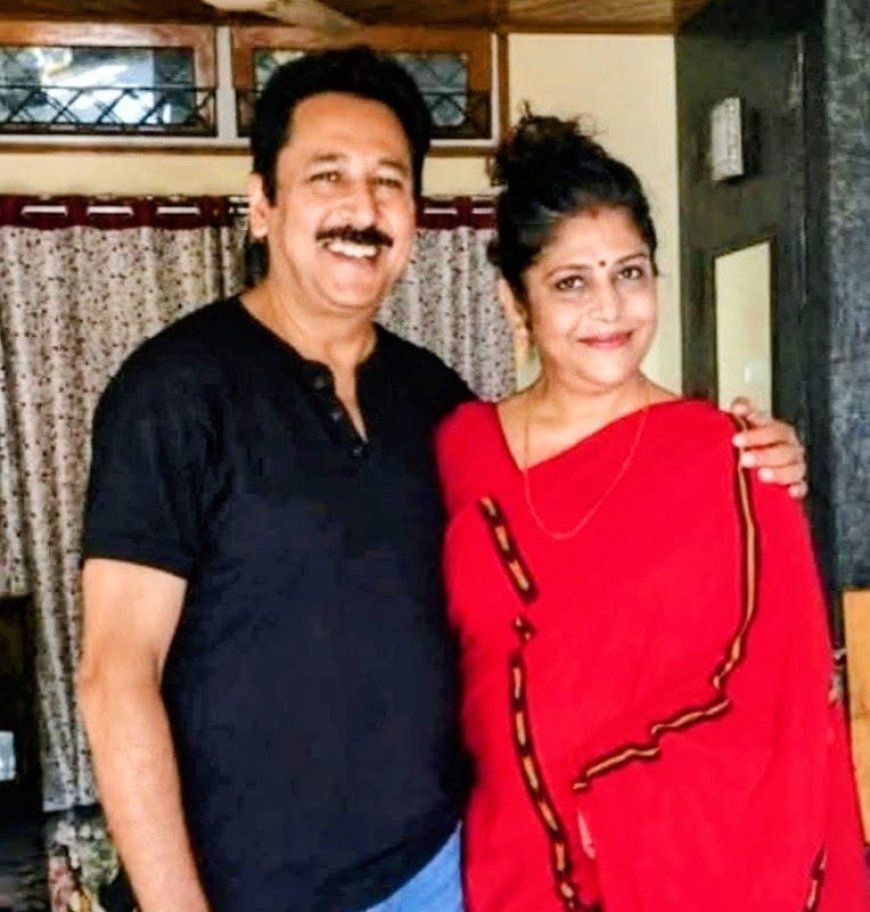
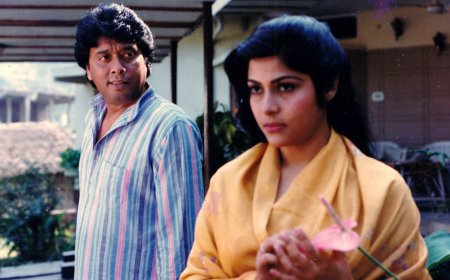
Purabi Sarma with Tapan Das
The passing of veteran actress Purabi Sarma is an irreparable loss to Assamese cinema. She approached every character she played with a rare grace, deep sensitivity, and an innate understanding of human emotion. Whether on stage, on air, or on screen, she poured her soul into her craft, leaving a beautiful legacy that will forever endure in Assam's cultural heart.
What's Your Reaction?