























Himjyoti Talukdar’s Moromar Deuta
Bishal Das, research scholar, Department of Assamese, Tezpur University, critically looks at the film

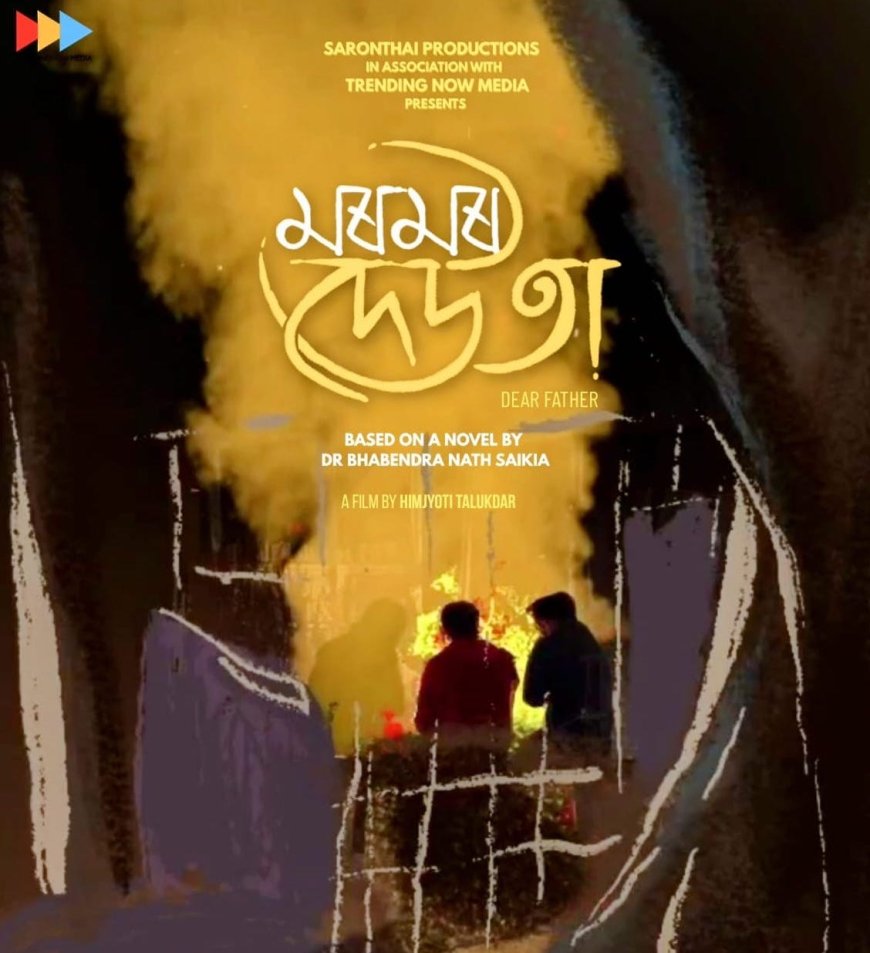
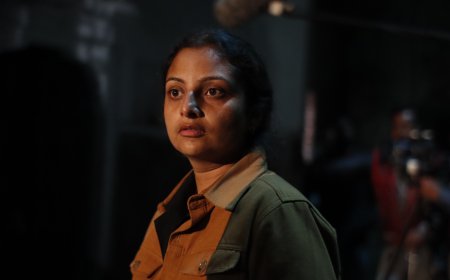
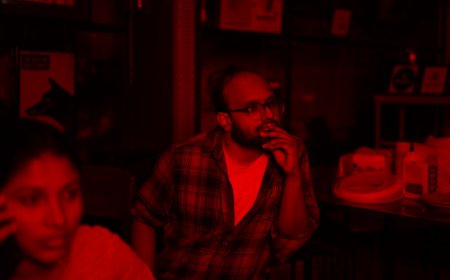
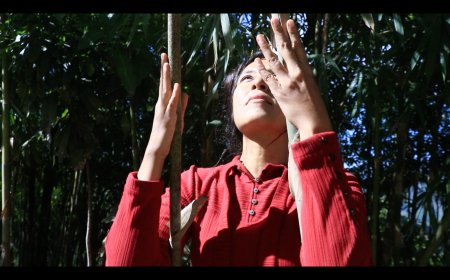
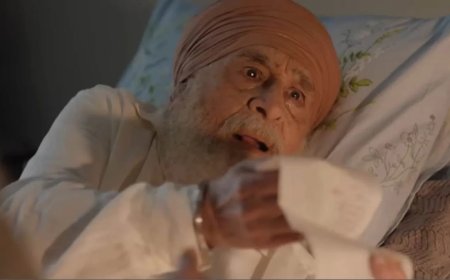
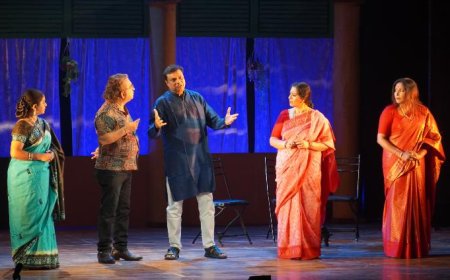
The relationship between fathers and sons has rarely been explored as a central theme in Assamese cinema. One notable example is Pita Putra, adapted from Pita Putra by Homen Borgohain. Another significant addition to this theme is Moromar Deuta, directed by Himjyoti Talukdar. Produced in 2025 and released on 15 June 2026, the film is an adaptation of the children's novel of the same name by Bhabendra Nath Saikia. While adapting the novel, Talukdar retains its central narrative but reimagines it to suit contemporary society. The cast includes Mintu Baruah, Bodhisattva Sharma, Aparna Dutta Choudhury, Arun Nath, Kul Kuldeep, Gaurav Bora, Aparajita Mahanta, Kabyashree Hazarika, Abhijit Bora, Manjit Kakoti, Soundarya Deka Baruah, and Rituparna Kalita.
In adapting Moromar Deuta, Himjyoti Talukdar has carefully reshaped the narrative to resonate with present-day audiences while preserving the essence of Bhabendra Nath Saikia’s original work. Rather than distorting the source text, he incorporates additions, omissions, and subtle alterations, employing his own directorial vision throughout the film. In doing so, Talukdar effectively demonstrates the principles of Auteur Theory, asserting himself as a creative author of the cinematic text rather than merely a translator of the novel.
Saikia’s original novel revolves around Bipul, an unruly adolescent whose father lives away from home due to work. At home, Bipul refuses to listen to his mother or siblings and frequently creates disturbances. He demands whatever he desires, shows little interest in studies, and eventually develops the habit of smoking cigarettes under the influence of his friends. As his reckless behaviour continues to escalate, the family finds itself increasingly troubled.
In the film adaptation, Bipul is renamed Partha. Before the film’s release, during a lecture at Tezpur University, director Himjyoti Talukdar explained the reason behind this change: “We have replaced the name Bipul with Partha because we have adapted the story to suit contemporary times. Nowadays, parents rarely name their sons Bipul.” While Bipul is portrayed as a school-going boy in the novel, Partha is presented as a college student in the film. One of the most significant scenes from the novel, in which the father secretly beats his son after becoming utterly frustrated, has been retained in the film. However, another important modification reflects changing social realities. In the novel, Bipul’s misconduct is limited to smoking cigarettes and quarrelling with a shopkeeper while trying to obtain them. In contrast, the film transforms this episode into one involving illegal drugs. Partha and his friends are shown arguing with a shopkeeper named Abdul over drugs, thereby updating the narrative to address one of the most pressing concerns affecting contemporary youth. Through this modification, Talukdar successfully aligns the story with present-day social realities.
The family structure has also been simplified in the adaptation. In the novel, Bipul lives with his parents and siblings—his elder sister Rani, younger sister Rini, and younger brother Mukul. In the film, however, the family consists only of Partha, his parents, and his elder sister Pongkhi. A brief appearance by one of Pongkhi’s friends is also included. Furthermore, Talukdar introduces a subtle romantic angle by hinting at Pongkhi’s relationship with a young man named Dhiman, an element absent from the original novel.
The adaptation also demonstrates considerable freedom in its treatment of characters. While the novel contains a wider range of characters, the film introduces new names and modifies existing ones according to the director’s creative requirements. From the perspective of performance, the film is highly commendable. Every actor delivers a convincing and natural performance. Technically, the film is equally accomplished, particularly in its use of colour grading, shot composition, cinematography, and colour symbolism. The songs incorporated into the film blend seamlessly with the narrative and enhance its emotional appeal.
One of the film’s most striking technical achievements lies in its thoughtful use of costume colours. Talukdar employs colours such as dark blue, brown, red, black, and white with deliberate symbolic intent. According to colour theory, each of these colours conveys specific psychological and emotional meanings. Blue represents sadness, anxiety, and melancholy; brown signifies stability, security, and reliability; red symbolises danger, love, and youth; black conveys fear, uncertainty, and tragedy; while white represents peace, simplicity, and mourning.
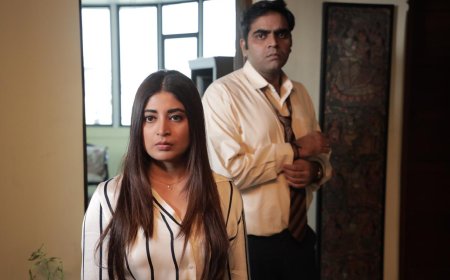
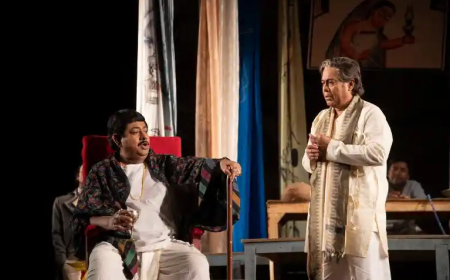
These symbolic associations are carefully reflected in the costumes worn by the characters. Partha’s father, Pradip Baruah, is seen wearing a dark blue sweater, a brown sweater, and a black coat at different moments in the film. These colours visually communicate his emotional burden, his role as the stabilising force within the family, and his growing anxiety regarding his son’s behaviour. In one of the opening scenes, Partha wears a red sweater, symbolising both the energy of youth and the danger he poses to his family. In another scene, he appears in a black shirt, reinforcing the sense of fear and destruction associated with his actions.
Another particularly meaningful sequence occurs when Pradip purchases a ring from an astrologer after seeing him on television, believing that it will help reform Partha. On his journey home, he imagines a peaceful future in which his son changes after wearing the ring. During this sequence, Partha’s mother removes her brown shawl and lets it flutter outside the moving vehicle. Symbolically, this gesture reflects the family’s hope that their suffering and anxieties will soon come to an end. In the same sequence, Partha is shown wearing a pink sweater, further reinforcing the father’s dream of restoring harmony and happiness within the family.
As already noted, Talukdar introduces several additions and alterations while adapting the novel without compromising its central narrative. In the original text, a barber is summoned to cut Bipul’s hair before he is made to wear the ring. While chasing the barber away, Bipul accidentally causes the barber to injure his foot with a pair of scissors. In the film, however, this incident is significantly altered. Instead of a barber, an electrician comes to hang a framed photograph of a spiritual guru in Partha’s room. When Partha attempts to attack the electrician, the framed photograph falls, its glass shatters, and the electrician injures his foot on the broken glass. Although the event differs, its narrative function remains largely the same.
Despite introducing several modifications, Talukdar remains faithful to the spirit of Bhabendra Nath Saikia’s novel. His adaptation neither unnecessarily prolongs the narrative nor distorts its emotional core. Nevertheless, one aspect of the original appears less effective in the film. In the novel, readers remain uncertain until the very end about the identity of the person who assaulted Bipul, creating considerable suspense. The film, however, does not preserve this same degree of mystery and emotional tension.
Overall, Moromar Deuta stands as a successful adaptation that thoughtfully reinterprets a beloved literary work for contemporary audiences. Through its effective use of cinematic techniques, strong performances, careful casting, symbolic visual language, and sensitive adaptation of the original text, Himjyoti Talukdar succeeds in creating a film that is both artistically satisfying and socially relevant. It may therefore be regarded as one of the noteworthy Assamese film adaptations of recent years.
What's Your Reaction?