































Review: Chunni (2026)

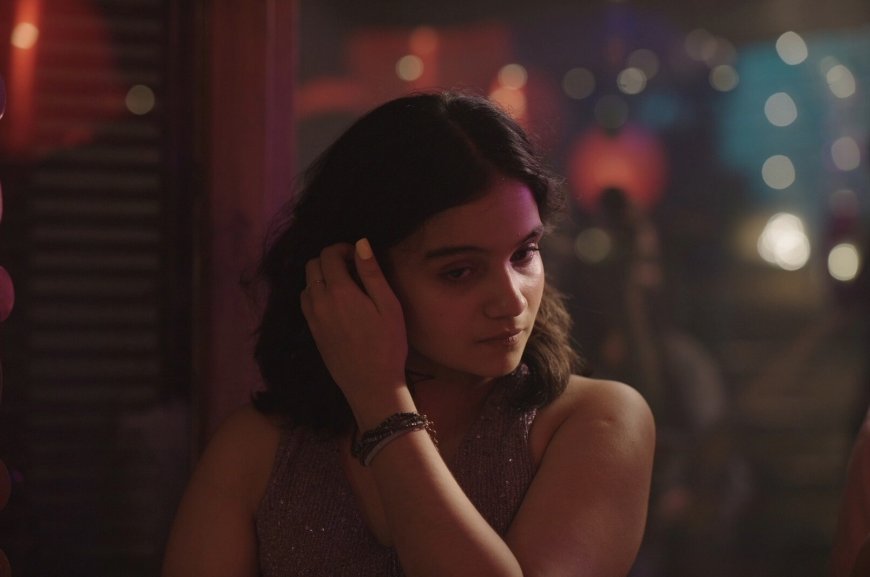
Some films declare their politics outright; others allow them to surface through the quiet accumulation of ordinary moments. Kaashvi Agarwal's Chunni belongs firmly to the latter category. Set over the course of a single evening in contemporary Delhi, it explores how patriarchy endures not merely through overt violence but through ordinary rituals of protection and surveillance. Beneath these gestures lies the persistent threat of harassment, which, in turn, reinforces restrictive gender expectations.
The opening is deceptively playful. Alone in her room, Avni rehearses a peppy dance number celebrating feminine desirability. It is a private moment of youthful confidence, quietly interrupted when one of her press-on nails comes off as she struggles to zip up her dress. The moment subtly foreshadows one of the film's recurring ideas. Femininity often demands constant repair, adjustment, and performance.
Avni's enthusiasm for a school party is quickly overshadowed by the expectations of home. Disapproving of her outfit, her conservative father orders her to change. His protectiveness stems from genuine concern, yet the film recognises how affection can coexist with control. His insistence on dictating when Avni should return home, contrasted with the greater freedom granted to her brother Ishaan, exposes a familiar contradiction. Even a supporting character deepens this social landscape. The family's househelp quietly endures routine violence from her alcoholic husband and refuses to seek legal help despite her employer's encouragement. Meanwhile, the heated exchanges between Avni's parents reveal how gender inequality infiltrates even marriages that outwardly function with normalcy.
Avni’s escape from the house by climbing down from the terrace is an act of rebellion and is immediately intercepted, not by a male authority figure, but by a neighbourhood woman who hands her a scarf to cover herself. The scarf carries no overt aggression and represents the internalisation of patriarchal values by women themselves, who often become their inadvertent custodians.
Once she steps onto the streets, the film refuses the comforting illusion that liberation begins outside the home. As she walks through the city, she is watched by men and women alike. The gaze itself becomes the film's principal antagonist. Years of caution have conditioned her to interpret every approach as a potential threat. It leads her to lash out even at a man whose intentions appear harmless.
Perhaps the film's most sobering observation is reserved for its destination. The school party, imagined as a sanctuary from familial restrictions, proves scarcely safer. The behaviour of the boys towards the girls suggests that the spaces young women long to occupy remain governed by the same assumptions they sought to escape. Safety, the film suggests, is not a geographical condition but a social one.
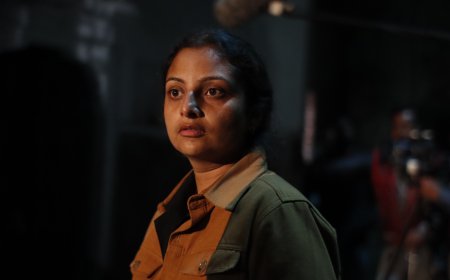
Preeti Panigrahi is quietly compelling as Avni, embodying the contradictions of adolescence with effortless conviction. She resists easy sentimentality and communicates excitement, frustration, and growing unease with a disarming economy that keeps the character recognisably human.
Chunni offers a perceptive portrait of what it means for a young woman to negotiate freedom in a society where danger is both real and constantly anticipated. The heaviest burden Avni carries is not the scarf itself, but the invisible inheritance of fear it represents.
Chunni had its world premiere at the 2026 New York Indian Film Festival.
What's Your Reaction?