































Review: Holy Curse (2024)


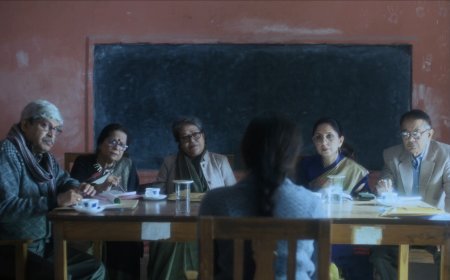
Snigdha Kapoor’s short film Holy Curse unfolds within the thick emotional air of a small household where fear, tradition, and denial knot themselves into a single, suffocating logic. It is a piercing study of denial, and exposes how superstition and patriarchy silence a child’s identity, turning love into control and harm.
At its centre is Radha, an androgynous preteen navigating the gendered pressures of early puberty. As a young person, her identity is still forming, fragile and uncertain, yet already policed. What the film captures with startling clarity is the speed with which a family, unwilling to confront the shifting contours of an individual’s gender expression, reaches for the most convenient explanation: possession. The ritual becomes a theatrical performance staged for adult reassurance rather than Radha’s well-being.
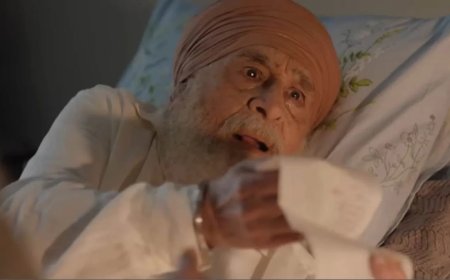
Holy Curse is less interested in overt commentary than in tracing the textures of denial, where identity is policed through ritual rather than empathy. Radha repeatedly tries to break the psychological perimeter closing in around her. Her distress, sometimes quiet and sometimes erupting in sudden attempts to flee, is read by the patriarch (Anup Soni) not as resistance but as proof that the ritual is working. The irony is devastating. The more Radha tries to assert her agency, the more the patriarch sees it as confirmation of possession. The film captures this looping logic with clinical precision. The turning point comes with the onset of Radha’s first menstrual cycle, which the patriarch immediately treats as evidence that the spirit has been expelled. In a painfully intimate moment, Radha’s biological transition, something deeply personal and confusing, is taken by him as a spiritual victory and a sign that restores his fragile sense of control. The patriarch understands the body only through the narrow beliefs he holds, and Radha’s own sense of what she is experiencing is pushed aside.
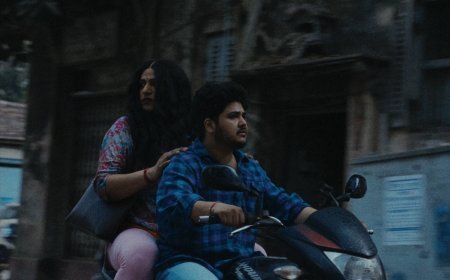
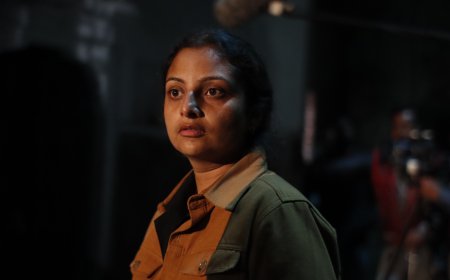
The film situates us in a world where superstition is not merely a belief system but a ready-made escape route. Rather than acknowledge Radha’s discomfort, the family decides to allow the patriarch to maintain the illusion of order. Kapoor stages this conflict with an unsettling stillness. Through controlled compositions and an unhurried rhythm, the film underscores how claustrophobia can persist even in open spaces, whether inside a room or a moving vehicle. Juhi Sharma’s cinematography deploys tight framing and restless handheld shots, while Anadi Athaley’s measured, rhythmic editing subtly reflects the fluctuations of Radha’s inner world, heightening the sense of entrapment that defines the narrative. At the centre of it all is Mrunal Kashid, whose portrayal of Radha captures both the vulnerability and quiet defiance of a child struggling to be understood.
In its final stretch, Holy Curse offers no easy catharsis or overt judgement. Instead, it observes how myth can be weaponised to discipline a nonconforming child, and how care, when entangled with fear, can mutate into something unrecognisable. The effect is a lingering ache, and the cost is borne by the child caught between who they are and who they are told to be.
After travelling to festivals around the world and winning several awards, Holy Curse is now available on YouTube.
What's Your Reaction?