












Review: Cuckoo Sings Spring, Unheard (2025)

Cuckoo Sings Spring, Unheard is a restrained, incisive documentary about a life lived in rhythm with struggle, and about a form of music that has been historically pushed to the margins. Following Suresh, a Dalit percussionist, the film traces the long shadow of caste on art, labour, and recognition. What emerges is not merely a portrait of a musician, but a clear-eyed inquiry into how certain voices are structurally unheard, even when they are central to political resistance.
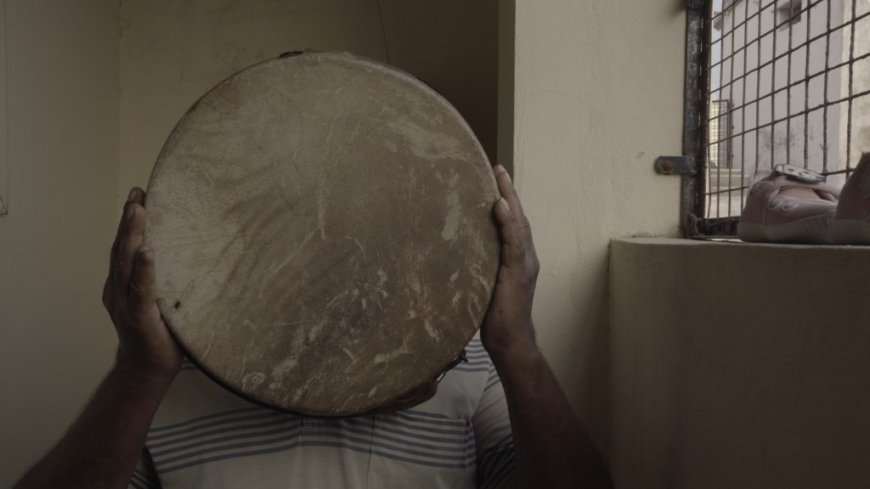
The film opens with an image that sets its ethical and aesthetic tone. Suresh covers his face with the dappu, the traditional drum closely associated with Dalit communities, and says: “This is my face. This is the beauty of my life.” It is a statement layered with pride and pain. The dappu is not just an instrument; it is a marker of caste identity. To touch it is to be inscribed within a social order that deems the player “untouchable.” From the outset, the documentary establishes that Suresh’s music cannot be separated from identity and dignity encoded in the instrument itself.
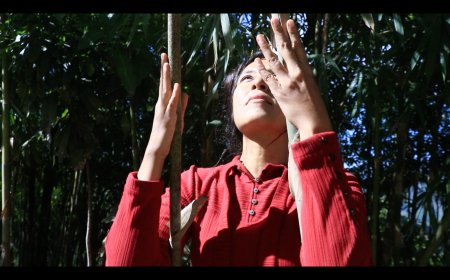
One of the film’s most evocative passages shows Suresh and his fellow musicians in a forest, tuning the dappu by heating it over fire. The camera lingers as the drum is coaxed into readiness, suggesting that this is not an act of manufacture but of care. Thus, the dappu acquires a symbolic life of its own, carrying pain, memory, and joy in equal measure. Music here is inseparable from the body and from history.
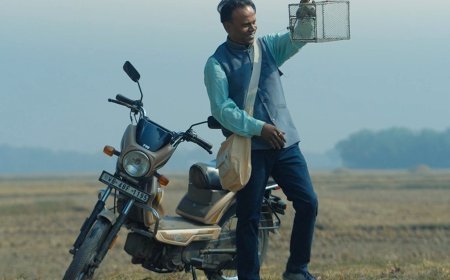
Suresh’s life unfolds between performance and precarity. Despite his deep musical knowledge and years of experience, recognition remains elusive. He performs mostly at public meetings, protests, and political gatherings. These are spaces where art is necessary but rarely rewarded. The documentary repeatedly places him in seminars on caste atrocities, where he listens as others speak about violence and injustice, before stepping forward to perform. These sequences are quietly devastating. Suresh’s music animates these spaces, yet he remains marginal within them, his labour essential but undervalued.
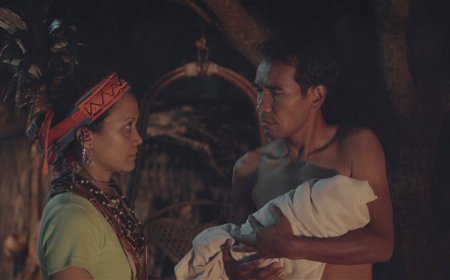
At home, the film shifts register without losing its political sharpness. Suresh speaks to his wife about the possibility of joining a media organisation named Human Rights News Channel. The terms are uncertain. There is no fixed salary for the first two months, and profit-sharing only if the organisation succeeds. His wife’s scepticism is grounded and practical. Suresh himself is unsure whether he will be exploited, but insists that he will work honestly. This exchange encapsulates the dilemma faced by many activists and artists from marginalised communities, caught between commitment to a cause and the need for economic survival.
One of the film’s most tender moments involves Suresh singing to his infant grandchild a song about land and belonging. These scenes subtly counterbalance the documentary’s accounts of deprivation. Hope is not abstract here. It is sung softly, almost privately, to the next generation. These moments shift the film away from public spaces of protest to the domestic sphere, where Suresh’s singing becomes quieter, more private, and addressed to the next generation.
Suresh’s personal history is inseparable from larger political movements. He recalls coming to Hyderabad with his parents in 1997, performing alongside Gaddar (Gummadi Vithal Rao), the legendary revolutionary Telangana folk singer and Naxalite activist. Gaddar’s recognition of Suresh as a child becomes a rare moment of affirmation in an otherwise harsh narrative. Yet these memories are also marked by hunger, recalling meals of rice mixed with chilli powder and water used to quiet the stomach. Interviewed in a forest, Suresh’s voice echoes as he speaks, as if the land itself is bearing witness.
The final image of the film is striking in its restraint and force. Suresh plays the dappu with bare-bodied intensity, his physical engagement with the instrument foregrounded. There is no grand closure, no sudden recognition. Instead, the film leaves us with the rhythm of persistent, insistent, unresolved struggles of the marginalised. Like the cuckoo of the title, Suresh sings of spring, of renewal and resistance, but his song remains largely unheard by the structures that surround him.
What's Your Reaction?