




































Review: The Pact (2026)

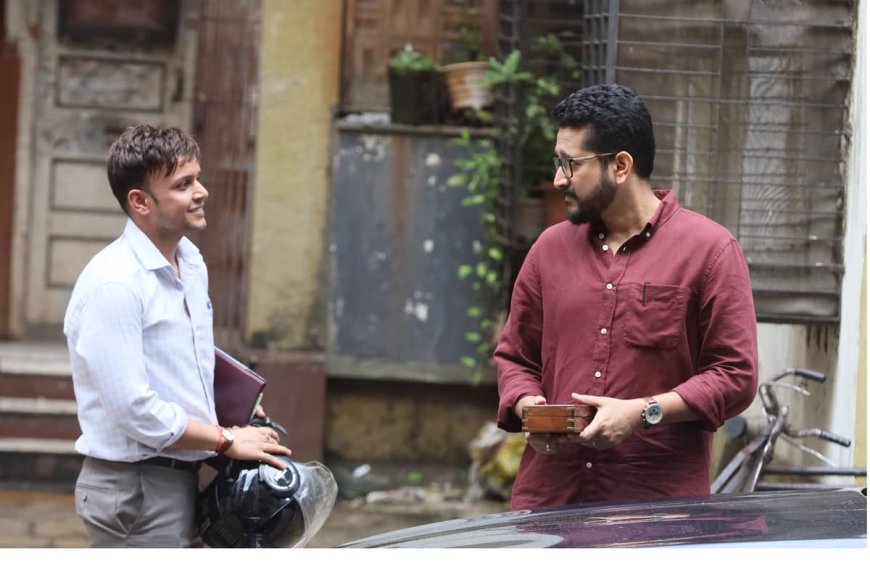
The Pact is a quietly devastating short about a father and son who loved each other deeply but spoke in different emotional languages. Directed with restraint by Lakshmi R Iyer, it understands that the most consequential relationships are shaped not by dramatic conflict but by silences, misread gestures and assumptions left unexamined for years.
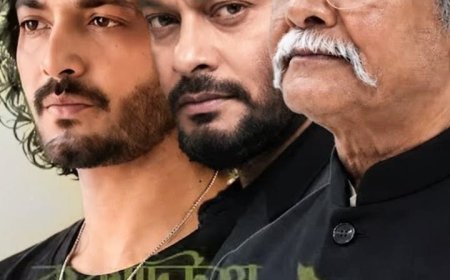
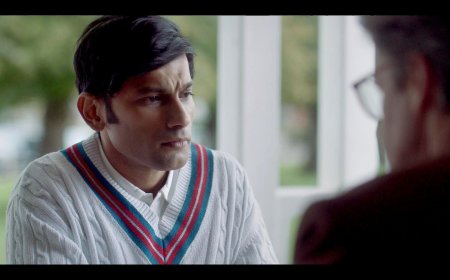
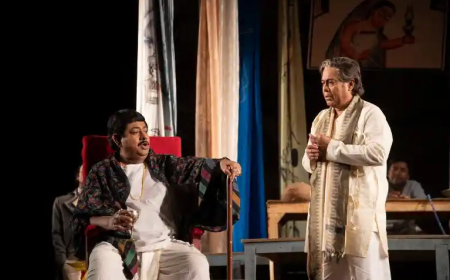
The story follows Raghav (Parambrata Chattopadhyay), a successful professional whose life revolves around efficiency, deadlines and transactions. As he prepares to sell an old family property, a practical decision loosens something buried. What begins as routine closure becomes an excavation of memory, drawing him back to his late father, Laxman (Vedant Sinha), a modest government servant remembered for discipline, emotional reserve and an unwavering insistence on self-reliance.
The film’s dramatic sensitivity lies in how it reframes that memory. Raghav has long interpreted his father’s silence as distance and his strictness as a lack of warmth. The narrative patiently dismantles this reading, suggesting that love, particularly of an older generation, is often expressed through action rather than articulation. Laxman is not emotionally absent so much as emotionally economical, operating within a vocabulary where care is demonstrated, not declared.
This generational tension quietly echoes in Raghav’s relationship with his nine-year-old daughter, Tara. Though attentive, he is increasingly distracted, his affection filtered through time scarcity and convenience. The film does not labour the parallel; it trusts the viewer to recognise how easily one inherits not only values but blind spots. The danger is not cruelty, but repetition.
Central to this re-evaluation is the film’s most resonant symbol: a set of tiffin boxes, or dabbe. Initially unremarkable, they gather emotional weight when Raghav learns their history from his mother. At office parties where non-vegetarian dishes were served—food forbidden at home—Laxman would quietly set aside portions of mutton curry or butter chicken and bring them back for his son. It was a furtive, tender act, performed without announcement or expectation of gratitude.
The revelation devastates precisely because it is modest. There is no grand sacrifice, no melodrama, only a man who understood his child’s pleasure and found a way to preserve it within his constraints. As Raghav’s mother, Leela (Kalyanee Mulay), explains, Laxman believed love lay not in display but in fulfilment. The film resists sentimentality, allowing this understanding to settle gradually.
The titular pact refers to a childhood promise that Laxman and Raghav would remain friends first, resolving disagreements through conversation and shared ice cream. Its quiet tragedy lies in how adulthood, with its rigid expectations, eclipses that intimacy. Without accusation, the film suggests that roles often replace relationships, and function displaces tenderness.
Crucially, Laxman is never sanctified. He remains strict, emotionally withholding, and even difficult. Yet the film insists that love can coexist with roughness, and emotional polish is not the sole measure of care. A recurring metaphor likens him to a scratched diamond: imperfect in surface, undiminished in value.
By the final moments, when a real estate agent remarks that houses may be sold but the address of memories never changes, the line lands because the film has earned it. The tiffin boxes are passed forward, transformed from relics into instruments of continuity. The Pact is less about reconciliation than recognition, arriving late, perhaps, but still necessary. It leaves us with a simple, enduring insight that love is often carried home quietly, at the end of a long day.
The Pact is available on YouTube
What's Your Reaction?