














Bhakutkut (2026) Review: A Charming Comedy with Its Fair Share of Flaws

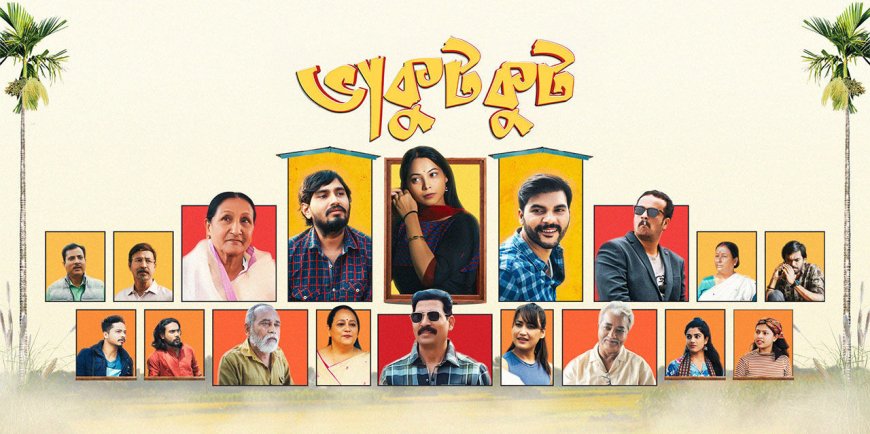
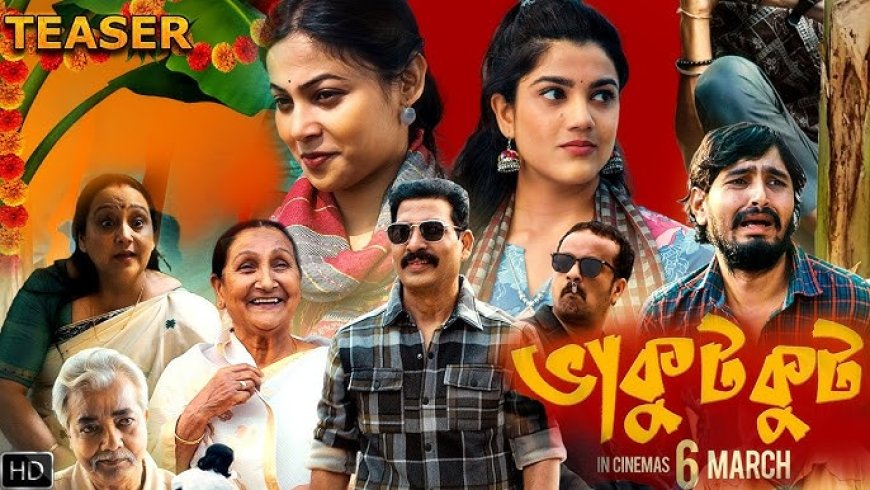
Writer-director Chinmoy Sarmah has remarkably excelled in his craft since his first film and it is very evidently visible in his latest feature, BhakutKut which released in Assam on 6th March, 2026. BhakutKut is a comedy based on and around the simplicity of rural living, love, family and friendships. Although a good film if asked to put it in two words, the film is also not without its fair share of troubles.
The film opens with Mridul (Mridul Chutia), an ex-serviceman and his family, who have returned to their native village from Bangalore. We are then introduced to Mridul’s elder sister (Pratibha Choudhury) who is internally troubled and gradually, the immediate challenge facing the family becomes clear- the marriage for her son, Indu (Kaushik Nath).
Indu faces the world on his own terms and has an obsessive fascination towards rearing cattle. So, for anyone who succeeds in finding a bride, the reward of a prime plot of land in town awaits to be claimed. But with the offer being extended to the entire village, the stakes of the competition increases as the film explores human nature and vested interests, while taking account for the greed and ugly side of fairer people.
In its thematic sensibilities, the story reflects some flair of Priyadarshan’s style of comedy although the execution differs in BhakutKut. The situational small village, whimsical characters, conflict of interest among almost everyone, including the husband and the wife, are all at play at once. But I only wish the execution of the second half had been as good as the first half.
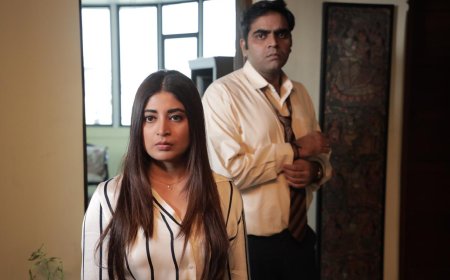
This premise and the promise of the prized land drive much of the plot and it places an interesting dilemma on the character portrayed by Dip Jyoti Kakati, who is still in the hangover of his character from Before Spring (2023). While he is essentially a nobody and a would-be bankrupt, the land offers him a golden chance to settle his increasing debts. This is why he considers marrying his daughter, Radhika (Darathie Bharadwaj), to Indu. His thoughts are further fuelled by Mridul and his wife, who also join the plan to share the property with him.
Meanwhile, Radhika is in love with Dhiraj (Monuj Borkotoky) who plans to marry her once he is financially settled. Then enters the motor-mouth relative Piku (Himangshu Prasad Das), another prospective claimant of the land, who spreads the rumour that Dhiraj and Radhika are conspiring together for the marriage to further their own nasty motives.
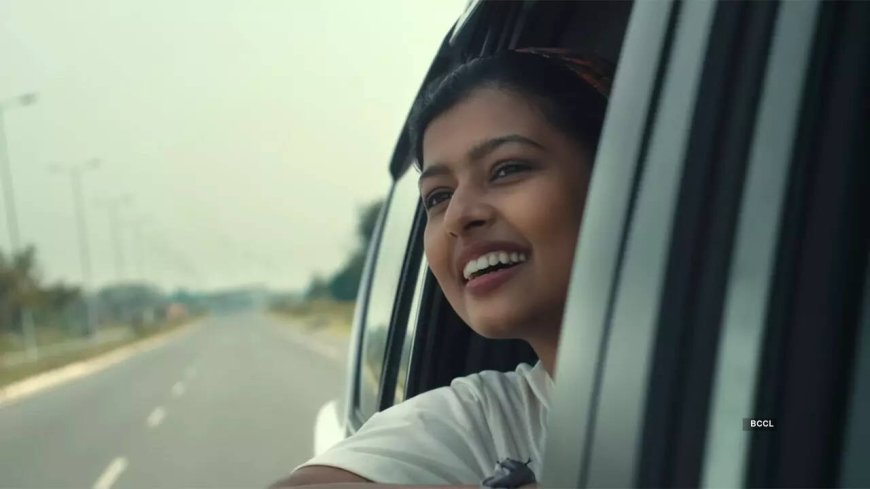
In between all of this there’s a subplot of a financial scam that doesn’t go anywhere and a land broker with a lower Assam accent. Meanwhile, a few of Dhiraj’s friends are eyeing for Mridul’s daughters—Priyanka (Priyanka Borthakur) and Priyakshi (Kabyashree Hazarika) and Dhiraj’s brother is stuck in love because his elder brother hasn’t married. Then there’s Rubul (Parag Baruah), a friend with a soft corner for Radhika and also Moonmi Phookan in a small role. Quite a lot, isn’t it? That’s the complex web that the film gets itself into to come out of which it struggles.
In the ending, many things don’t make sense apart from the fact that the writer-director got bored and rushed for a conclusion. But if the ending is kept aside, the film remains a fairly engaging entertainer with decent interest building and a soft pacing that doesn’t hurt the feel good and offbeat comic flavour of the film. On a broader scale, it also serves as a much needed break from the heavy political weight lifting dominating recent Assamese releases such as Agnibaan and Khaki.
In that regard, an important reason why BhakutKut works is due to the rural setting and characters. The humour also works for most part of the film because it is very natural to the context. Such relatability has the potential to make a viewer invested in the story as the characters came along with their own quirks to keep the audiences entertained.
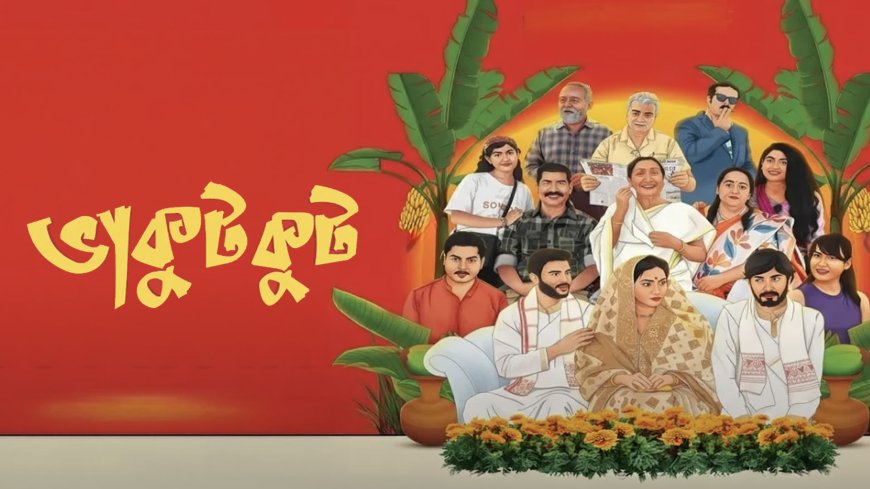
It is also rare to see such a large ensemble cast being successfully implemented in Assamese cinema, as Assamese films are usually known for their heightened minimalism. However, BhakutKut has managed to achieve this with some considerable success (at least till the ending). It is also among the latest films, like Casetu Nagen and Bhaimon Da, to feature such a large pool of characters. But balancing focus across so many roles comes with its own set of challenges.
In BhakutKut, one such shortcoming is the utilization, or more appropriately, non-utilization of senior actor Pranjal Saikia. He is completely wasted in the film. It’s not that he was not given enough scope to perform, but that his character failed to matter in the context of the story. He was just there in a story that didn’t care about him. Further, his role also escaped the interest of the makeup and costume department which is why Pranjal Saikia looks, sounds and feels similar in all of his recent films, be it Joubone Amoni Kore 2, BhakutKut or his upcoming Koka Deuta Nati aru Hati 2.
Moreover, some scenes in BhakutKut were completely unnecessary to the story, as they contributed to no significant purpose. In a scene, Indu senses that a cow is ill by smelling its dung. This scene did not matter in the larger narrative because it ultimately led to nothing, even though that conversation ends with Indu and his friend intending to visit the vet. If the purpose was to simply highlight Indu's knowledge about cows, then there were ways to integrate the same into the already existing scenes where cows were discussed.
Again, on a positive note, many scenes in the film came with some layered interactions which kept the humour on-going and the audience interest alive. For example, in particular situations throughout the film, a character is clearly shown to be lying to the other, but the fun fact is that the scene derives its humour not from the absurdity of the lie but from the manner in which the lie is performed. Actor Parag Baruah (as Rubul) deserves special appreciation in this regard.
Shot in the town and villages of Tezpur in Assam, the environment of the film is vibrant and the director utilizes a great variety of rural landscapes to his benefit. But the most recurring scenery in the film is the riverbank. If a character is sad - they are shown by the riverbank, if someone has left home - they reside there, if a marriage is to take place - it unfolds by the riverbank. In a moment of curiousness, I’d also like to imagine what the director would have done if Assam had no riverbanks.
When not indulging in such curiosities, I also wondered why Mridul Chutia’s character was an ex-serviceman and what difference would it have made if he had been a businessman instead? I couldn’t answer myself. But I liked the fact that his character was so ambiguously under written. It was so unclear whether he genuinely wanted to help his nephew or was simply after the land. This vagueness has however, unintentionally worked in the filmmaker’s favour. Apart from this, sometimes I also wondered where his wife and younger daughter were after they momentarily left the village in a fit of rage. Must be somewhere around since they again return for the marriage?
In a separate effort, the film also takes a leap to address mental health and the social stigma around it, even though it was supposed to be a film about human greed. Durgashri Borah comes in for a special role here and there was a charming potential of her love story with Indu. Alas, that was done away with hurriedly. And apart from that, the dialogues in the film are also witty and sharp, with some standing out as memorable one-liners, such as Indu Jabo Sapori, Dhirajor Lagibo Lottery.
Among the cast, the major highlight is Kaushik Nath. He relies on his slightly oddball, rumpled, everyman persona for Indu and it works best for the him and the film. Monuj Borkotoky appears good-hearted yet somewhat cynical, confident in himself but taken aback by the choice when Radhika decides to marry Indu. Radhika’s frustration can be felt through Darathie Bharadwaj’s eased out performance. She’s frustrated not at being poor, but at having to be subservient and helplessly relying on her parents. She now wants to take advantage of the opportunity that has arisen.
As for rest of the cast, nothing worth to be written in particular, except Priyanka Borthakur, who could have done more if given the scope. Bhargav K Borah too does well as a friend-turned-foe while Himangshu Prasad Das as Piku is villainized without any context.
In conclusion, BhakutKut tries to achieve a good balance between the fun and the examination of a negative human condition like greed and selfishness but it gets a little too carried away with the many characters it features. Nevertheless, its entertaining reflexes are strong enough to make for a decent watch. BhakutKut was released in around 52 cinema halls across the state and it is produced by Jayshree Bhuyan who also gets featured in the film in a major role.
*****
What's Your Reaction?