








































Review: Tumhari Baari, Jo! (2025)

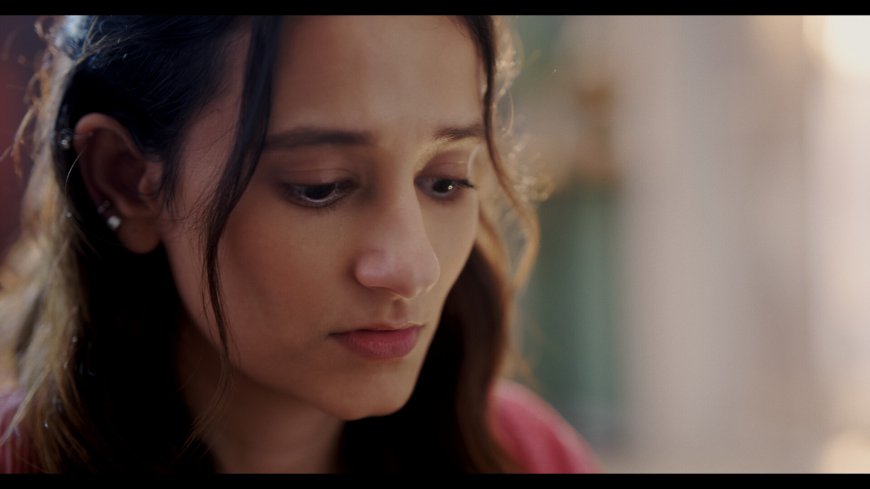
National Award-winning filmmaker Vinoo Choliparambil’s short film Tumhari Baari, Jo! is set entirely around a family Scrabble session, transforming an ordinary weekend domestic ritual into a quietly affecting exploration of identity, silence and emotional risk. The brilliance of the short lies in its refusal to manufacture melodrama. Instead, it understands how, within many Indian households, life-altering revelations often arrive not through grand confrontations but through pauses, evasions, jokes and the uneasy regularity of family conversation.
The protagonist’s decision to spell out a long-suppressed secret through the Scrabble board becomes more than an act of coming out. It is an attempt to insert her truth into a space governed by rules, tradition and familiar patterns of behaviour. What follows is revealing not because of overt hostility but because of the family’s differing responses. Her mother recoils from the word itself, her father instinctively neutralises discomfort through humour, while her brother alone recognises the emotional gravity beneath the move. The film perceptively captures how love and denial can often coexist within families, especially those negotiating generational and cultural expectations.
What makes the short particularly moving is its tonal restraint. There is humour, warmth and affection embedded within the interactions, preventing the narrative from slipping into didacticism. The family members are not reduced to ideological positions but remain recognisably human in their awkwardness, confusion and emotional limitations. In doing so, the film avoids the trap of treating queerness merely as a “social issue”; instead, it foregrounds the exhausting vulnerability involved in simply wanting to be seen and acknowledged. It is a family of five where even the household help participates in the game, proudly speaking about how she is gradually learning English words through Scrabble. This is a small yet telling gesture that subtly dissolves the hierarchies within the household and adds to the film’s warmth and inclusiveness. The confined setting also works beautifully as a metaphor. Thus, the Scrabble board becomes a battlefield of language itself—of what can be spoken, what is avoided, and what words are allowed legitimacy within a family structure. Every exchanged glance and unfinished sentence carries weight. The short understands that sometimes the most radical act is not rebellion, but articulation.
Performance-wise, Yashaswini Dayama beautifully captures the quiet anxiety and emotional vulnerability of a young woman grappling with the fear of revealing her truth, lending Jo both warmth and restraint. Geeta Agrawal Sharma, as the mother, plays her part with a believable mix of affection, discomfort, and conditioned hesitation, never reducing the character to a simplistic figure of opposition. And the rest of the supporting cast are not merely reduced to footnotes. They are given enough emotional presence to make the family dynamic feel lived-in and recognisable, contributing to the film’s warmth and understated texture.
Sayak Bhattacharya’s cinematography frames the domestic space with intimacy and unobtrusive sensitivity, allowing the emotional tensions to emerge organically within the confined setting. Editors Choliparambil and Suraaj Gunjal maintain a gentle rhythm that mirrors the film’s tonal subtlety, while Kalesh Lakshmanan’s sound design quietly complements the emotional undercurrents without overwhelming them.
Tender, observant and emotionally intelligent, Tumhari Baari, Jo is less concerned with dramatic resolution than with the fragile moment of disclosure itself. In that respect, it becomes not merely a coming-out story, but a sensitive portrait of how families listen, deflect, misunderstand and, perhaps slowly, begin to learn.
Tumhari Baari, Jo! will be screened at the recent edition of the New York Indian Film Festival, held from May 28 to 31, 2026.
What's Your Reaction?