















Review: Morfot (A Forgotten Tune)

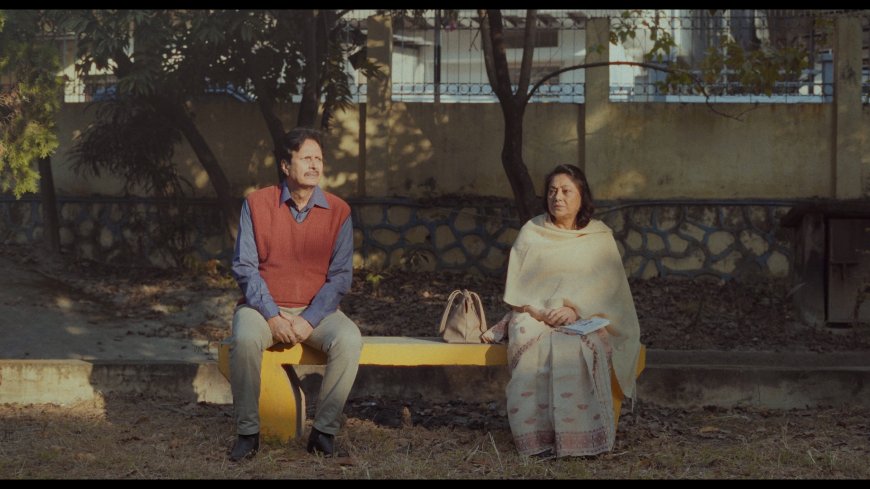
Arindam Barooah and Indranil Gyan's Morfot is a gently crafted short film on companionship, ageing, and the possibility of emotional renewal in the twilight years of life. Set within a handful of locations and driven by two finely observed performances, it finds quiet poignancy in the tentative bond between two elderly individuals seeking connection despite the social and familial constraints that surround them.
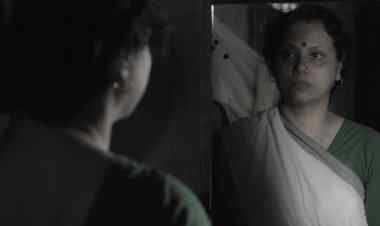
The film opens in a park where Anuja (Mridula Baruah) notices a flower that appears dried up yet somehow continues to cling to life. The image establishes one of the film's recurring motifs: resilience in the face of decline. Anuja lives in an old-age home, separated from her son and his family, while Pradip (Arun Nath) visits her regularly, bringing medicine and companionship. Their relationship unfolds through small gestures and conversations rather than dramatic declarations, allowing affection to emerge with remarkable naturalness.
One of the film's most effective scenes revolves around a sweater Anuja is knitting. Frustrated by a knot in the yarn, she considers abandoning the work and beginning again. Pradip reassures her that with patience and determination, any knot can be untied. The moment functions as a metaphor for their own situation. Both harbour a desire to spend their remaining years together, yet hesitate because of the possible disapproval of their children and the gossip of other residents in the old-age home. The tangled yarn becomes an emblem of the emotional and social complications that stand in their way.
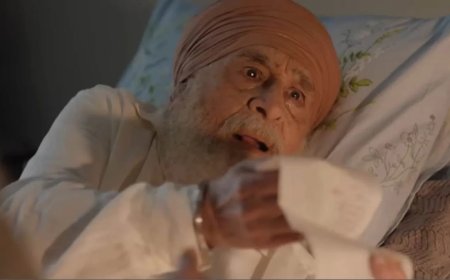
The screenplay further enriches their shared history through a touching revelation. Pradip has carefully preserved the letters Anuja wrote in her youth. Her surprise at discovering that he has kept them all these years speaks volumes about enduring affection and memory. Without resorting to sentimentality, Morfot suggests that some emotional bonds survive the passage of time, waiting for an opportunity to bloom again.
The motif of the flower returns towards the climax, when Anuja observes that the same flower is blossoming once more. Pradip's response—that it keeps dying and returning to life—encapsulates the film's worldview. Renewal is not a singular event but an ongoing process of loss and recovery. The film's open ending, in which Anuja resumes knitting the sweater, quietly implies a willingness to begin again, both in craft and in life.
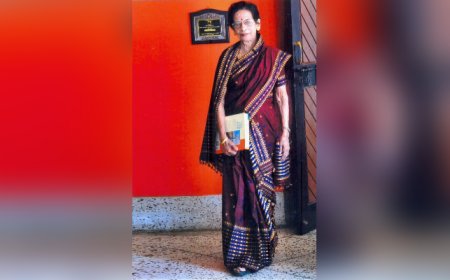
The appearance of a book by Assamese writer and poet Dr Meena Devi Baruah in the opening moments subtly reinforces the film's reflective tone. Like Baruah's writing, Morfot is attentive to memory, longing, and the emotional textures of everyday life. The film's minimalism proves to be one of its strengths. Restricting itself largely to two central characters and a few carefully chosen settings, it focuses on emotional detail rather than narrative complexity.
Arun Nath and Mridula Baruah deliver wonderfully restrained performances, conveying affection, hesitation, and vulnerability through the smallest shifts in expression and gesture. Their chemistry lends credibility to a relationship that might otherwise have seemed merely symbolic.
At a time when cinema often overlooks the emotional lives of the elderly, Morfot offers a compassionate portrait of two people seeking companionship in the face of loneliness. Its observations are modest, but they linger, much like the image of a flower that refuses to stop blooming despite repeated encounters with decay.
Morfot has been officially selected for the 19th Mumbai International Film Festival (MIFF) 2026 in the Short Fiction section (National Category). The film is scheduled to screen on 16 June.
What's Your Reaction?