

















Interview: Manoj Sharma


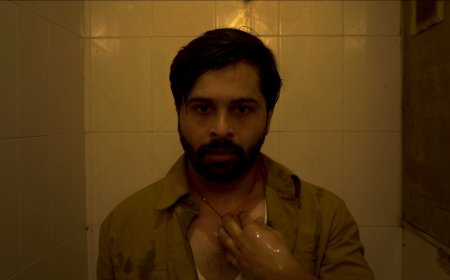
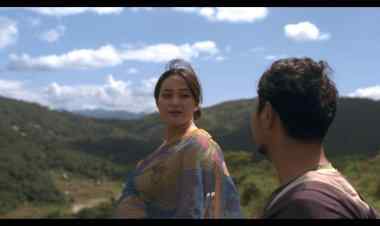
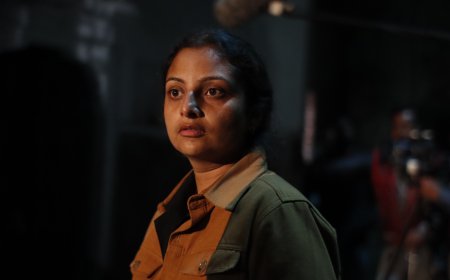
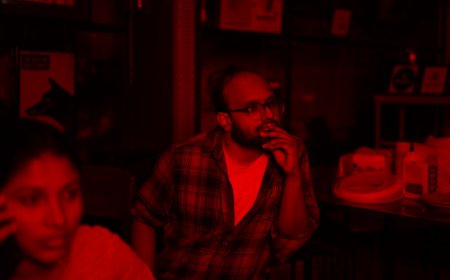
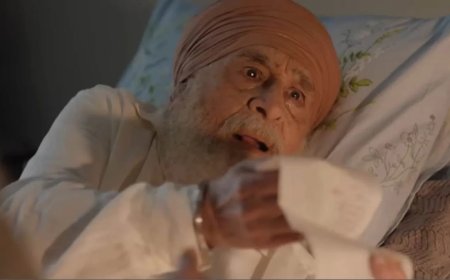
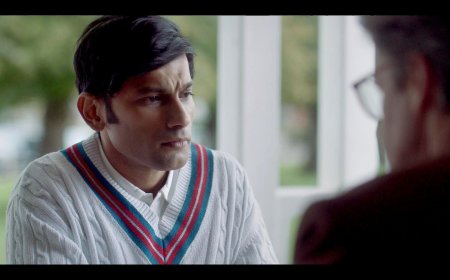
In Body (2024), director Abhijit Mazumdar examines the quiet devastation that follows a moment of reckless cruelty. Set in Mumbai and unfolding with an unflinching yet controlled gaze, the film traces the psychological unravelling of a young theatre actor abandoned by his drunken friends and left to navigate not just the city, but the ruins of his own sense of self.
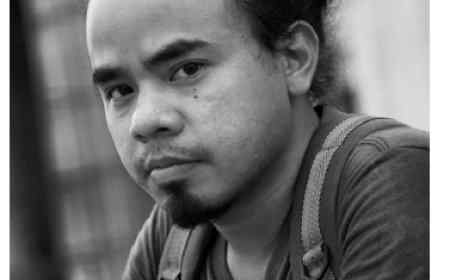
At the centre of this unsettling study is Manoj Sharma, who delivers a performance of striking restraint. As a man hollowed out by humiliation and trauma, Sharma underplays with remarkable discipline, allowing silence, stillness and fractured gestures to convey what dialogue never does. His portrayal resists sensationalism, instead charting a slow internal collapse marked by vulnerability, shame and a desperate search for human connection.
In this interview, Sharma discusses preparing for a role that demands sustained physical and emotional exposure. He reflects on approaching the character’s quiet breaking point after the retreat incident. He speaks about using the body, movement and stillness to express what remains unspoken. He also considers how he shaped the tender, restrained scenes with the young boy. Finally, he addresses the fine balance between emotional nakedness and dignity in moments of humiliation.
Dipankar Sarkar. Manoj goes through intense physical and emotional exposure over a long stretch of the film. How did you prepare yourself for a role that demands that kind of sustained vulnerability?
Manoj Sharma. The role demanded me to understand and experience trauma. Preparation started early on from the scripting stage. Abhijit da uniquely collaborated in the writing process. He met with me at a coffee house fortnightly, and then after chatting with me, he would send a scene the next day. Such proximity to scriptwriting meant I had the opportunity to create the character while the director was still developing it. It was like co-discovering the role. The early prep started with researching nudists, and I was intrigued by the ease with which they could let go of the garment in public. The next phase of research was about understanding the trauma response of people and understanding the dazed state. There are several images or references to a dream state in the film. I was intrigued by the REM sleep state and tried to simulate it during the day with open eyes. Mental health conditions such as PTSD and Schizophrenia became research topics too.
I stretched the boundaries of my mind step by step. First, I stripped inside an acting studio with other actors present. An acting studio is a rather comfortable space for me. When I was studying acting at FTII (Film and Television Institute of India), the acting studio had a sacrosanct image in my mind. To me, it was a place that permitted all kinds of acting explorations. What training has done for me is that I am able to channel that energy in any rehearsal space at will. The first time I stripped in the acting studio, it made me break down. I couldn’t stop thinking of people crossing body boundaries and committing heinous crimes such as rape. Then there were countless images of people dying from COVID.
There were powerful subtexts already present in the script that supported me. Khushboo, my co-star, helped me understand the subtext of scenes better. She helped me understand the gravity of scenes. Abhijit da helped me with a timeline of events that we never see in the film. That document was very useful in stitching events together in the mind. Some of these were very powerful visuals that became homework. Multiple scenes in the film had a possibility of using any of these dark, sad and extremely violent images. And to think of it, there is no dearth of such dark and violent images in society. I just made myself available and receptive to these news pieces, visual cues around us, the truth of the written scenes and gave utmost importance to the victim's psyche.
Dipankar Sarkar. After the retreat incident, something in Manoj seems to quietly break and never fully return. What did that turning point feel like for you while playing him?
Manoj Sharma. It was betrayal. How could Amol do that? What I say to the therapist—“Sharam mehsoos hui, darr laga… gussa bhi aaya…”—became a helpful performance cue for the scenes in which I walk naked through the village after the stripping incident.
The intensity of the friendship with Amol was very deep. In the forest climax, I say, “Mera sabse accha dost…” When a friendship is so deep, the hurt of betrayal becomes even deeper.
I myself have experienced those genuine moments of not remembering what I said after being completely sloshed. So in the lake sequence, when Amol says that I was poking him the previous night, his words make no sense to me. All my character can feel is the hurt of Amol’s actions.
Dipankar Sarkar. So much of Manoj’s inner world is communicated without dialogue. How did you rely on the body, movement, and stillness to express what he couldn’t say out loud?
Manoj Sharma. Khushboo, my co-actor in the film, made me aware that one of the main flaws of the character is his inability to express himself. In fact, this remains a flaw for most of the characters in the film.
Our acting workshops were conducted by actor-director Pushpendra Singh, who had also been our acting faculty at FTII. I was familiar with his working process and surrendered to it completely. During the workshop, I experienced a breakthrough in discovering the character’s breathing pattern to reach the dazed state. Interestingly, cinematographer Vikas Urs also worked extensively with breath while filming the scenes. In one of our post-screening discussions, he told me that he connected with the breathwork I was using and incorporated it into his framing.
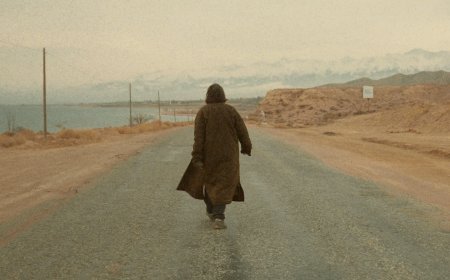
To prepare, I began taking long solo walks and going for extended swims. These helped bring my body into the habit of being with itself with a feeling of solitude. The character undertakes a long walk of shame, and I wanted to get that right. In my mind, it was also a walk of evolution for him. Pushpendra sir recommended that I revisit the films of Robert Bresson. I admire how, in Pickpocket, the dialogue is minimal, yet so much is communicated. If the script is strong, silence becomes powerful, as it allows the film and the character to take shape in the viewer’s mind. Since I believed in the script, I had to embrace the idea that “less is more,” and that sometimes simply existing truthfully within the frame is enough.
Dipankar Sarkar. The scenes with the young boy are very gentle and restrained. What helped you keep those moments simple and emotionally honest without pushing them too far?
Manoj Sharma. I am also a child educator. I teach drama at an IB school in Mumbai. After FTII, I spent a year with NSD’s Children’s Repertory Company. There, I found an amazing mentor in Abdul Latif Khatana and some of the best colleagues to work with and learn from. That year allowed me to delve deeper into child psychology and to become comfortable in children’s presence, and vice versa. That experience helped immensely.
The scenes with the child were technically complex, as most of the time the child was not physically present. Abhijit da reverse-engineered the sequences by first shooting the child’s reactions. After reviewing the footage, I performed in front of a plate onto which the child’s footage was later patched.
Those are the technical aspects of the scenes. Emotionally, the child reminded me of the harsh childhood my character had, particularly in relation to his father. This motivated me to be extremely tender towards the child, which, in some ways, became a form of healing for my own childhood as well.
Dipankar Sarkar. Lastly, Manoj faces repeated moments of humiliation, yet the performance never feels exploitative. How did you find that balance between emotional exposure and dignity?
Manoj Sharma. It’s the character’s hurt that keeps him resilient. He has his own sense of right and wrong in place. According to him, what happened to his parents was destiny, what Amol did to him was betrayal, what happened on the road when he was being beaten was coming from a place of agency where he wanted to rise against the brutal attacks, and what happened in the nightmare with that man spitting on his face was disgusting and confusing. In all these episodes, we see the character to have different reasons (Or at least I had those in my mind). Maybe it worked because I kept the motivation of each scene in mind. Or maybe I was following directions as expected, or maybe it was because of the writing. I am not one hundred per cent sure why you felt so. But I am glad you did.
At the 22nd Third Eye Asian Film Festival, in the Indian Cinema Competition section, Manoj Sharma was awarded Best Actor (Male) for his performance in Body.
The film will next be screened at the Wench Film Festival on 28 February at 1:00 pm at Alliance Française de Bombay.
What's Your Reaction?