























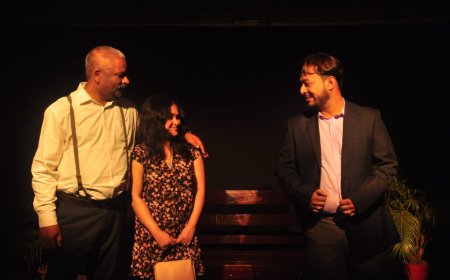

Gestures, colour, women and violence: An essay on 7 Khoon Maaf
Srijani Dutta from West Bengal writes critically on 7 Khoon Maaf


Abstract :
This essay attempts to depict the representation of woman in the popular culture/ media. Film is one of the primordial examples of popular culture/ media that envisions the position of women and their sufferings at the hands of patriarchy since the beginning of the inception of the film. Mass and media attract the audience and try to formulate the perception about the various issues of the society. 7 Khoon Maaf is a critically acclaimed film that reveals the monstrosity of patriarchy and the arousal of the female power. In this film, love is a trope that centres on the very idea of marriage and identity. In this movie, all of her husbands meet the unfortunate death and she is supposed to be the culprit. But, her uprising from the distressed condition by finding herself acts as a rebellious voice and asserts itself to be a way out justifying all her misdeeds. In this regard, I will read the depiction of colours and gestures and their relation with violence and abjection.
Keywords:
Violence, abjection, women, colour, gestures, film
Body of discussion:
Popular media is the culture that demystifies the narratives and storytelling of high art and culture by representing the socio- cultural- political issues of the society. Film, a popular mode of culture and entertainment depicts the gender construction, objectification of women, supression of women and other related problems. Film tends to reache the mass audience for its form and content. Vishal Bhardwaj, one of the critically acclaimed filmmakers of Bollywood uses his unique style such as interplay of light and shade, music, symbolic colours, bright costumes, method acting, flashbacks, non-linear narration for the representation of domestic violence and ill marriage in 7 Khoon Maaf. Through the minute characterization and intricate narration, he depicts human obsession, psychosis, mental disorder like deep rooted fear, hyper masculinity etc. The colour-scape, gestures, costumes are the design of the films. Therefore, this essay will try to shed light on the representation of abjection, violence through colours and gestures in his movie.
According to Kristeva, abjection is a feeling, a subjective experience. We react to war, famine, fire, violence, death, gross images that make us feel nauseated- “…what is abject, on the contrary, the jettisoned object, is radically excluded and draws me toward the place_ where meaning collapses” (Kristeva 2) Bodies are prone to violence, exploitation and are the puppets at the hands of fragile ego and masculinity. Film, theatre, paintings, graphic/illustrated books are the powerful visual mediums. Colours evoke out the mood of the story. The gestures tell the theme of the works/ stories. In this case, I have chosen the movie of Vishal Bharadwaj in order to read his art of storytelling of abjection, violence through colours and gesture.
Genre refers to the nature of the artworks. Drama has melody, suspense, performance, spectacle, stock and round characters to unveil their true intension. Bharadwaj has created his theatrical/ film language by experimenting with the words like “colour,” “gesture.” His use of strong gestures and expressionist colours acts as a method to shock the audiences. This essay attempts to answer these questions:
1. In what way does Bhardwaj depict violence, abjection in his film?
2. How does he use colours in his films? What is the relation between colour and violence?
3. Body is the metaphoric space for struggles and contestation for power. The characters are emotionally loaded. In what way do these characters act/behave/do gestures? How do their behaviours react to situations, create the sense of abjection in the film?
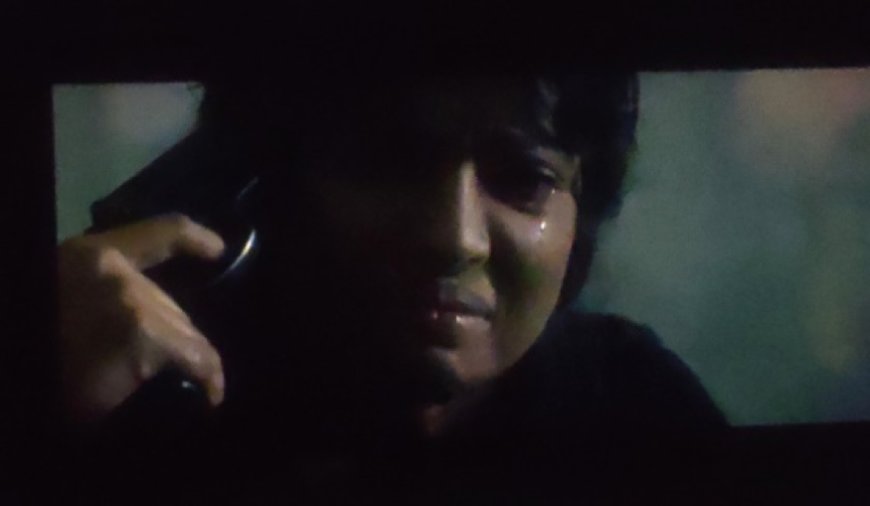
Methodology refers to the methods through which the problems can be addressed in the research. Vishal Bhardwaj’s destructive characters reflect their behaviours. According to Kristeva, abject is the dead body, death, wastages, blood, the feelings/ sensation. Abjection happens when there is no binary between subject and object. The primary intention of the abject is to arouse the feeling of terror and uncanny. The visual aesthetics of the horrible abject create psychological sensation of terror. Some scenes of Bharadwaj’s movies create the feeling of nausea/ abjection. He generally makes drama-based movies. His movies are full of contrasting images and replete with conspiracy, murder, revenge and mental turbulence. Hence, I have done a qualitative textual study of the primary film text such as 7 Khoon Maaf by reading abjection, violence against woman through colour, and gesture. I have also used the theoretical lens of Julia Kristeva’s abjection- “…but what disturbs identity, system, order…” (Kristeva 4) In 7 Khoon Maaf, Priyanka Chopra has played the female lead role. She has been depicted as an assertive woman who has been subjugated, exploited at the hands of the representatives of patriarchy. She is a woman who looks for love but in the process, she has lost her identities for multiple times. The journey of seeking for love does not prove to be smooth and easy. This process has caused destruction, violence onto her body and mind, emotional torture and the loss of the lovers/husbands. These husbands do not stand for loyalty, respect, understandings and love. They are the mouthpieces of patriarchy and the toxicity of masculinity. Through these characterizations, Bharadwaj has disclosed marital problems, marital rape, divorce, failed marriages, female sexuality, identity crisis and mental disorder. Unfortunately, all of her husbands die mysteriously and the reason is unknown. It creates the irony, climaxes and uncertainties and abjection in the atmosphere. Marriage is supposed to be peaceful and warm. Here, the readers can find the violent, abusive picture of marital states which are devoid of love and romance. Chaos dominates their mind. By doing so, Bharadwaj has mildly satirized marriage as a socio-economic construct and agreement. Later, the female protagonist has turned into a nun as if she is searching for this true self and identity. Nun symbolizes peace, warmth, innocence and chastity. Bharadwaj also attacks on the idealistic view on love, romance and marriage. She becomes the representative of all married woman who face extreme amount of anger and violence of masculinity and patriarchy. Starting from the Army major to the doctor, they all are the symbols of deadly sins. The ritualistic colourful dance song “Darling” creates an energetic spectacle in the movie. The warm, primary colours such as red, orange, yellow colours show the emotion, melancholia and mystery. The movie opens with the sound of raining and the camera’s focus on her face. She is depicted as miserable, sad and hopeless. She is holding a gun to shoot herself. This gesture unearths the latent violence, pain and her suffering. Black symbolizes melancholia, mourning, sin, guilt and death. Her gestures and the black colour depict her mental turbulence.
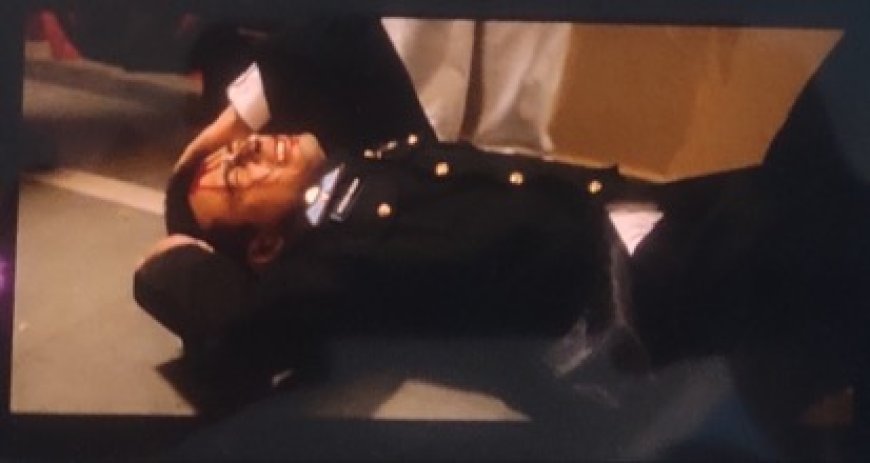
Red symbolizes love and jealousy. In this film, red symbolizes fiery passion and disgust. There is a depiction of a hall room where masochist Rodriques hits a man. It shows that men are also exploited at the hands of toxic masculinity.
There is another scene of battle field where Goonga and Mr. Rodriques are fighting revealing masculine power and violence onto body. In this scene, yellow symbolizes the masculine strength.
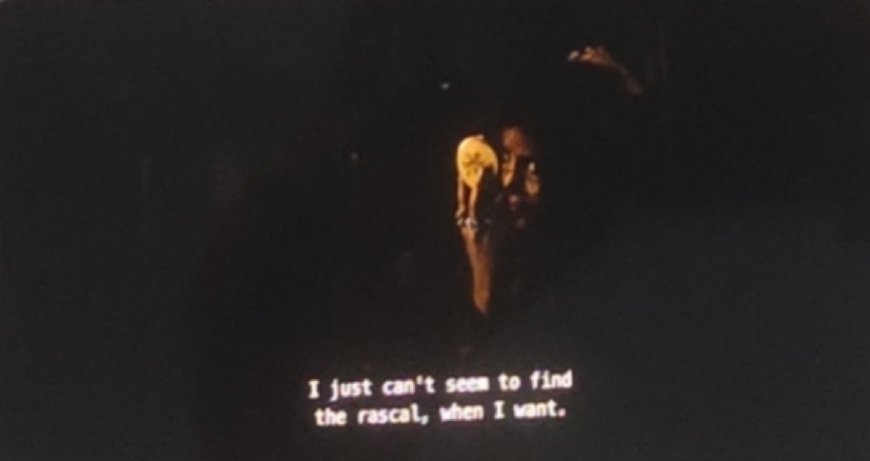
The yellow colour against the black backdrop depicts intense pain and mental psychosis.
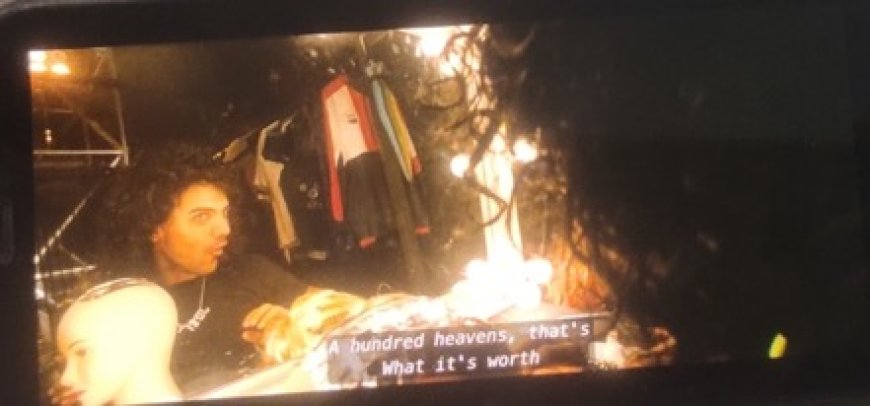
The entire background is black. Here black represents darkness of human mind whereas the focus is on her face. Yellow shows her psychological breakdown as well as abjection.
7 Khoon Maaf represents the other stories of female identities and agency. It is the perspective of a male director on the very idea of woman. Her central position in the film marks her aura as rebellious and independent. From the surveillance and dependence under the paws of patriarchy, she breaks out and finds her true self. She becomes a new ‘woman’ and thus, her journey justices all her murderous instincts and activities/ gestures. The binary between the subject and object has been erased many times and this erasure evokes out the sense of abjection in the readers’ mind. Apart from 7 Khoon Maaf, the another movie Bulbul by Anvita Dutt depicts the torture on women through witchcraft and the prevalence of child marriage in some parts of India. These issues have been portrayed through metaphorical dialogues, bright colours, terrified gestures etc. Her bulbul aura is marked by red colour. It is the story as well as the perspective of a female director on becoming a woman.
Conclusion :
Indian cinema along with its glamour and technicalities narrates the story of partition, city and small places in post-Independence era, disability, myths and lost histories and consequently becomes one of the weapons to shape the perception of the audience. Rasa theory, analysis of adaptation, position of women, importance of dance, aesthetic and auteurship of Bhardwaj, Lady Macbeth’s ambition, role of weird sisters, Bhardwaj’s inclination towards mafia or gangster world, relation between Bollywood and noir films –all these topics have been critically read. But, reading the storytelling of abjection, violence through colours and gestures has not been examined and reviewed. Literature/research gap points at the gaps in the theoretical understandings/academic study of any particular area, topic, and a researcher generally tries to fill up the gap by doing extensive literature and adding new lens to it. Thus, this essay will try to add a new insight to this domain.
Bibliography:
Primary sources:
Bhardwaj, Vishal. 7 Khoon Maaf. 2011
Secondary sources:
Arnheim, Rudolf. “The Expression and Composition of color.” The Journal of Aesthetics and Art Criticism. Vol. 56. No. 4. 1998
Bollywood Shakespeares. Edited by Craige Dionne. Paramita Kapadia. Palgrave Macmillan. 2014.
Eisenstein, Sergei. The Film sense. Edited by Jay Leyda. Meridian Books. 1957
Guptan, Anvita, D. Bulbbul. 2020
Kristeva, Julia. Powers of Horrors: An Essay on Abjection. Columbia University Press.1982
What's Your Reaction?