





























Interview: Suruchi Sharma

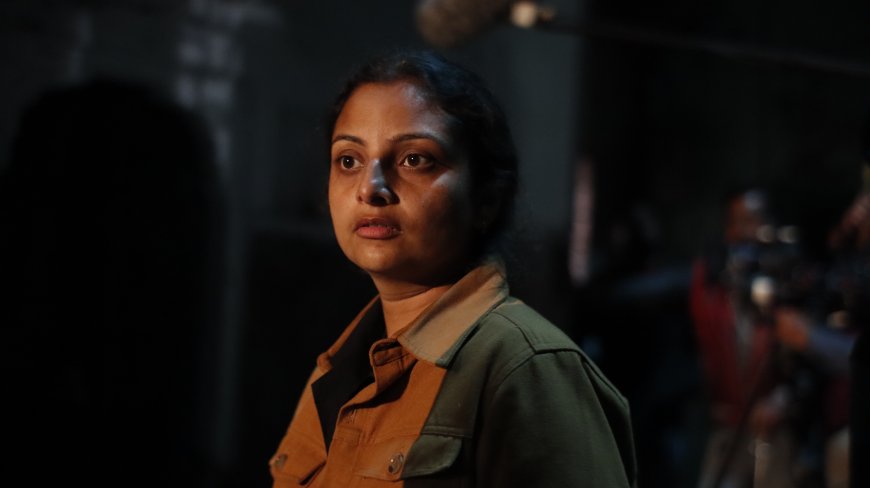
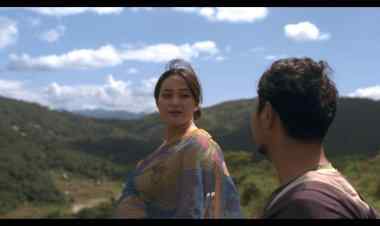
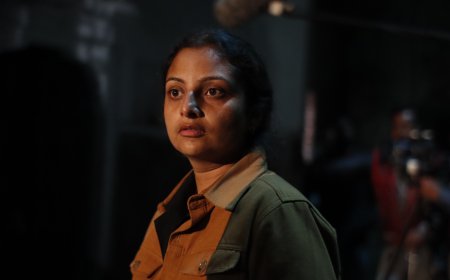
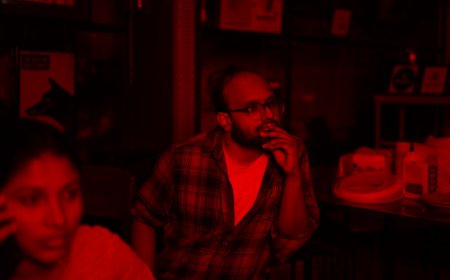
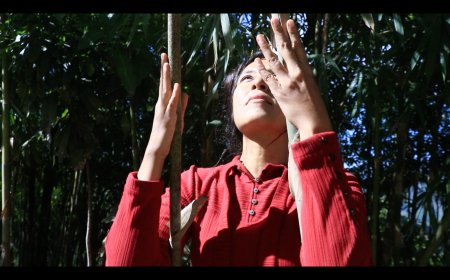
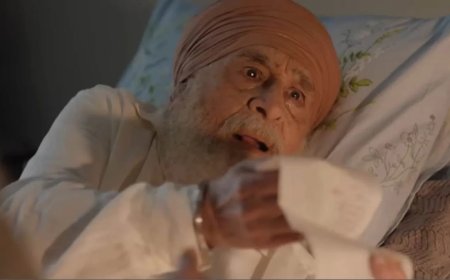
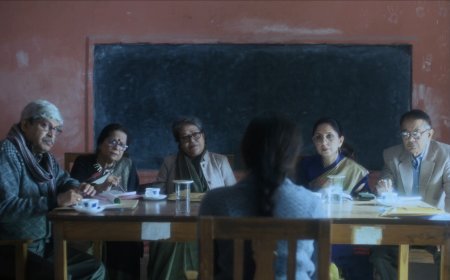
Gagan Gaman, the latest short film from National Award-winning Jaipur-based filmmaker Suruchi Sharma, unfolds as a quietly compelling modern folktale. Rooted in the musical and mythic traditions of Rajasthan, the film traces the journey of a woman navigating doubt, silence, and endurance. It is a work that balances intimacy with broader cultural resonance, drawing on both the textures of folk life and the sensibilities of contemporary cinema. In its imagery, sound, and pacing, the film offers not merely a story, but an experience—one that lingers in the viewer’s mind long after the credits roll.
In this interview, she reflects on the film’s origins, her engagement with myth and sound, and the practical realities of sustaining independent filmmaking today.
Dipankar Sarkar. Gagan Gaman unfolds with the logic of a folktale, yet appears guided more by instinct than by a conventional script. When a film relies so strongly on intuition and visual progression, what forms of discipline or restraint are necessary to prevent it from slipping into indulgence?
Suruchi Sharma. Yes, it's a very delicate situation to go entirely with the voice of one’s subconscious. I think one can not ever be too sure; this has to be tried out to see how such an experiment works at the end of it. With Gagan Gaman, I knew I was moving into a new form, but this form I realised also comes more naturally to me. I tried for a long time to fit my ideas into the conventional formats, but it always made me feel unsure or dissatisfied with the material. With Gagan Gaman, I aligned more with myself both as a filmmaker and a person. It's been an exercise in finding courage and freedom. I’d say two things helped me hold the narrative: one was my practice as a filmmaker before this one. I have made four independent documentaries, two fiction films, some music videos and a seven-episode docu series as a director before diving into an experiment such as this. Secondly, support from my team, Ashok Meena, my cinematographer Ajit Singh Rathore, my sound designer and Vibhav Nigam, my editor, helped me mount the ideas as imagined. For Gagan Gaman, I was a more stubborn director and chased the idea to its last breath and with a good team, I could translate the ideas well. As for being indulgent, who’s the judge? One only finds out in retrospect.
Dipankar Sarkar. Myths in Gagan Gaman are treated less as beliefs to be affirmed or rejected, and more as ideas that ask for a deeper involvement from the viewers. How did you approach folklore cinematically, as something to be inhabited and experienced, rather than reduced to symbolism or surface texture?
Suruchi Sharma. Gagan Gaman, as a fil,m is the pure voice of my subconscious. There’s been very little strategic thinking in making this film. I had a certain enthusiasm for sharing my internal world with the world outside. And so I did not choose elements of folk narrative or any other as a means to something. Mythology has been part of my myriad lived experiences, and I hold many myths and mysteries subconsciously. Over time, I have engaged with these myths to arrive at my own understanding of these stories. I am probably still in the process of understanding these ideas. I dislike making films as a means to something, and I dislike templates. When you let the idea guide you, this is what comes out.
Dipankar Sarkar.. Jaipur functions in the film less as a backdrop than as a quiet, shaping presence. What does working from within a city you’re familiar with allow you to observe or articulate that might be lost to a more transient or externally imposed gaze?
Suruchi Sharma. It's not so much about being an insider or an outsider but more about which part of an ecosystem you are present in and how deeply you can observe something. Even as an outsider, if you meditate deeply on an idea, a place, a person, maybe you unlock something unique and beautiful. Even as I have been living in Jaipur all these years, a part of me still feels like an outsider or a misfit in the city. It's been a long process of making space for myself over time in a strongly patriarchal and restrictive environment that this city has given me. It has also given me a rich access to heritage, beauty and culture. And so I love this city and yet have a critical gaze for it. Probably with this film, I am inviting the audience to meditate deeply on this city. Beauty is the external facade. Every person and a place holds so much more inside of them. Gagan Gaman is an invitation to a tour within.
Dipankar Sarkar.. Across the film, the protagonist appears as a seeker, moving through doubt, silence, and endurance. Did you approach portraying this journey to convey any moral lesson or insight?
Suruchi Sharma. Well yes! I’d hate to spell it out, but the riddle is asking the viewers to introspect and engage. The riddle will lead you through a door to unwinding your authentic self.
Dipankar Sarkar.. Gagan Gaman is as attentive to sound as it is to image. What role did the aural space play in shaping the film’s emotional and mythic register?
Ans. The film would be incomplete without its aural landscape. It is an essential part of world-building. I am very happy to have worked with Ajit Singh Rathore, who aligned with the film from the very beginning. I am glad he would accept my ideas and support them with ease. Sometimes, the sound pushes the experience to the extreme. While some ideas were there from the beginning, some things were discovered at a later stage. I really enjoyed this process of layering the film with sound.
Dipankar Sarkar. Independent shorts and documentaries often circulate precariously, despite moments of international recognition. How do you view the sustainability and future of the short film form in India, and how are you navigating these uncertainties as an independent filmmaker?
Suruchi Sharma. My practice all these years has been to create an independent artistic ecosystem of my own. My work has been minimally dependent on the mainstream industry or its distribution network so far. I also was more focused on creating the work rather than building an audience all these years. While there is an urgency in distribution, I did not go the conventional route and also took a very long time to fully understand the ecosystem. I am glad to have found my own path into distribution. For example, an exhibition of my decade-long journey recently put all my works in a room as an interactive showcase. This was a very fruitful exercise in discovering my audience and connecting with them more intimately. I hope that it travels to more places, and I would urge more galleries and patrons to support me in taking the work to the audience. As an individual with very small resources, it's almost impossible to take care of creation and distribution of multiple projects and ideas all at the same time. I urge support because I believe even the audience is seeking spaces for quiet meditation in the ecosystem of noise. I am sure people across cities would love to see work made with purpose and authenticity. Not just myself, but any artist who works with honesty must be supported by their community. Patrons must come forward on their own accord to propose support instead of making artists pitch all the time. I dream of building and sustaining islands of hope in spite of and against the mainstream ecosystem. I believe in magic, and I know more doors, more collaboration will open up through collective effort.
As for Gagan Gaman, I am glad that Platoon One Distribution has come on board to help me distribute the film. The film first be released on BMS Stream and pretty soon on Apple TV, Google Play/Youtube Movies. For anyone wanting a better artistic ecosystem in the country, this is their time to contribute to an independent short film’s first steps towards finding its audience. I can only be hopeful that it will all go well in the end.
What's Your Reaction?