







Main Vaapas Aaunga and the Burden of Partition Memory

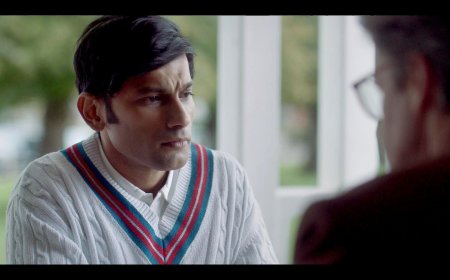
One of the most moving moments in Imtiaz Ali's Main Vaapas Aaunga arrives long before its emotional climax. In the aftermath of Partition, the young Ishar Singh Grewal, affectionately called Keenu (Vedang Raina), after learning about the brutal massacre of the women in his family, tells his younger brother that they must leave the past behind and move on. It is a promise born not of forgetfulness but of survival. Yet the film quietly reminds us that history does not disappear simply because we wish it away.
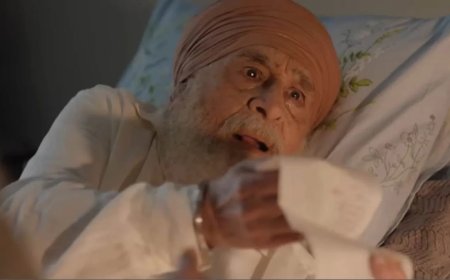
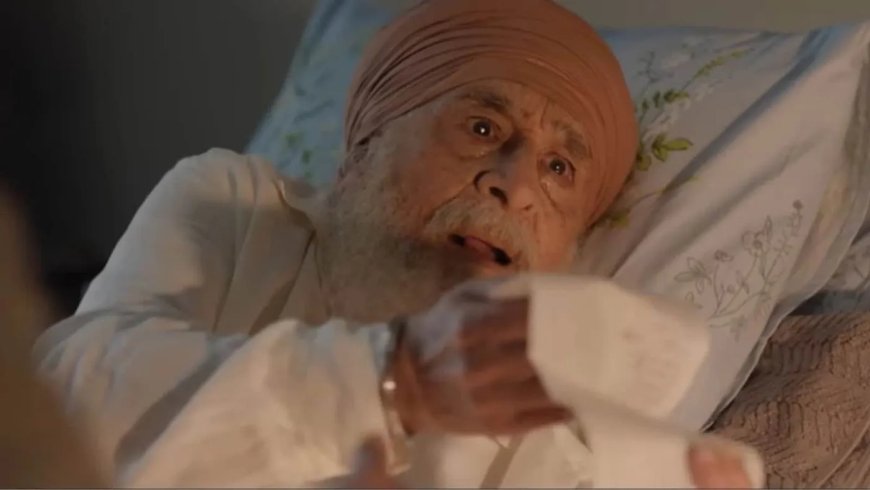
Decades later, Ishar (Naseeruddin Shah), now in his nineties, is a widower living with amnesia. Ironically, while his present slips away, fragments of his youth in undivided Punjab return with startling clarity. Among them is the memory of Jiya (Sharvari Wagh), the Muslim woman he loved before history tore them apart. The contrast is poignant: the man who once vowed to move beyond the past finds himself unable to escape it. The narrative understands that forgetting trauma is rarely a matter of choice. The challenge is not whether we remember, but how we remember.
That distinction shapes the film's emotional and political vision. Memory, Ali suggests, should deepen our capacity for empathy rather than fuel resentment. It should encourage reflection, not retaliation. At a time when popular culture often revisits Partition to reinforce contemporary religious anxieties, Main Vaapas Aaunga chooses a more humane path.
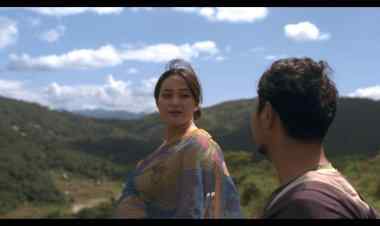
The search for Jiya becomes the film's narrative engine, but it also bridges generations. As Nirvair (Diljit Dosanjh) helps his grandfather Ishar in search of a love lost to history, he is forced to confront the uncertainties of his own relationship with Kaveri (Banita Sandhu), his London-based girlfriend. Unlike Ishar, whose love was destroyed by forces beyond his control, Nirvair hesitates despite having every freedom to commit. The contrast is quietly revealing. Through two romances separated by a generational gap, the screenplay by Ali and Nayanika Mahtani reflects on how the meaning of love, commitment and belonging changes across generations, while reminding us that emotional courage remains timeless.
A small but telling detail encapsulates this continuity. As a young man, Ishar etched the words "Malikka Dilfareb"—which translates roughly as "my heart's enchantress"—onto his wrist, a permanent inscription of love that survives even as memory begins to fade. It is a reminder that some emotions endure beyond history's violence, beyond political borders, and even beyond the frailties of old age.
The film does not flinch from depicting the horrors of Partition. One of its most devastating passages shows Muslim mobs attacking Ishar's family in an act of retaliatory violence, yet Ali resists the temptation to reduce an entire community to villains. This moral restraint becomes evident when Nirvair asks Ishar's brother Kitpal (Vinod Nagpal) about those events. Kitpal refuses to indulge in sweeping condemnation. Instead, he reminds Nirvair that he cannot fully understand what happened because he was never there, while making it equally clear that he has no desire to relive those horrors by turning memory into hatred.
That refusal is perhaps the film's most radical gesture. Rather than directing audiences towards an enemy, Main Vaapas Aaunga encourages them to reflect on the kind of people they wish to become. It acknowledges unimaginable suffering without allowing that suffering to become a licence for permanent hostility. In doing so, it offers an alternative to the increasingly familiar grammar of historical cinema, where collective trauma is often mobilised to justify contemporary divisions.
The "return" promised by the title is therefore not a return to an idealised past or a lost homeland. It is a return to an ethical imagination in which memory becomes a source of understanding rather than vengeance. In an age shaped by polarisation and outrage, that may be Imtiaz Ali's most courageous act.
What's Your Reaction?