









Review: My Gender Is Black (2026)

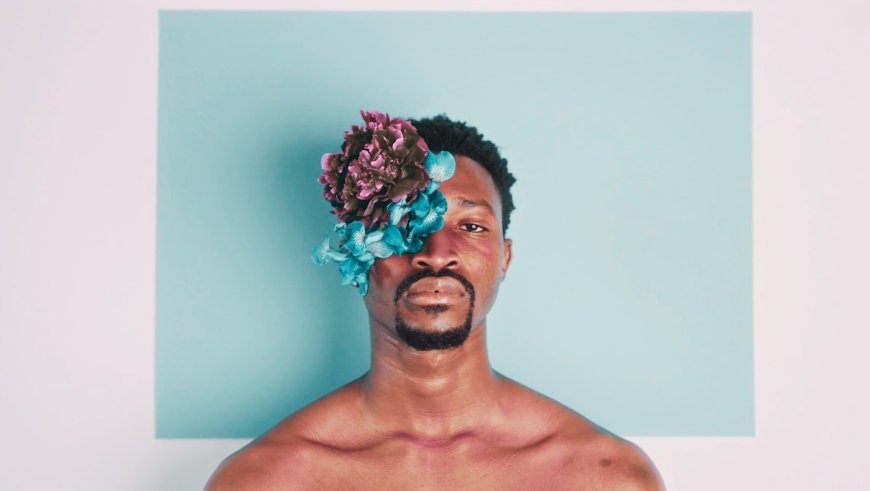
In My Gender Is Black, a twenty-minute documentary, Terry Blade examines Black masculinity as something more complicated than an identity one inherits, or an ideal one strives to fulfil. It is also a performance, shaped by the demands of family, community, sexuality, race and the gaze of strangers.
The documentary’s subjects speak of the rules governing how they should dress, move, love and express emotion, and of the penalties for failing to observe them. Rather than offer a definitive account of Black masculinity, Blade makes room for its contradictions. Its visual approach reinforces this openness, bringing interviews into conversation with portraiture, archival footage, typography, music and movement.
These formal choices provide a framework for the personal accounts that follow. Christian Chigbolu, a transgender boy, recalls knowing he was a boy at the age of five, before he had the language to explain what he knew. “I genuinely believed I was a boy,” he says. Chigbolu does not describe his childhood as a process of discovering a hidden identity but as the bewilderment of having others insist on an identity that did not feel like his own. His discomfort began when the world imposed its expectations of femininity upon him. Gender becomes oppressive not simply through the categories available to us but through the authority with which others enforce them.
The documentary moves from this intimate account of childhood to the demands placed on grown men. Ujah Ogbole describes a masculinity tested long before a boy reaches adulthood. Crying, he observes, can be enough to call a boy’s manhood into question. Men denied the opportunity to articulate their feelings may grow into adults who struggle to communicate them. Ogbole, however, refuses to equate vulnerability with weakness. He speaks of his creative power and his willingness to express emotion, suggesting that someone unable to accommodate his vulnerability is not someone to whom he needs to expose it. Strength, in his account, becomes inseparable from the freedom to feel.
Elsewhere, Blade examines the exclusions that persist within queer communities. In an excerpt from The Jay Hill Podcast, Big Sexy describes the phrase “no fats, no femmes,” a shorthand for the rejection of fat and feminine men in certain gay social spaces. His testimony complicates any easy distinction between the oppressive expectations of the wider world and the freedoms supposedly available beyond them. Skin tone, body size and gender presentation can become measures of desirability within communities whose members know what it means to be judged elsewhere. Even among those with whom solidarity might be expected, acceptance remains conditional.
Syd Tillman identifies another form of marginalisation. Gay men, she argues, have been made cute, and considered as convenient companions for shopping and gossip, their masculinity reduced to a reassuring stereotype. Her objection is not to affection but to the way apparent acceptance can preserve a hierarchy. A gay man may be welcomed so long as his difference remains entertaining and palatable. Blade recognises the distance between being included and being understood.
In its treatment, My Gender Is Black draws on a music-video aesthetic interspersed with interviews, lending the images physical immediacy without reducing the testimonies to spectacle. Through juxtaposition and interruption, Blade’s editing creates meaning, while the interplay of sound and image extends the documentary’s argument beyond words. The body becomes more than a subject of discussion; it is a site where social expectations are imposed, performed and contested.
Archival footage from a 1960 Canadian television interview, in which broadcaster Nathan Cohen speaks with James Baldwin, adds historical resonance. Baldwin’s reflections on the gap between a person’s identity and the image others impose upon him sharpen the documentary’s concern with representation. To be seen is not necessarily to be known. Visibility can also mean being reduced to what another person fears, desires or finds acceptable. Self-definition becomes an assertion of the right to exist beyond those projections.
The documentary returns at the end to Chigbolu, who recalls getting frequent haircuts as a teenager because they made him feel more masculine, particularly when he was not taking testosterone. Now further along in his transition, he feels less compelled to work at appearing masculine. The change is understated but consequential. What once required deliberate effort has become more comfortable, less dependent on external confirmation.
Blade allows these experiences to remain distinct while revealing the pressures they share. My Gender Is Black suggests that freedom begins when selfhood no longer has to answer to every expectation imposed upon it. For a documentary concerned with the scrutiny of Black bodies, the possibility of liberation lies not simply in becoming visible, but in determining the terms on which one is seen.
What's Your Reaction?