




























Interview: Tribeny Rai


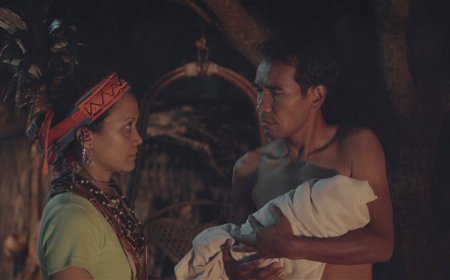
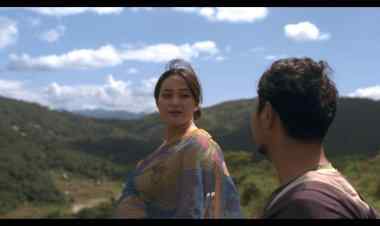
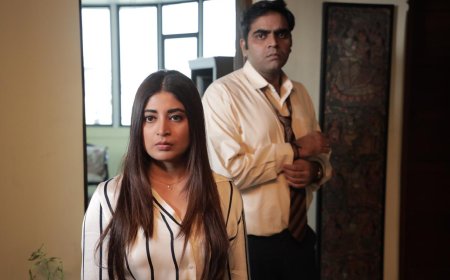
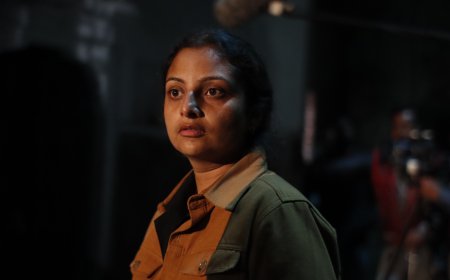
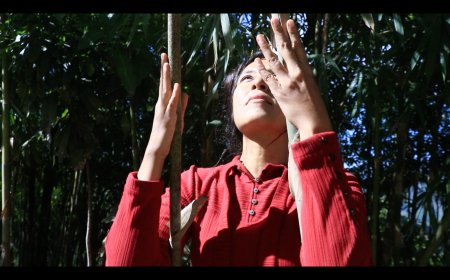
Following its world premiere at the 30th Busan International Film Festival in 2025, Tribeny Rai’s Shape of Momo—winner of the Songwon Vision Award and the Taipei Film Commission Award—has travelled to several film festivals in India and abroad. The film follows Bishnu (Gaumaya Gurung), a young woman who leaves her job in Delhi and returns to her mountain village in Sikkim. Once home, she finds herself confronting the trials and tribulations of a society deeply rooted in tradition, where she must navigate entrenched patriarchal norms while balancing family expectations, social pressure, and her own evolving sense of identity.
In this interview, she speaks about her process of securing funding, the onboarding of collaborators for the theatrical release, and her experiences as a debutant filmmaker.
Dipankar Sarkar. Film school students often struggle to make their debut feature. Your film has travelled across international festivals, earned significant laurels, and is now releasing in India and Nepal. How would you sum up this journey?
Tribeny Rai. This has been a journey of sheer perseverance. Working on a personal story and finding resonance amongst audiences all over the world has been deeply rewarding. Every stage of making a film feels like a challenge when you function from an independent standpoint. You don't even know whether or not your film will see the light of day. But I am grateful for every bit of the experience leading up to this moment of release. For a filmmaker from Sikkim, it almost feels like a dream.
Dipankar Sarkar. Shape of Momo was part of the NFDC Film Bazaar and was also selected for the Work-in-Progress Lab at the Hong Kong–Asia Film Financing Forum (HAF).
Tribeny Rai. There are so many films made in India annually that it is very easy to get lost. I believe platforms like NFDC, Filmbazaar and HAF inform aspiring filmmakers about the journey and prepare them to meet opportunities that may come their way. For our film, it helped programmers from different film festivals to discover our work at a very early stage, and they stayed with us through the process. I think they are great platforms for filmmakers to learn about the industry, and for the industry to learn about their projects.
Dipankar Sarkar. How did Rana Daggubati’s Spirit Media come on board to support Shape of Momo’s theatrical release, and how important was this backing in helping an independent debut feature expand from the festival circuit to wider theatrical audiences?
Tribeny Rai. Spirit Media organically felt like the right home for our film. The conversation found its own pace, and when they came on board, it felt less like a decision and more like a natural arrival. The films they have championed before us have meant so much to the independent ecosystem in India. Their back stories are deeply rooted in their world, and that felt completely aligned with what we were trying to do. Having them with us means the film gets to travel beyond the festival circuit and find audiences it may never have reached otherwise. That kind of support goes beyond distribution. It is a belief, and that is what independent filmmakers need most.
Dipankar Sarkar. With filmmakers like Payal Kapadia, Zoya Akhtar, and Reema Kagti coming on board as executive producers, what has this collaboration meant for the film’s journey?
Tribeny Rai. When you have such powerful women filmmakers championing a story like ours, it not only lends credibility but also reinforces my belief in the importance of mentorship. I hope that when stalwarts like them support emerging voices like mine, it opens doors and creates opportunities for other filmmakers who believe in stories deeply rooted in their place and culture.
Dipankar Sarkar. You were recently honoured by the Honourable Chief Minister of Sikkim and former MLA of Namchi, Smt. Krishna Kumari Rai, at the 3rd edition of the Sikkim Kalakar Sammelan. How supportive has the government been towards the growth of cinema in Sikkim, particularly in nurturing local talent and strengthening the region’s filmmaking ecosystem?
Tribeny Rai. The film industry is in a very nascent stage in my state. The current government and the chief minister have been particularly invested in creating a sustainable ecosystem, not just for filmmakers but for artists across the board. This was the third edition of Kalakar Sammelan, organised under the Department of Culture. Almost every other person in Sikkim has a government job, so for the state government to make such a tremendous effort to foster an environment that enables artists to grow is truly commendable.
Dipankar Sarkar. Based on your experience so far, what would you like to share with individuals who aspire to pursue a career in filmmaking?
Tribeny Rai. I can only speak about the independent filmmaking scenario where you are both the producer and director of the film. One has to continuously nurture and sustain belief in the project over the years. It will take years to get your script to the screen, and every step of the process will be shaped by uncertainty and constant problem-solving. But one must not lose conviction, no matter what. If you have conviction and perseverance, eventually people and opportunities will come along to help carry the film forward.
Following its world premiere at the 30th Busan International Film Festival in 2025, Tribeny Rai’s Shape of Momo—winner of the Songwon Vision Award and the Taipei Film Commission Award—has travelled to several film festivals in India and abroad. The film follows Bishnu (Gaumaya Gurung), a young woman who leaves her job in Delhi and returns to her mountain village in Sikkim. Once home, she finds herself confronting the trials and tribulations of a society deeply rooted in tradition, where she must navigate entrenched patriarchal norms while balancing family expectations, social pressure, and her own evolving sense of identity.
Shape of Momo is set for a theatrical release on 29 May in India and Nepal. In this interview, she speaks about her process of securing funding, the onboarding of collaborators for the release, and her experiences as a debutant filmmaker.
Dipankar Sarkar. Film school students often struggle to make their debut feature. Your film has travelled across international festivals, earned significant laurels, and is now releasing in India and Nepal. How would you sum up this journey?
Tribeny Rai. This has been a journey of sheer perseverance. Working on a personal story and finding resonance amongst audiences all over the world has been deeply rewarding. Every stage of making a film feels like a challenge when you function from an independent standpoint. You don't even know whether or not your film will see the light of day. But I am grateful for every bit of the experience leading up to this moment of release. For a filmmaker from Sikkim, it almost feels like a dream.
Dipankar Sarkar. Shape of Momo was part of the NFDC Film Bazaar and was also selected for the Work-in-Progress Lab at the Hong Kong–Asia Film Financing Forum (HAF).
Tribeny Rai. There are so many films made in India annually that it is very easy to get lost. I believe platforms like NFDC, Filmbazaar and HAF inform aspiring filmmakers about the journey and prepare them to meet opportunities that may come their way. For our film, it helped programmers from different film festivals to discover our work at a very early stage, and they stayed with us through the process. I think they are great platforms for filmmakers to learn about the industry, and for the industry to learn about their projects.
Dipankar Sarkar. How did Rana Daggubati’s Spirit Media come on board to support Shape of Momo’s theatrical release, and how important was this backing in helping an independent debut feature expand from the festival circuit to wider theatrical audiences?
Tribeny Rai. Spirit Media organically felt like the right home for our film. The conversation found its own pace, and when they came on board, it felt less like a decision and more like a natural arrival. The films they have championed before us have meant so much to the independent ecosystem in India. Theiry back storieare s deeply rooted in their world, and that felt completely aligned with what we were trying to do. Having them with us means the film gets to travel beyond the festival circuit and find audiences it may never have reached otherwise. That kind of support goes beyond distribution. It is a belief, and that is what independent filmmakers need most.
Dipankar Sarkar. With filmmakers like Payal Kapadia, Zoya Akhtar, and Reema Kagti coming on board as executive producers, what has this collaboration meant for the film’s journey?
Tribeny Rai. When you have such powerful women filmmakers championing a story like ours, it not only lends credibility but also reinforces my belief in the importance of mentorship. I hope that when stalwarts like them support emerging voices like mine, it opens doors and creates opportunities for other filmmakers who believe in stories deeply rooted in their place and culture.
Dipankar Sarkar. You were recently honoured by the Honourable Chief Minister of Sikkim and former MLA of Namchi, Smt. Krishna Kumari Rai, at the 3rd edition of the Sikkim Kalakar Sammelan. How supportive has the government been towards the growth of cinema in Sikkim, particularly in nurturing local talent and strengthening the region’s filmmaking ecosystem?
Tribeny Rai. The film industry is in a very nascent stage in my state. The current government and the chief minister have been particularly invested in creating a sustainable ecosystem, not just for filmmakers but for artists across the board. This was the third edition of Kalakar Sammelan, organised under the Department of Culture. Almost every other person in Sikkim has a government job, so for the state government to make such a tremendous effort to foster an environment that enables artists to grow is truly commendable.
Dipankar Sarkar. Based on your experience so far, what would you like to share with individuals who aspire to pursue a career in filmmaking?
Tribeny Rai. I can only speak about the independent filmmaking scenario where you are both the producer and director of the film. One has to continuously nurture and sustain belief in the project over the years. It will take years to get your script to the screen, and every step of the process will be shaped by uncertainty and constant problem-solving. But one must not lose conviction, no matter what. If you have conviction and perseverance, eventually people and opportunities will come along to help carry the film forward.
Shape of Momo is set for a theatrical release on 29 May in India and Nepal.
What's Your Reaction?