













Dulal Roy: A Life Dedicated to the Art of Theatre
Noted film critic Prantik Deka critically looks at the works and life of the doyen, Dulal Roy

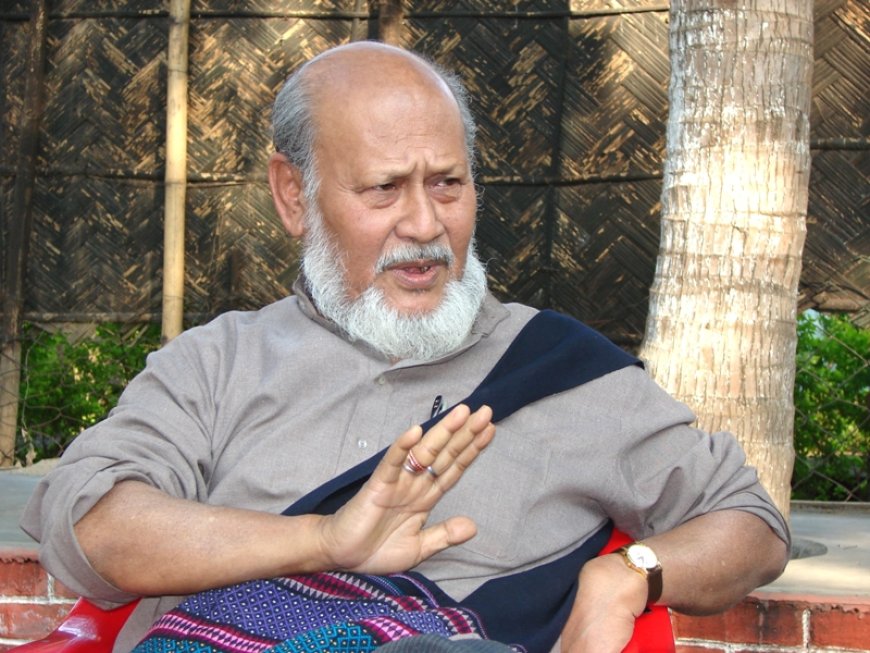
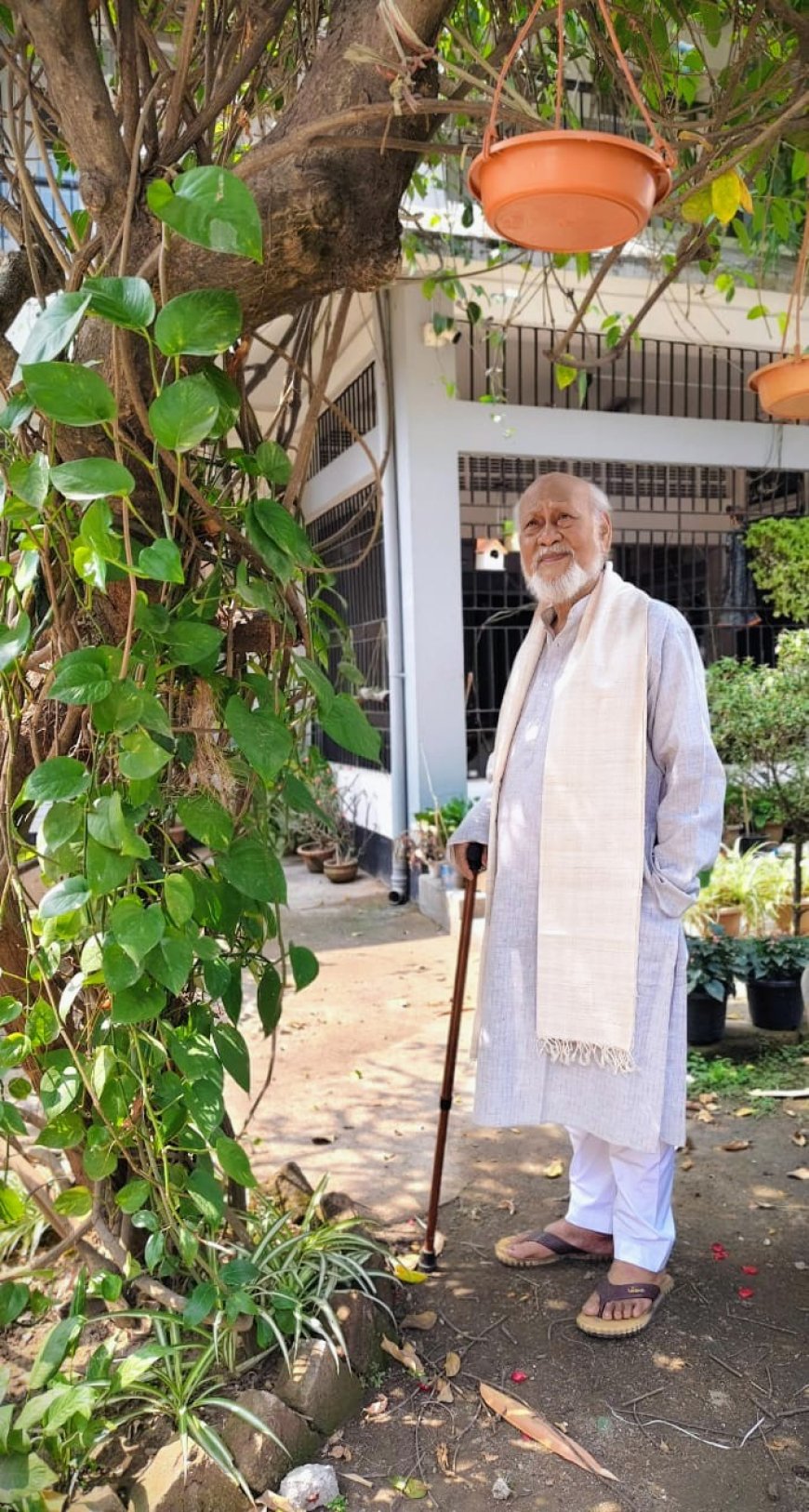
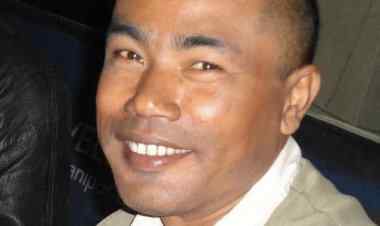
In the context of contemporary Assamese theatre, Dulal Roy is acknowledged as an indefatigable and lifelong practitioner whose contributions have significantly enhanced the discipline through a variety of experimental endeavours and explorations. The renowned theatre director, playwright, actor, and film director Dulal Roy was born in Santipur, Guwahati in 1943. From an early age, he was irresistibly drawn to the magic of the stage, a passion that would eventually blossom into a distinguished career in the performing arts.
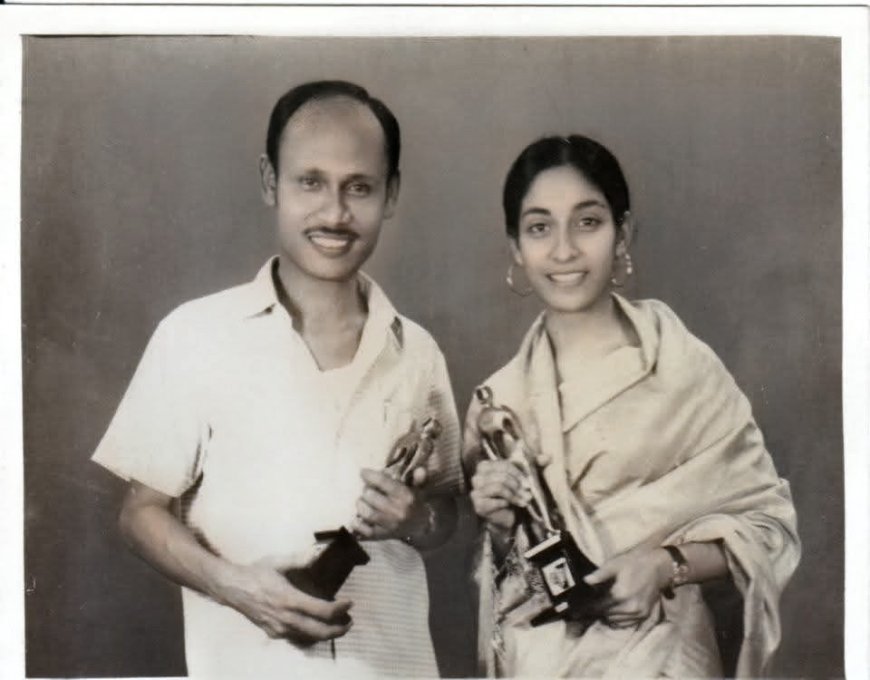
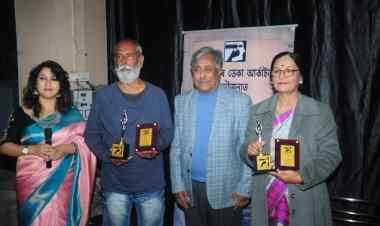
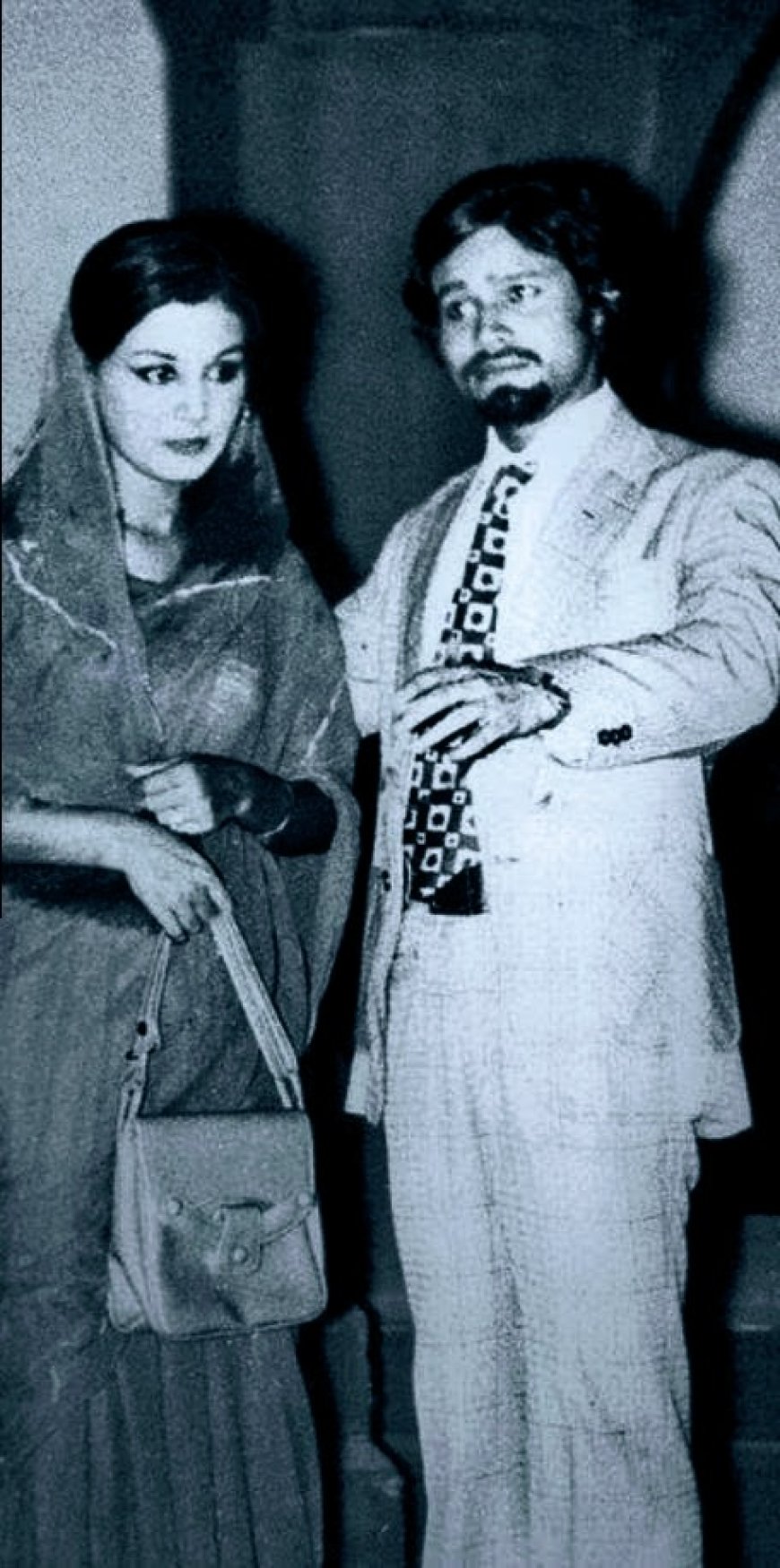
Best Director Dulal Roy with Best Actress Santwana Bordoloi with their trophies won at the All India Full Length Drama in Delhi in 1973 for the play 'Preyoshi'
Dulal Roy’s earliest and significant inspirations grew out of his family’s rich cultural milieu. His uncle, Kishori Mohan Roy, regularly recited the poetry of Rabindranath Tagore and took him to jatra performances in Guwahati, introducing him to emotionally charged narratives and traditional folk theatre. This formative exposure to Tagore’s writings and the broader Bengali literary tradition had a profound impact on his acting style, fostering a focus on emotional depth and subtle, nuanced expression.
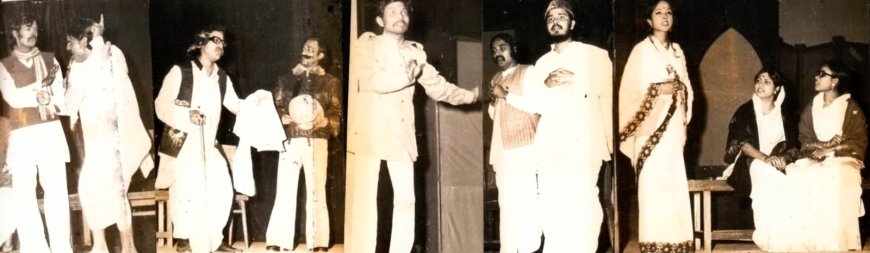
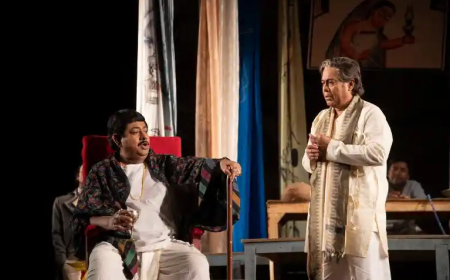
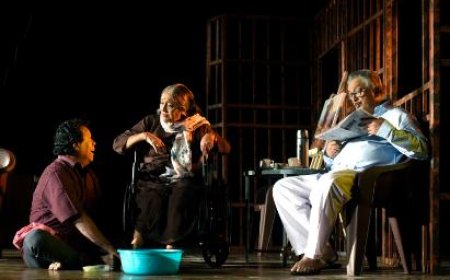
Scenes from the play 'Sarkari Inspector'
Motivated by a passion for drama and theatrical expression, Dulal Roy enrolled at the National School of Drama in 1963 to undertake advanced training in stage direction. However, for someone from a lower-middle-class background, the prospect of traveling to Delhi for educational purposes posed a considerable challenge. Dulal Roy experienced a similar situation when he embarked on his journey to Delhi to attend the renowned National School of Drama, an endeavour that presented a significant challenge more than sixty years ago. Moreover, he faced significant ridicule and mockery from numerous individuals solely because he chose to travel to Delhi to pursue a degree in drama, a path that was considered unconventional. Sixty years ago, the idea of delving deeply into the realm of theatrical study was not a sentiment that resonated with many at that time. Nevertheless, Roy remained resolute and continued to follow his passion for drama in Delhi, undeterred by others’ opinions. At that time, the bustling capital city of Delhi was entirely unfamiliar to Dulal Roy. He found himself increasingly anxious about where he would find a place to stay upon his arrival in this new and daunting environment. Finally, the then Union Minister Renuka Devi Barkataki made arrangements for Dulal Roy’s lodging and boarding. While pursuing his studies in theatre direction at the National School of Drama, he encountered considerable difficulties. During that period, the National School of Drama in Delhi was under the leadership of Ebrahim Alkazi, who is widely regarded as a pioneer in the evolution of modern theatre in India. It was under the mentorship of Alkazi, along with the passionate guidance of educators including N.C. Jain, Sheila Bhatia, and Panchanan Pathak, that Dulal Roy immersed himself in the theatrical arts.
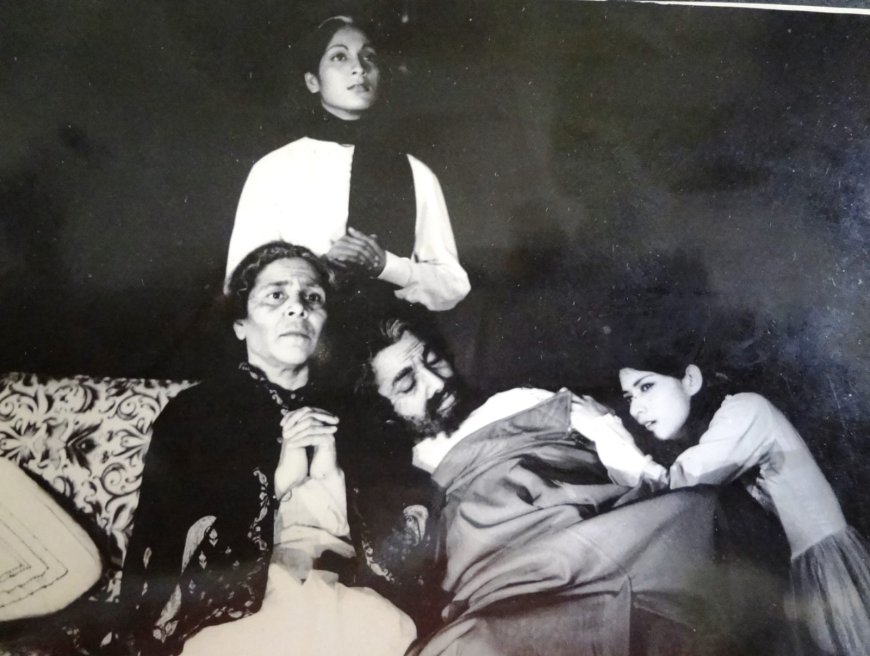
A scene from Dulal Roy's 'The Father', authored by August Strindberg
In 1966, Roy earned a diploma in dramatic arts in direction from the National School of Drama. In 1968, with the aim of expanding his horizons and mastering the various subtleties of the audio-visual medium, he undertook advanced professional training in film editing by enrolling at the prestigious Film and Television Institute of India (FTII) in Pune. This academic journey culminated in 1970 when he received a diploma in cinema editing. Subsequently, he gained practical experience by collaborating briefly with renowned filmmakers such as Tarun Dutta, Asit Sen, Rajinder Singh Bedi, and Hrishikesh Mukherjee. During this formative phase, he served as an assistant editor on iconic films such as Safar, Buddha Mil Gaya, Anand, and Dastak.
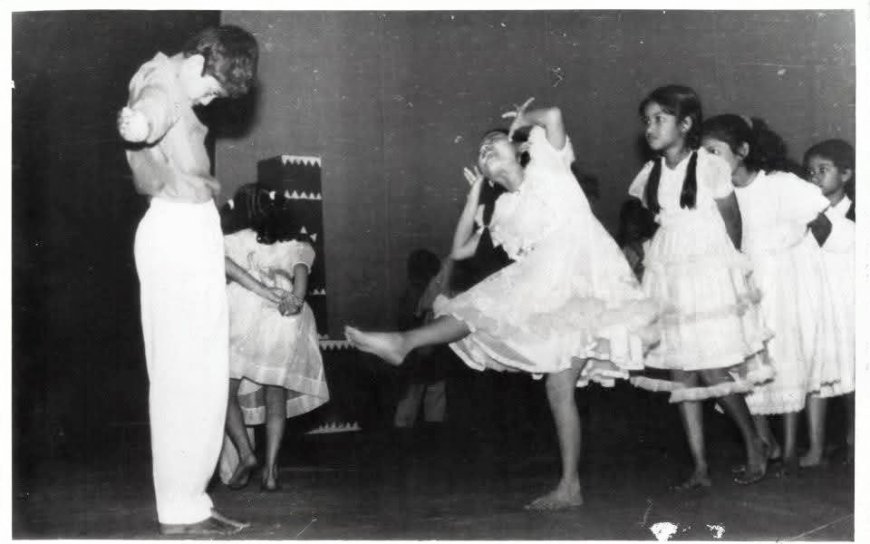
Children's play 'Swarthopor Daitya' staged at Rabindra Bhawan in 1993
However, the allure of the theatre proved to be much stronger than any other pursuits he had considered, drawing him back to his true passion, where he truly felt alive and fulfilled. His sensitivity enabled him to grasp the intricacies of the performing arts, and he aimed to foster strong relationships while striving for both artistic and moral development.
Long before he stepped into the hallowed halls of the National School of Drama, during his formative student years, he had already carved out a reputation as a serious theatre director. He had a remarkable talent for engaging discerning audiences in Guwahati, and it all began with his theatrical performances at Cotton College. In his sophomore year of college, he translated and adapted Narayan Gangopadhyay’s play Bharate Chai into Assamese, giving it the new title Janani, a production that received significant acclaim. From that moment on, there was no turning back. A vibrant drama society, known as the Cotton College Dramatic Society, was established, seamlessly integrating theatre into the daily lives of students. Both teachers and students eagerly took part, making it a collaborative and enriching experience for everyone involved.
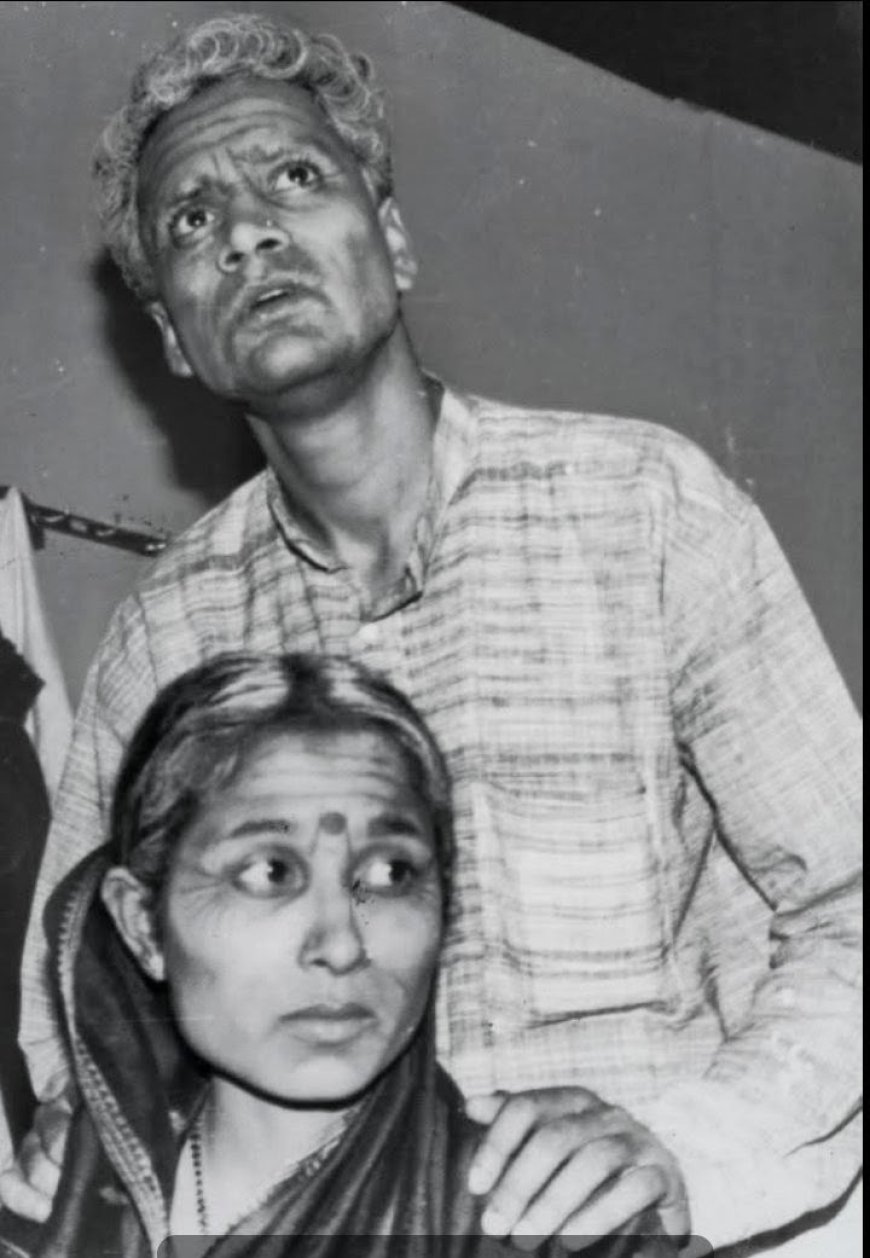
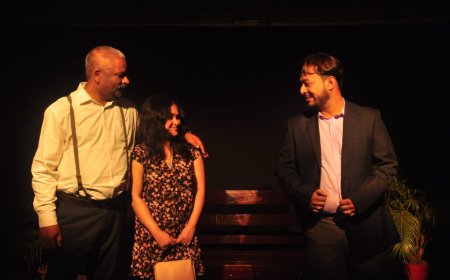
A scene from 'Sandhya Chhaya'
Driven by a dedication to storytelling and his craft, Dulal Roy embarked on a dynamic exploration of theatrical performances in Guwahati. After returning to Assam in 1972 to dedicate himself to his enduring passion for theatre, he has remained steadfast in his original objective of producing high-quality and meaningful theatrical works. His fascination with the endless diversity of human personalities, their fates, and the worlds they inhabit — both private and public — led him to explore an array of themes, stories, and characters. Guided by an instinct for dynamic action, he emerged as a theatre director capable of channeling a powerful sense of creativity, focus, and deep, searching thought. Dulal Roy regularly implemented innovative stylistic techniques, utilising his academic expertise to explore diverse theatrical elements. His unique approach to dialogue, lighting, music, body movement, minimal sets, and subtle acting instead of melodrama shocked puritans, while breaking the chains of conformity.
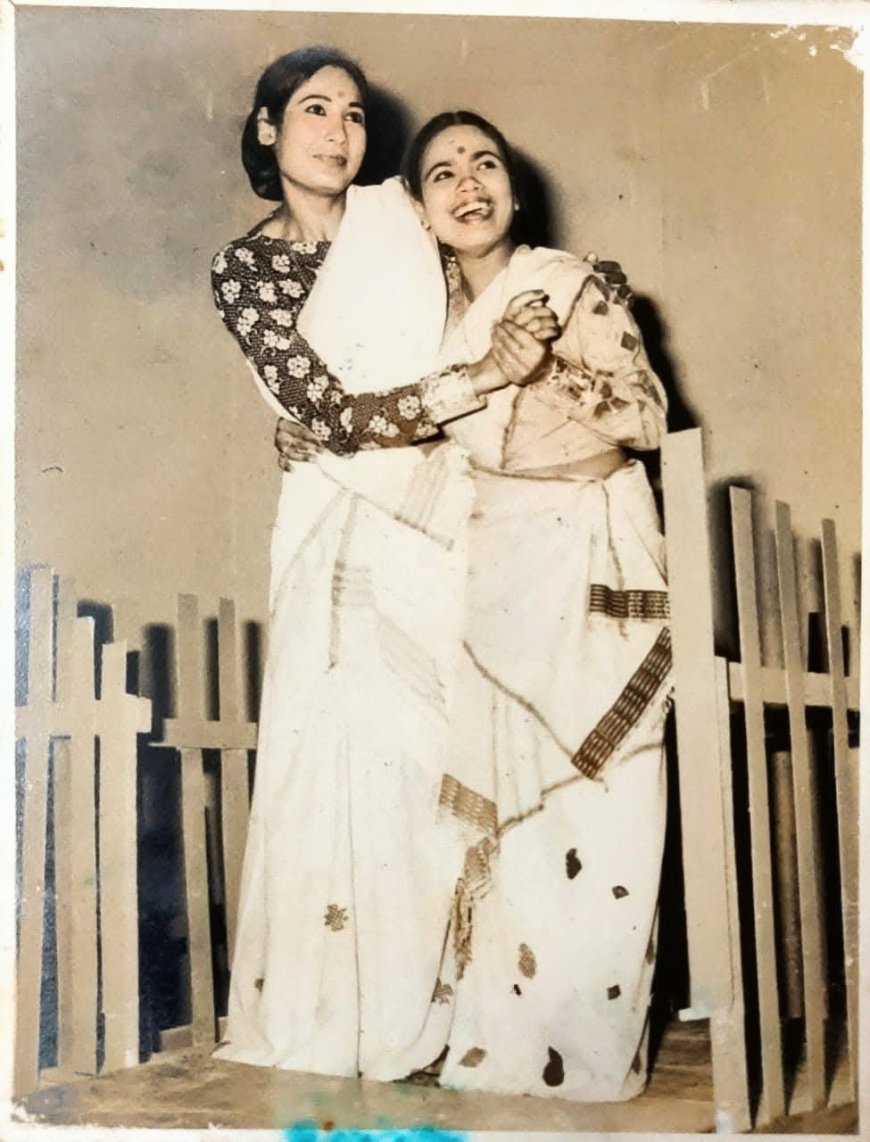
Bina Baruwati and Chetana Das in Dulal Roy's 'Bhotai Deka'
In 1975, Dulal Roy served as the Producer of the drama section of the Directorate of Cultural Affairs. Following the assumption of this responsibility, Dulal Roy played a significant role in further invigorating the theatre movement in Assam. Roy aimed to cultivate a vibrant cultural environment in Assam by creating numerous innovative, experimental plays, thereby enhancing the theatre scene with fresh, intellectually stimulating content. He has built a remarkable body of work by reimagining masterpieces from world theatre for Assamese audiences. He introduced the theatre community to the power and depth of these works, staging enduring works by legendary playwrights, alongside showcasing the state’s traditional Ankiya Bhaona with innovative lighting, music, costumes, and stage techniques — proving that heritage and innovation can command the same stage with equal brilliance.
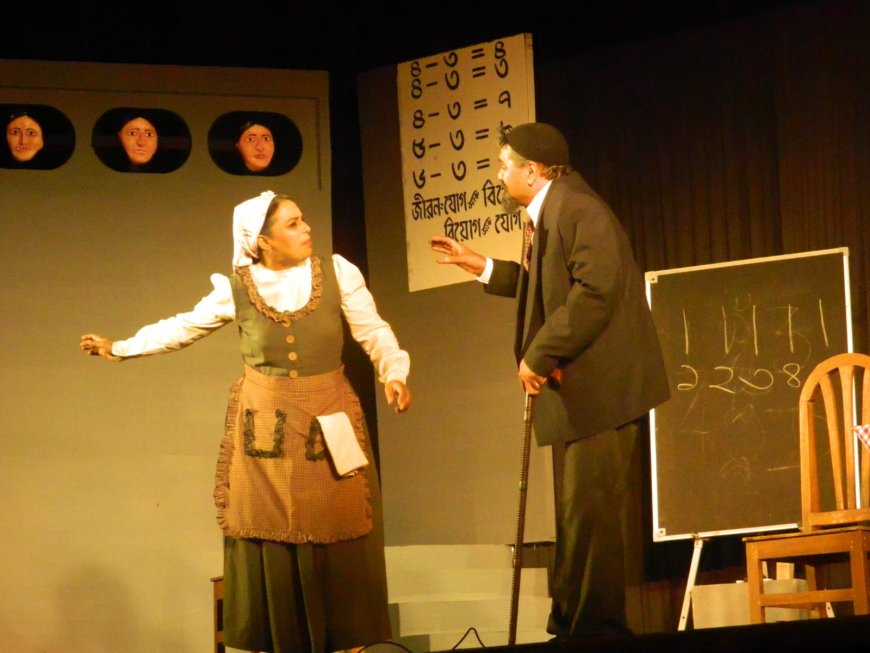
A scene from Dulal Roy's The Lesson
His innovative directing approach, especially in staging modern European dramas, introduced fresh perspectives and inspired further creative exploration in Assamese theatre. Roy’s close involvement and experimentation with modern theatre stem chiefly from his determination to portray reality in its entirety and to meet the challenge of ensuring each of his plays remains relevant to contemporary audiences. In addition to Assam, this renowned theatre director achieved considerable acclaim and critical recognition throughout various regions of the country through the presentation of his works.
A scene from Aahaar, the first truly mature absurdist play in Assamese literature, staged in 1976 at Guwahati’s Rabindra Bhawan
Dulal Roy consistently spearheaded efforts to adapt world-class plays from various languages into Assamese, with the goal of enriching the repertoire of Assamese theatre. Preyoshi, a captivating reinterpretation of renowned Irish playwright George Bernard Shaw’s classic Pygmalion, emerged as an independent theatrical gem that thrust Dulal Roy into the spotlight. This remarkable production garnered prestigious accolades, including awards for best production, best direction, and best actress at the all-India full-length drama competition held in New Delhi in 1973. The play’s triumph signaled the emergence of a fresh and dynamic director in the national theatre landscape. Four years thereafter, Roy’s stage adaptation and direction of famous Ukrainian novelist and playwright Nikolai Gogol’s biting Russian satire The Revizor (The Government Inspector/Inspector General), titled Sarkari Inspector in Assamese, which was hailed as a landmark in his mission to modernise Assamese theatre through global classics, received the awards for best production and best direction at the same competition in the national capital. Dulal Roy has also brought celebrated Romanian-French playwright Eugene Ionesco’s landmark Theatre of the Absurd works into Assamese, translating and directing his famous “anti-plays” The Chairs and The Lesson, which explore just how meaningless and futile human communication and existence can sometimes seem. In fact, Dulal Roy made his directorial debut on the proscenium stage way back in 1965 with Eugene Ionesco’s The Lesson. He transformed Irish playwright Samuel Beckett’s iconic Waiting for Godot into the Assamese production Godor Pratikhyat, and adapted English dramatist Peter Shaffer’s celebrated play The Five Finger Exercise as Pancharatna. His acclaimed Assamese adaptation of Jean-Paul Sartre’s existentialist play No Exit, titled Narakar Gopan Kakhyat, marks a significant milestone that brought modernist existential and avant-garde theatre to Assam. Among his other notable reinterpretations are Moliere’s classics The Miser and Tartuffe — originally penned by French playwright Jean-Baptiste Poquelin, Russian playwright Anton Chekhov’s pioneering The Proposal, and Italian dramatist Luigi Pirandello’s groundbreaking Six Characters in Search of an Author, Albert Camus’ Caligula and Cross Purpose, along with several other distinguished works. Roy also showcased a selection of the most celebrated theatrical pieces by the legendary playwright William Shakespeare, featuring Assamese adaptations of the iconic tragedies Macbeth and Hamlet.
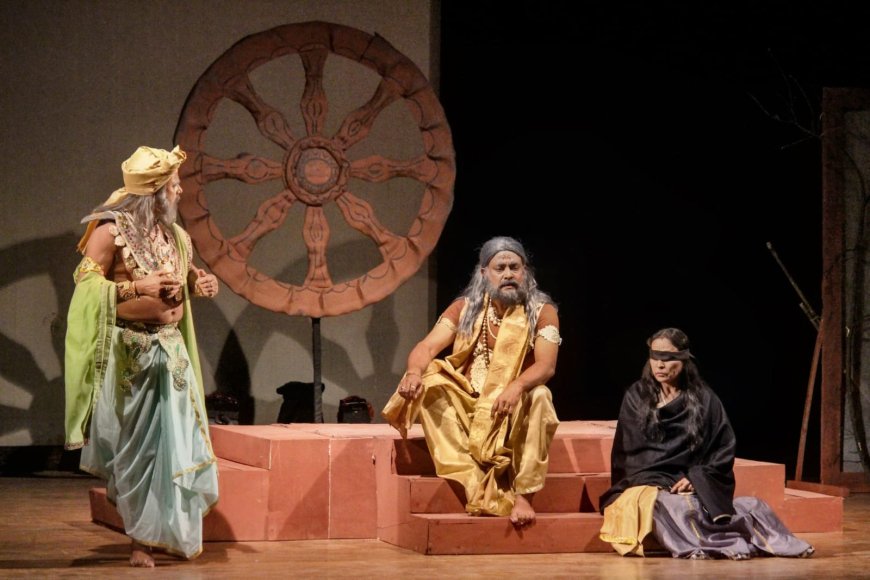
A scene from 'Andha Yug'
Aahaar, penned by renowned playwright Arun Sarma and brought to life by Dulal Roy — who also handled direction, set design, and music — is hailed as Assamese literature’s first truly mature absurdist play and a turning point in its theatre history. Its legendary 1976 staging at Guwahati’s Rabindra Bhawan shattered conventions, abandoning straightforward realism for bold, abstract imagery and transforming local stagecraft. The production ran for nine consecutive days to packed audiences, igniting a new culture of regular theatre-going in the city, and mesmerised viewers with its innovative 3D recreation of the iconic North Brook Gate.
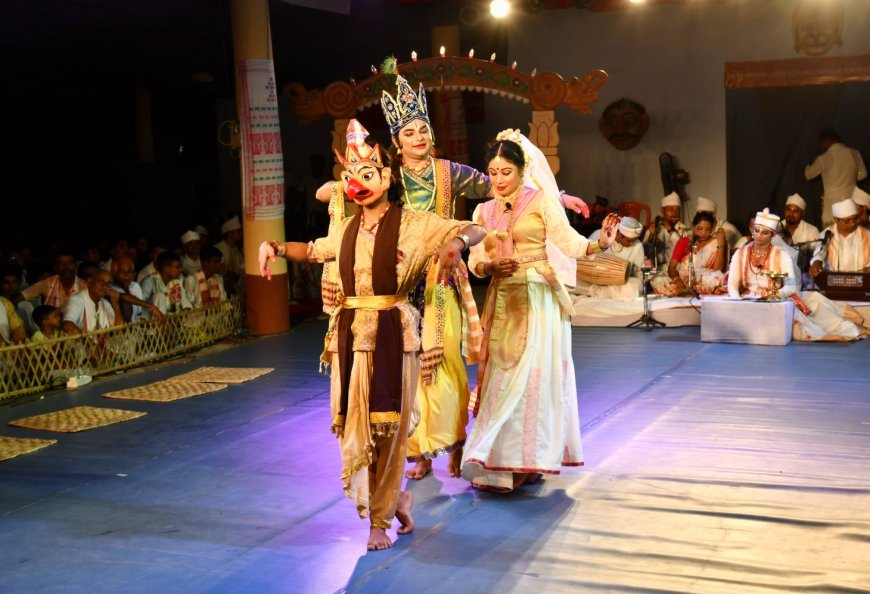
A scene from Dulal Roy's Ankiya Bhaona 'Parijat Horon'
Taking into account the circumstances of time and location, Dulal Roy’s attempt to establish Modern Theatre in Assam could be likened to summiting Mount Everest. Even though Assam boasts a diverse cultural heritage, the lengthy colonial rule had nearly stifled the growth of fresh and innovative ideas in the arts scene. In earlier days, Assamese theatre drew largely from traditional forms — Bhaona, Ojapali, Khuliya Bhaona, and from performances inspired by the Bengali Jatra. Yet even then, there was no lack of visionaries determined to carve out a unique identity for Assamese drama. Across both the pre- and post-independence eras, luminaries such as Rupkonwar Jyotiprasad Agarwalla, Kalaguru Bishnu Prasad Rabha, Natasurya Phani Sarma, and their contemporaries worked tirelessly to shape a distinct theatrical tradition for Assam. It was Dulal Roy, however, who ultimately ushered in a fully realised modern theatre in the Assamese language.
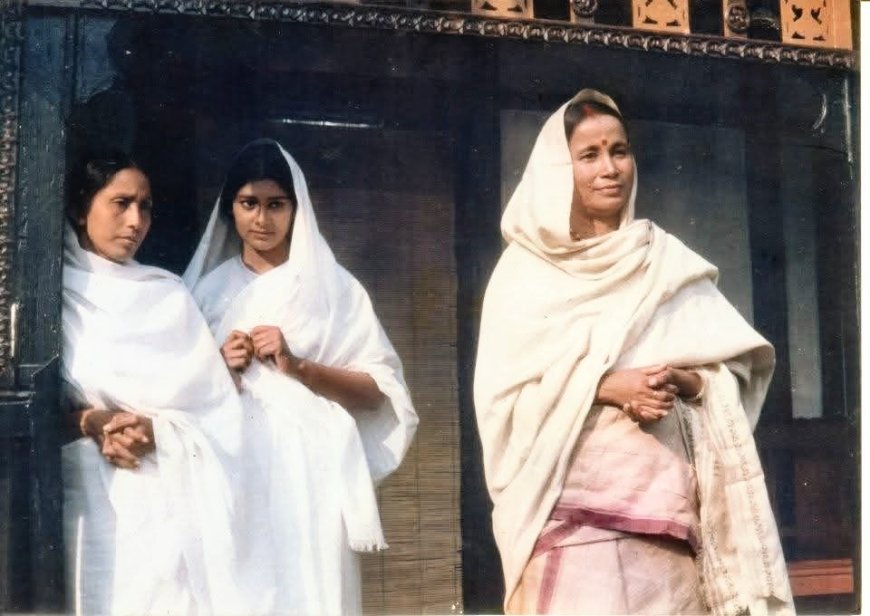
A scene from the serial 'Kamrup Ki Kahaani'
Back in 1965, the legendary artist and former Chairman of the Sangeet Natak Akademi, Dr. Bhupen Hazarika, sharing his admiration for Roy after watching the plays The Lesson and The Proposal, remarked: “These two productions by Dulal Roy have significantly illuminated the Assamese Theatre scene in a most attractive way, akin to the fireflies lighting up in the darkness of the night.” Roy, inspired by these words from an artistic genius, sought to imbue all of his subsequent productions with the same luminous quality.
Beyond staging well-known Western plays, Dulal Roy, noting a lack of well-crafted drama in Assam, continued to push boundaries. Through sustained efforts to invigorate the local theatre scene, he introduced Assamese adaptations of celebrated Hindi works by leading playwrights, including Andha Yug by Dharamvir Bharati, Aadhe Adhure and Ashadh Ka Ek Din by Mohan Rakesh, and Khamosh–Adalat Jaari Hai by Vijay Tendulkar, among others.
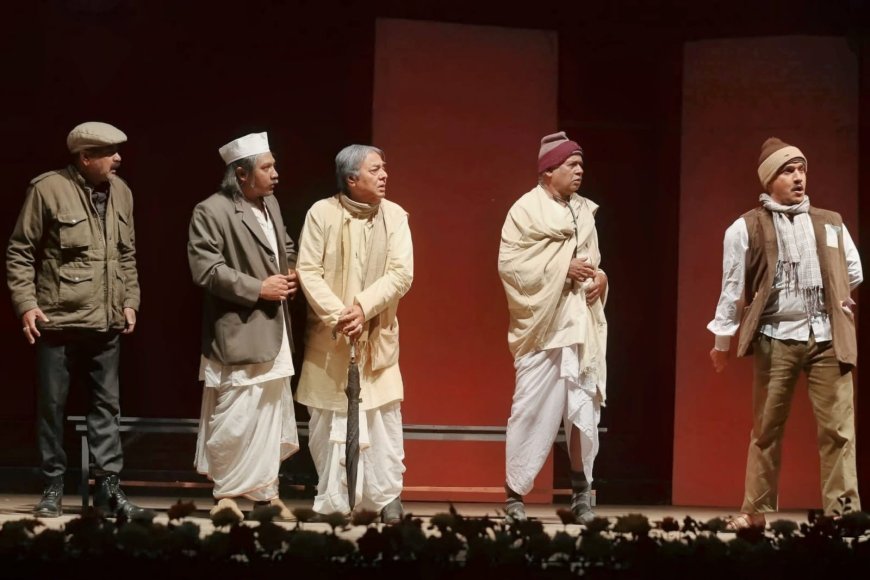
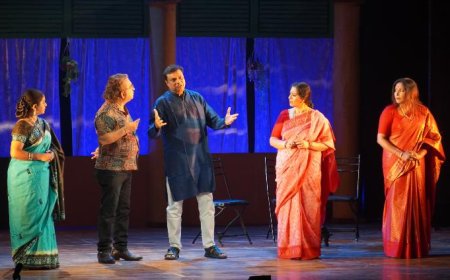
A scene from 'Sarkari Inspector', directed by Dulal Roy, and presented by Guwahati's Natasurya, staged in 2022
Roy has demonstrated substantial involvement in organising and conducting multiple theatre festivals both within and outside the state. Additionally, he has facilitated numerous theatre and children’s workshops across multiple locations as well as coordinated several theatre seminars, in which he has participated as a speaker. He has also served as a member of many prestigious committees.
It is worth noting that Dulal Roy has helmed more than 80 plays, authored a substantial body of work for stage, radio and television, and participated as a performer in numerous productions. Some of the notable plays directed by Dulal Roy include — Janani, Chaknoiya, Runu Junu, Premor Setu, Brikhyar Khoj, Aahaar, Moi Rehmate Koisu, Aahotgurir Natun Baat, Sipahi Bidruh, Letha, Overbridge, Siraj, Gaonburha, Lili Oi Lili, Sakharam Binder, Arjuntolir Dhumuha, Suruj Boroniya Pataka, Nilambar, Eti Sular Kahini, Jukti Tarka, Mukti, Bidruh, Rupalim, Janma, Kanaklata, Karengar Ligiri, Bismriti, Bhotai Deka, Maniram Dewan, Aajaan, Teo Kun, The Proposal, The Caretaker, Machar Telere Mach, Suna Janmejay, Preyashi, Chup–Adalat Bohise, Arms and the Man, The Father, Pancharatna, Fatema Bibir Ghar, Bhogjara, Pon Rokshya, Miss Julie, Caligula, Godor Pratikhyat (Waiting for Godot), Swarthopor Daitya (a children’s play based on The Selfish Giant), Cross Purpose, Moi Tuniye Tuntunalo, Dragon, Narakar Gopan Kakhyat, Anya Ek Adhyay, Sandhya Chhaya, Hamlet, Vedavyas, Maha Praloy Aru Matho Eghanta, Chandalika (Dance Drama), Mamore Dhora Tarowal, Ram Bijay (Ankiya Bhaona), Maharaja, Andha Yug, Aadhe Adhure, Ashadh Ka Ek Din, Sarkari Inspector, etc. The plays directed by Dulal Roy for Radio include Gramin Chikitshak and Dayeetya.
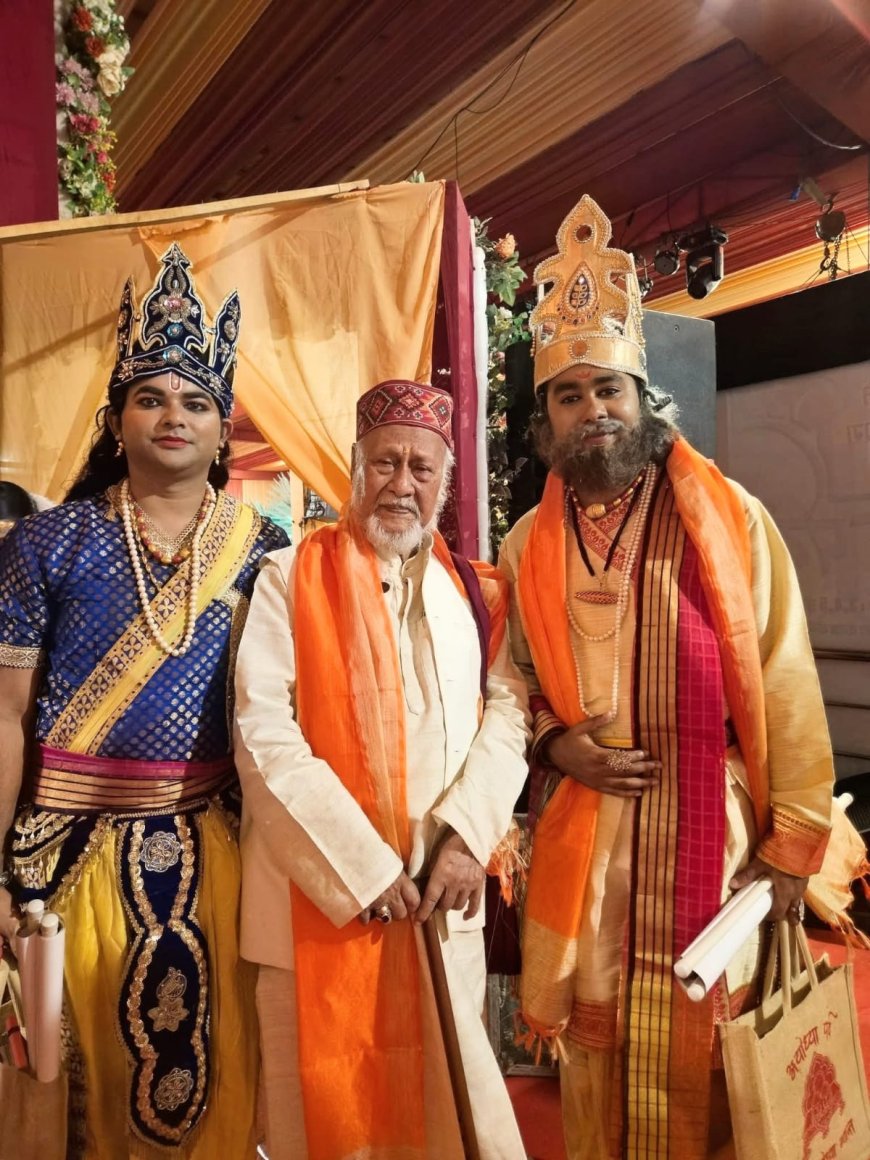
Dulal Roy with the artistes of Ankiya Bhaona 'Shri Ram Bijay', staged at the Ayodhya Parv held at the Indira Gandhi National Centre for the Arts (IGNCA) in New Delhi
Dulal Roy is known for his dedication to creating impactful performances that enrich the audience’s experience. With a commitment to artistic excellence, he carefully shapes each production to resonate on emotional and intellectual levels, encouraging viewers to reflect and transform through their experience. Dulal Roy’s work goes beyond mere entertainment, drawing in audiences with layered storylines that push boundaries and spark fresh perspectives. He epitomises the spirit of a genuine artist, advocating for the power of visual expression in shaping a progressive society.
Dulal Roy believes that theatre can only prosper when it embraces originality, perpetual evolution, and active momentum. With his insightful and adaptable stagecraft, Roy has set a new benchmark of excellence in Assamese theatre and, throughout his journey, has become a beacon of inspiration for aspiring directors, playwrights, and performers, encouraging them to follow in his illustrious footsteps.
Since the late 1960s, Dulal Roy has consistently captivated, entertained, and evoked emotional responses from his audience, while simultaneously prompting critical reflection. For him, theatre must engage the intellect, and his body of work exemplifies this shared characteristic. However, he has faced considerable challenges throughout his career.
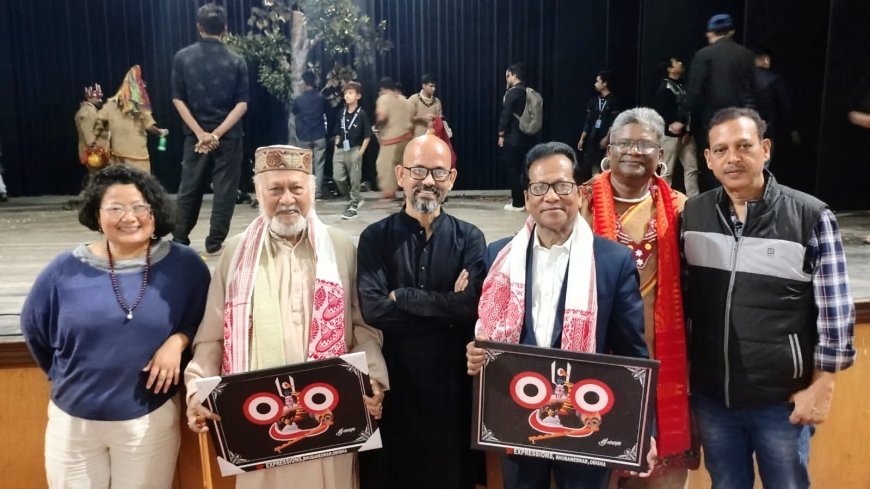
Dulal Roy being felicitated along with Moinul Haque at the Bharat Rang Mahotsav 2023 at Guwahati.
Renowned literary figure, Dr. Mamoni Raisom Goswami’s immortal creation, Mamore Dhora Tarowal, a novel which earned her the Sahitya Akademi Award in 1982, was staged with a new interpretation by Dulal Roy, with the play named after the novel itself. Generally, audiences of two and a half to three thousand spectators attend and enjoy plays in mobile theatre venues. Guwahati’s Latasil playground witnessed more than ten thousand spectators enjoy the play Mamore Dhora Tarowal, presented by director Dulal Roy. For the first time in the history of Assamese theatre, a play was viewed and enjoyed by over ten thousand people, creating an unparalleled record and marking one of illustrious theatre director Dulal Roy’s major accomplishments. In contrast, Roy showcased the play Karengar Ligiri, a seminal masterpiece by Rupkonwar Jyotiprasad Agarwala, in an open-air location. He always strived to ensure that audiences both enjoyed his plays and gained something new from them. This visionary director and esteemed mentor has consistently cultivated and unveiled a new generation of compelling theatrical talent to the stage. Among the most renowned figures in the cultural arena that Roy has unearthed and nurtured on stage are Seema Biswas, Robin Neog, Pranjal Saikia, Purnima Saikia, Tapan Das, Chetana Das, Dr. Santwana Bordoloi, Abinash Sarma, Jayanta Das, Bina Baruwati, Paresh Goswami, Gabyanjali Das, Baharul Islam, Jaya Seal, Anup Hazarika, Pakeeza Begum, Kishore Choudhury, Runu Devi, Mirrel Quddus, Hem Bhatta, Dilip Dutta, Dilip Phukan, Ramani Barman, Heera Neog, Sushil Goswami, Biren Das, Lakhi Borthakur, Naba Baruah, Kopil Borah, Khanjan Nath, Mrinal Borah, Sapunti Bordoloi, Upakul Bordoloi, Karuna Deka, Basanta Borthakur among others.
In 1979, Dulal Roy stepped into the world of Assamese cinema with his first directorial venture, Ashray. He not only helmed the film but also penned its screenplay and dialogues, marking the beginning of a new chapter in his filmmaking journey. Additionally, he wrote the screenplay and dialogues for the Assamese film Antaheen Jatra. Due to his lifelong involvement with theatrical performances, he couldn’t concentrate on directing and acting in Assamese movies. As an actor, director, and playwright, Roy has demonstrated considerable proficiency across multiple languages. In addition to his role in directing theatrical productions, Dulal Roy is also recognised for his unique contributions as a playwright. Among the noteworthy works composed by Dulal Roy are — Janani, Jukti Tarka, Bismriti, Pon Rokshya, Kanaklata, Swarthopor Daitya, and others.
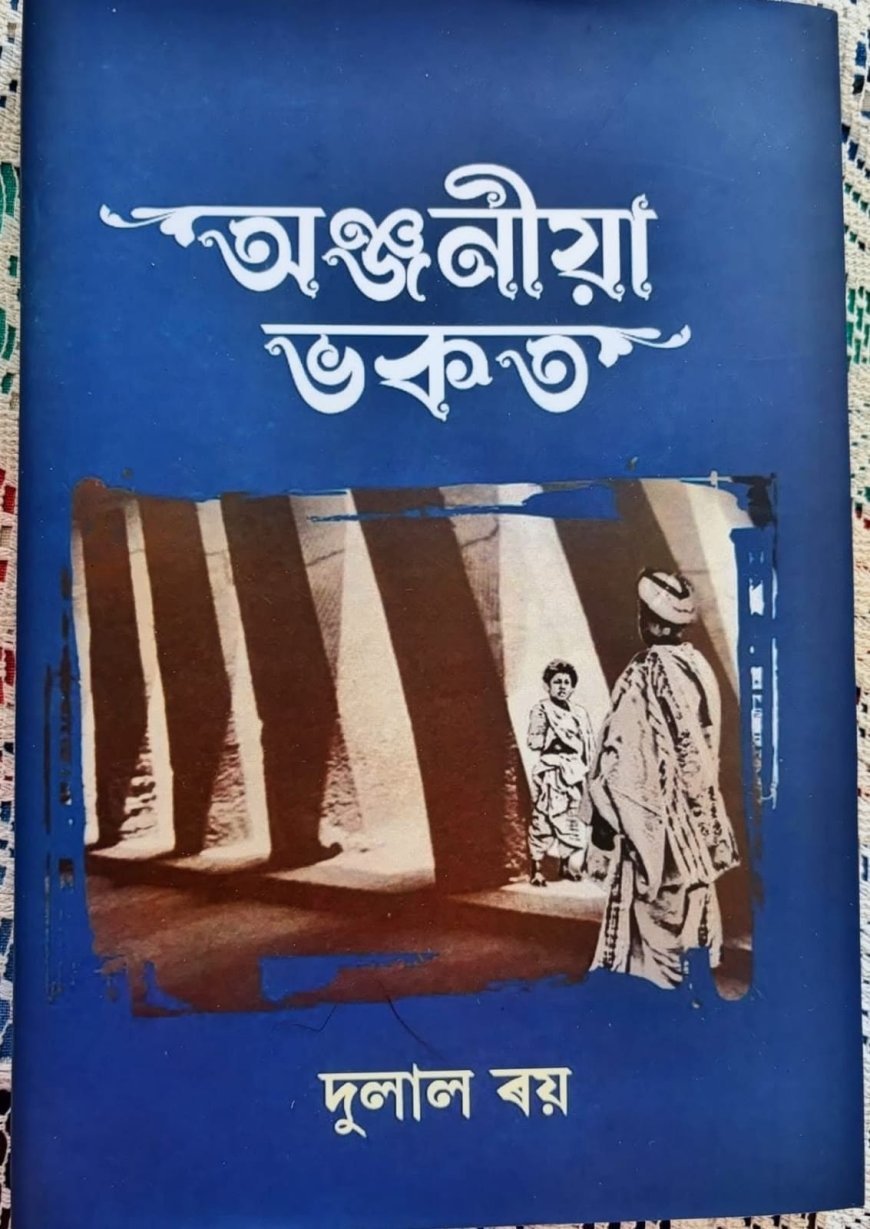
Dulal Roy’s highly acclaimed play 'Anjaniya Bhakat' became a published book in 2025
He has also demonstrated his acting skills in several Assamese films, such as Aparoopa, Papori, Anal, Eman Morom Kiyo Lage, and Kadambari. At the Pimpri Chinchwad International Film Festival 2026, held in Pune, Dulal Roy received the Best Male Actor award for his heartfelt performance in the short film Martya, directed by Pragya Paramita.
The widely acclaimed novel Datal Hatir Uye Khowa Howda (The Moth-Eaten Howdah of the Tusker) by Dr. Mamoni Raisom Goswami was adapted into a Hindi television serial titled Kamrup Ki Kahaani. Directed by Dulal Roy and inspired by the folk life and culture of Assam, the show was aired on Delhi Doordarshan’s national network. His television serial, titled Staff Photographeror Chabi, which was based on the acclaimed Assamese literary work by Dr. Nagen Saikia and subsequently translated into numerous foreign languages, was a highly acclaimed production that was broadcast on Doordarshan Kendra Guwahati. His telefilm endeavours, particularly Bandiyar, which draws from a story by the Sahitya Akademi Award recipient Harekrishna Deka, alongside his well-received production Yatra, reflect his incisive narrative attention to issues surrounding human confinement, socio-political strife, and individual challenges. True to his background at the National School of Drama, Roy systematically deconstructed the melodramatic conventions that dominated regional broadcast media during that period. His background in realistic and avant-garde theatre was clearly reflected on television through detailed psychological character analysis and minimalist yet striking set designs.
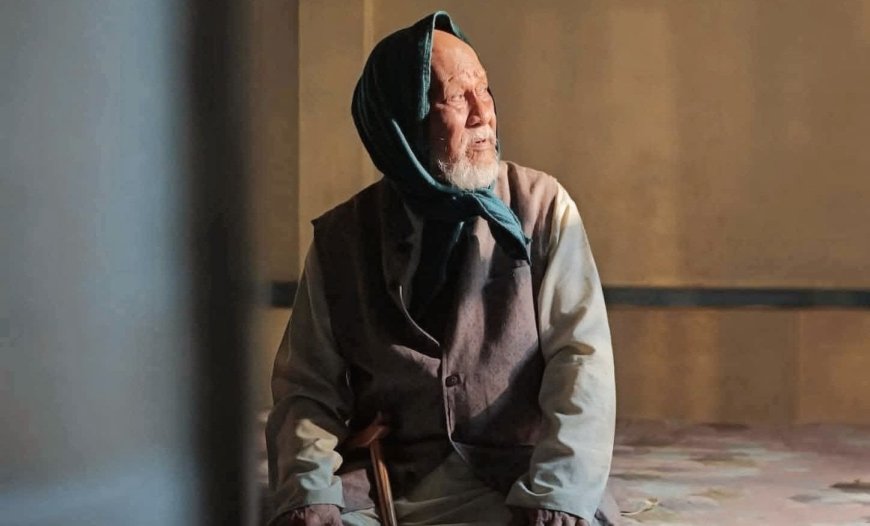
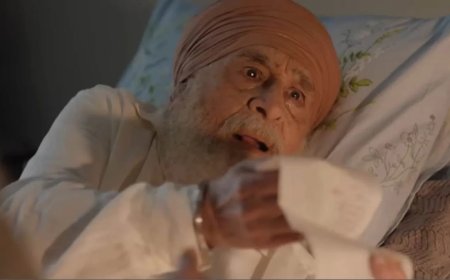
Dulal Roy in the short film 'Martya'
Dulal Roy was also highly praised for his work on documentaries like Spandan and Capital and The City. He created television documentaries as well, notably Mukha (Mask), an acclaimed anthropological and ethnographic film exploring the mask-making traditions of Majuli. Additionally, he produced Darkness at Dawn, which addresses important sociopolitical issues.
Roy, motivated by a profound desire to share his artistic legacy with future generations, continually looked for new methods to improve the Assamese proscenium stage, which he felt was severely lacking in both creativity and modern relevance. In pursuit of this vision and with the broader objective of nurturing, promoting, and preserving diverse performing arts traditions, Dulal Roy established the drama institute Rangapeeth in 1993. Under his guidance, Rangapeeth emerged as a notable centre for serious theatre practice and training. The institute has staged a number of critically acclaimed productions, including adaptations of Spanish poet, playwright, and theatre director Federico Garcia Lorca’s Yerma and The House of Bernarda Alba, Jaywant Dalvi’s Sandhya Chhaya, and Vijay Tendulkar’s Khamosh–Adalat Jaari Hai, among others. Rangapeeth exposed Assamese audiences to landmark global and Indian plays while fostering a culture of thoughtful, socially conscious theatre. Beyond performances, it fostered theatre education for children through workshops and seminars, cultivating their creativity, communication skills, and early artistic engagement. These initiatives have consistently identified and guided emerging talent, ensuring a steady and vibrant continuity of theatrical practice in the region.
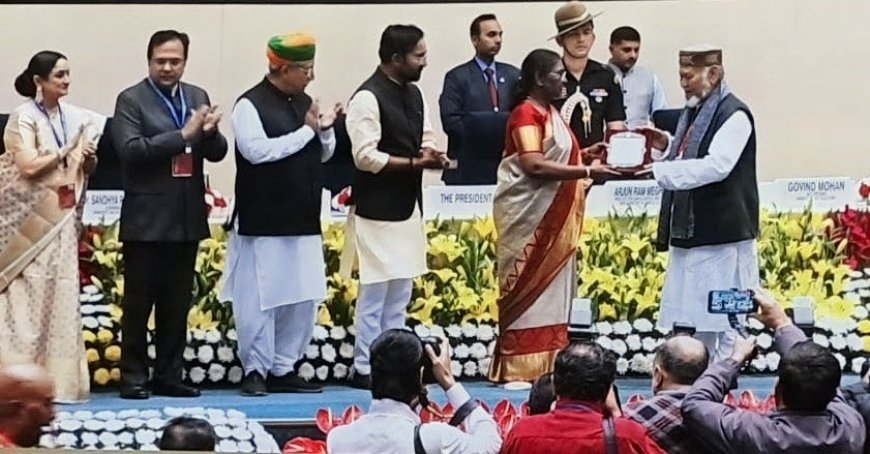
Dulal Roy receiving the Sangeet Natak Akademi Fellowship (Akademi Ratna), the highest national honour in Indian performing arts, conferred for the year 2022, from Hon’ble President of India, Smt Droupadi Murmu, at Vigyan Bhawan, New Delhi.
Rangapeeth still produces plays and publishes books, but it no longer functions as a theatre training school. In 2016, Rangapeeth published Pratyay Aru Anwexon: Dulal Royor Xadhonar Sobi, an important collection of essays on the distinguished theatre figure Dulal Roy, edited by noted critics Utpal Datta and Nayan Prasad. Containing over a hundred articles written by Roy’s former associates and art critics, this book serves as a valuable resource for researchers and university-level students.
In addition to his contributions to the revival of Assamese theatre, Dulal Roy has been instrumental in advocating for and preserving Assam’s rich Sattriya cultural legacy. Long before his appointment in 2008 as Project Director of the Sattriya Kendra, established by the Sangeet Natak Akademi for nurturing Sattriya, Dulal Roy had been actively and consistently involved in conserving and promoting Sattriya dance, music, and theatre to a wider audience within the broader field of drama and its allied disciplines. In 2001, Roy, in collaboration with Dr. Bhupen Hazarika, then Chairman of the Sangeet Natak Akademi, initiated foundational efforts to establish Sattriya as a classical art form. This marked a pivotal moment, after which the recognition and development of Sattriya progressed without interruption. In fact, the inaugural presentation of a dance drama in the Sattriya style, Tagore’s Chandalika, was directed by Dulal Roy. He has also pursued sustained efforts to present Ankia Naat Bhaona, a theatrical form within Sattriya, while preserving its distinctive characteristics, particularly the use of Brajavali rather than Assamese. Throughout his time as Project Director and even after his tenure, he has significantly contributed to showcasing the six Ankiya Naat Bhaona by Srimanta Sankardev in the Brajavali language, deviating from the traditional practice of performing them in Assamese.The production of Sankardev’s Ankiya Naat Bhaona ‘Shri Ram Bijay’ was initially staged by Dulal Roy in 2013 at the Rabindra Bhawan auditorium in Guwahati, which marked the first effort to present Ankiya Naat Bhaona on a proscenium stage. The production aimed to tackle the unique challenge of recreating the ambiance and experience of witnessing Ankiya Naat Bhaona in the setting of a Namghar.
Dulal Roy’s highly acclaimed play Anjaniya Bhakat became a published book in 2025. The drama explores Sattriya culture’s guru-disciple tradition, focusing on spiritual discourse and moral education in society. It demonstrates how Satras instill moral values in children through strong characters and compelling narrative that appeals to both theatrical and literary audiences.
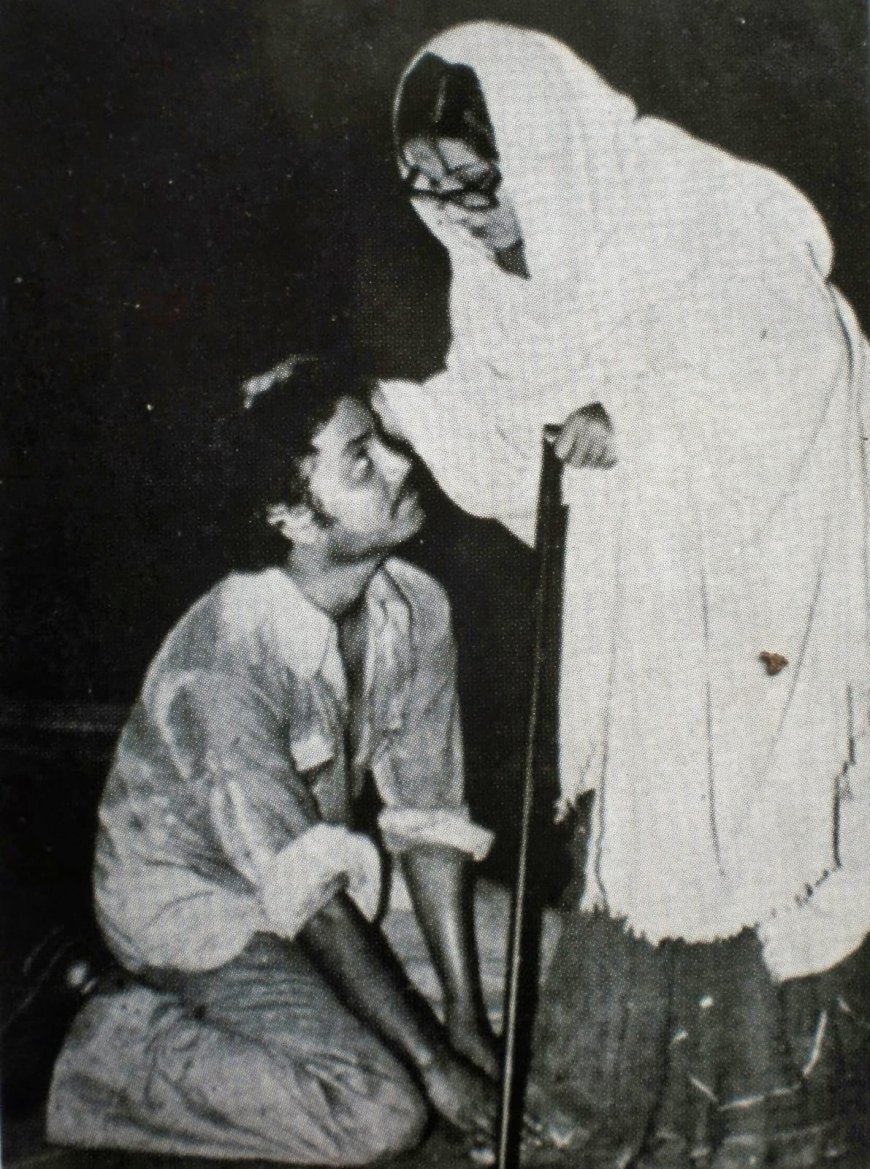
In a dramatic scene from Dulal Roy's landmark play 'Aahaar', performed in 1976
In 1987, Roy participated as a member of the Indian cultural delegation in a special cultural program held in Moscow, aimed at further promoting goodwill between India and the Soviet Union. Roy also subsequently served as Joint Director of the Directorate of Cultural Affairs in Assam, a position he held with dedication.
A tireless lifelong devotee of the theatre, Dulal Roy received a constellation of honours over his career. Among them were the Sangeet Natak Akademi Award for stage direction in 1999; the Chaman Lala Award for Stage Craft in 2007 in New Delhi; and the Honour of Excellence in Theatre from Pracheen Kala Kendra, Chandigarh, also in 2007. He was additionally decorated with the Natya Bhaskar award in Assam in 1999, the Shraddhargha Award from the socio-cultural organisation Jyotirupa, Assam in 2007, the Natyaprabar Sarada Kanta Bordoloi Award for excellence in theatre direction and stagecraft that same year, and the Axom Srestha Award for his contribution to theatre in 2015, along with numerous other honours.
On March 6, 2024, Dulal Roy received the prestigious Sangeet Natak Akademi Fellowship (Akademi Ratna), the highest national honour in Indian performing arts, in recognition of his outstanding contribution to Indian theatre. The award, conferred for the year 2022, was presented by the Hon’ble President of India, Smt Droupadi Murmu, at Vigyan Bhawan in New Delhi, in a distinguished ceremony that brought great pride to Assam.
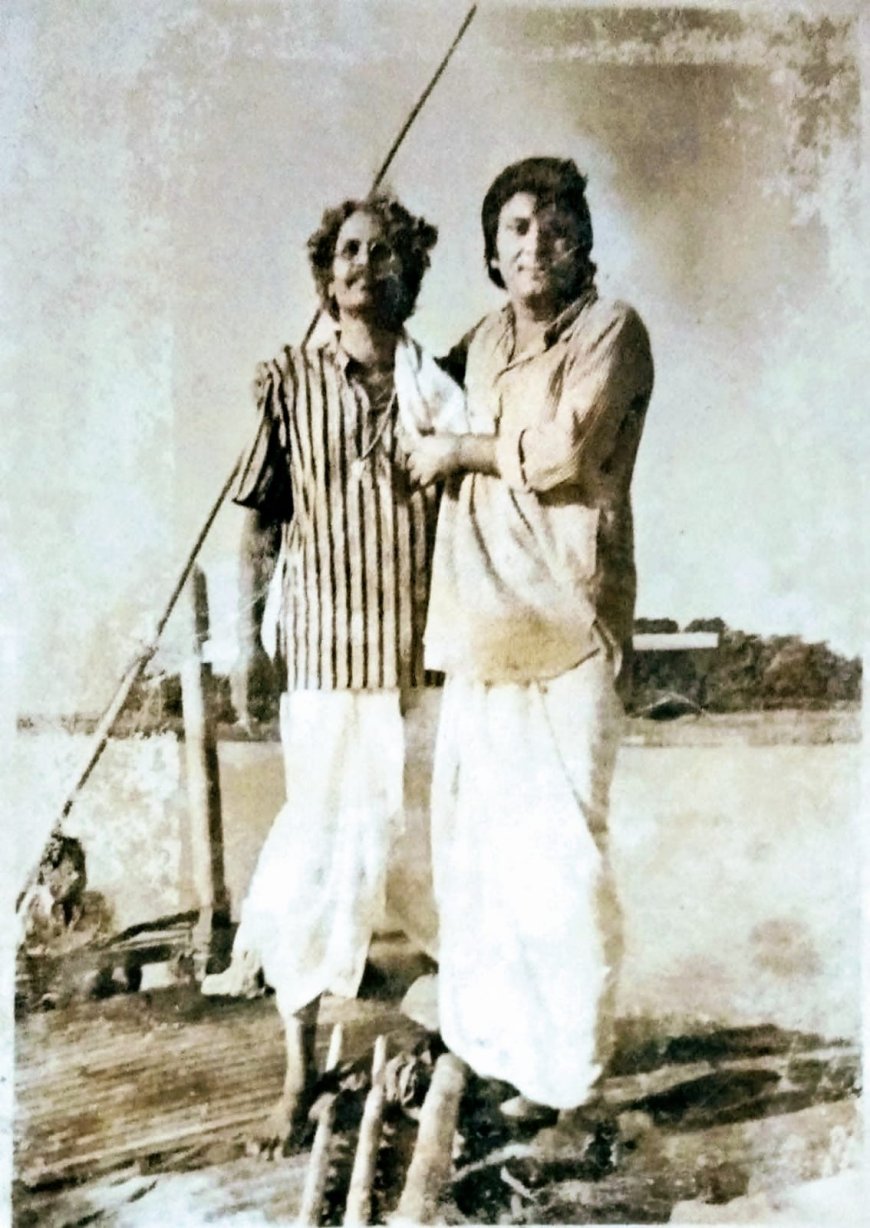
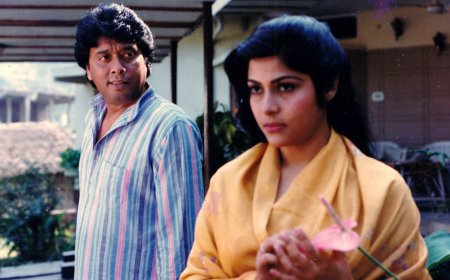
A scene from the film 'Ashray'
However, Roy maintains that his greatest honour came in the year 2000, when he staged the play Sarkari Inspector in New Delhi at the National School of Drama auditorium, as part of the Sangeet Natak Akademi award ceremony. The hall was densely populated with former and current alumni, eminent critics, and others associated with theatre and the arts. When the curtain fell to resounding applause, Ebrahim Alkazi, who had been Director of NSD during Dulal Roy’s student years, presented a bouquet to Roy and stated with emotion: “This is one of the most glorious moments of my life, witnessing one of my most cherished students being honoured, recognised, and celebrated for his achievements.”
A resident of Beltola in Guwahati, Dulal Roy is backed by his culturally inclined family, whose unwavering support has been a steadfast source of strength for him throughout his journey. His spouse, Santi Chaya Roy, is a talented film and stage actress, in addition to being a renowned folk dancer.
What's Your Reaction?