



























Review: Halad (2025)

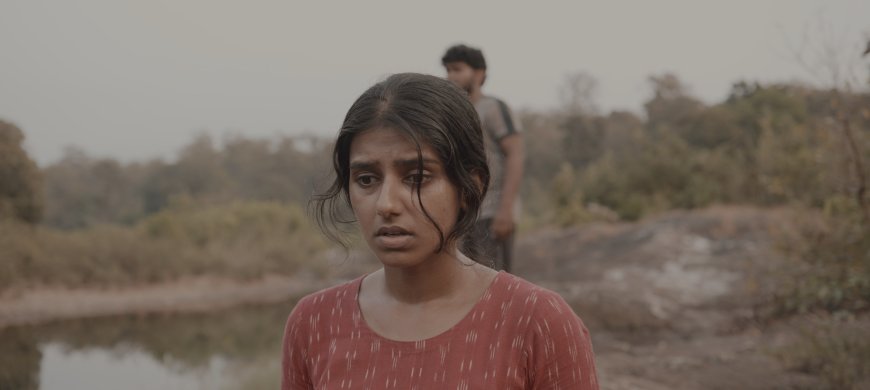
Sobita Kudtarkar’s short film Halad unfolds as an accumulation of emotional, social and atmospheric pressure within a household governed by fear. The film situates us inside a family trapped under the authority of an irresponsible patriarch whose control no longer seeks justification. What emerges is not simply a portrait of domestic oppression, but a study of how such power quietly reshapes the interior lives of those who endure it.
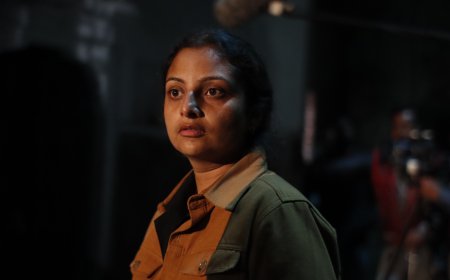
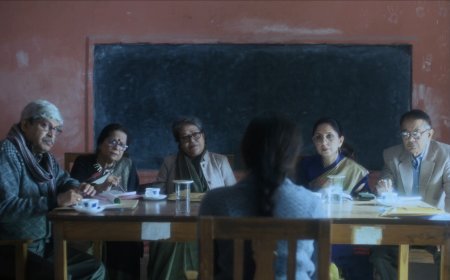
In a Goan village, Shamal (Prashanti Talpankar) works as a labourer in a cashew factory, holding together a fragile household strained by poverty and unrest. Her husband, Fati (Shivdas Ustekar), a habitual drunk, frequently creates chaos at home. Their daughter Roopa (Sobita Kudtarkar), preparing for her exams, finds her routine disrupted when Fati returns one day and provokes a confrontation, leading to a heated argument between them. Shamal intervenes, and Fati storms out. Soon after, word arrives that he was seen heading towards the riverside. Growing anxious, Roopa and her brother Mhadev (Shravan Fondekar) set out in search of him as their journey unfolds against tense undercurrents, while Shamal struggles to hold her family together.
There is a raw, unvarnished intensity to the film’s textures. As Roopa and her brother Mhadev move through the village in search of their drunken father, Fati, the ordeal takes on a restless, disquieting rhythm. The search is not merely physical; it becomes a conduit for Roopa’s spiralling thoughts, uneasy and suggestive of something darker beneath the surface. Tension arises less from incidents than from these interior disturbances, handled with notable restraint. Sobita Kudtarkar’s performance as Roopa grips not because of how much she expresses, but because of how much she holds back, striving to remain intact until the inevitable moment of collapse. In this sense, the film becomes a striking depiction of social and righteous adaptation. A brief but telling moment, where Roopa discovers Mhadev drinking with his friends, introduces a fracture within the siblings’ fragile solidarity. Her anger is less an outburst than a recognition that the father’s patterns risk repeating themselves. The film resists spelling this out, yet the implication lingers.
Around this tightening domestic space, rituals continue. A bridal ceremony unfolds as a folk song rises in the background. The juxtaposition is quietly devastating. As one household edges toward coping with a crisis, another prepares to begin a sanctioned cycle of belonging. The irony is not underlined, yet it is unmistakable. It is here that Halad locates its breaking point, where suppressed emotions coalesce into an irreversible shift. Whether the resulting loss can even be called a loss remains an open question, one that the film wisely leaves unresolved.
Halad maintains a steady sense of jeopardy, observing rather than declaring, and allowing its realism to emerge through detail and duration. What remains is a cold, unsentimental glimpse into lives shaped by control, yet not entirely defined by it. Beneath its apparent stillness, the film carries the force of something waiting, perhaps inevitably, to break. It builds with quiet persistence, giving way to a gripping finale that feels less like a work of fiction than a stark moral reckoning.
Halad was screened at the 56th edition of the International Film Festival of India in 2025.
What's Your Reaction?