































Review: Distance (2026)

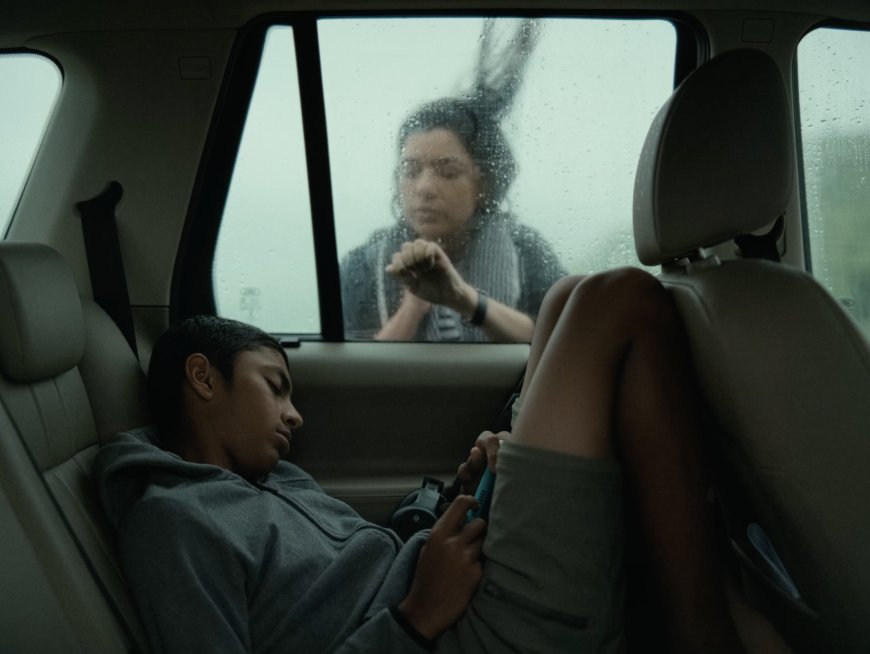
Cinematographer Swapnil S. Sonawane’s debut short film Distance resists the familiar grammar of road movies, where travel often promises self-discovery and movement functions as liberation. Here, the passage of time becomes endurance, and intensifies the discomfort of forced proximity between two emotionally estranged individuals, while grief hangs over the vehicle like a third passenger that is shapeless, persistent and impossible to ignore.
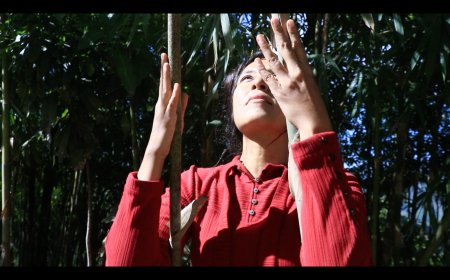
Clocking in at around twenty-six minutes, Distance begins with a journey already burdened by absence. Ambika (Rajshri Deshpande) is tasked with driving Dhruv (Rudra Patwardhan), the thirteen-year-old son of her best friend, back to boarding school months after the sudden death of his father. Yet what unfolds is an intricate study of emotional estrangement and the quiet anguish of unspoken truths.
Every passing kilometre accumulates not towards catharsis but towards pent-up confrontations, as Swapnil S. Sonawane and co-writer Subhadra Mahajan construct a world where silence acquires texture and accountability carries emotional weight. Dhruv’s hostility towards Ambika is not immediately legible, nor is it designed to be. His resentment emerges through gestures of withdrawal, irritation and stubborn refusals of intimacy rather than declarations. Ambika, meanwhile, expresses care through practical acts rather than eloquent speech, navigating suppressed grief and emotional turbulence with quiet restraint.
Objects acquire unusual significance here. The accidental destruction of Dhruv’s windmill project initially appears to be a minor narrative detour, yet it gradually reveals itself as the film’s governing theme. The broken object becomes more than damaged cardboard and glue. It becomes another loss in a life suddenly structured around absence. The windmills — both the practical structures scattered across the landscape and Dhruv’s fragile science project — emerge as metaphors for transformation, converting invisible forces into movement. When Ambika helps repair the model turbine and its tiny bulbs flicker back to life, the moment resonates precisely because the film earns its symbolism through restraint rather than insistence.
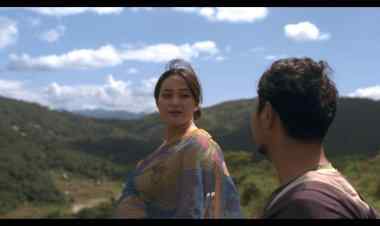
Sonawane frames the film in a 4:3 aspect ratio, turning roads cutting through monsoon-soaked greenery and mist-covered hills into spaces of enclosure rather than liberation. The compressed frame also helps him place the characters inside an SUV in a state of emotional confinement, where even moments of respite feel temporary and tenuous. The landscapes, though expansive, function less as open spaces than as volatile chambers, mirroring the remoteness between the two travellers. Prerna Saigal’s editing maintains this carefully modulated rhythm, allowing silences and awkward pauses to linger without overstating their emotional weight. Meanwhile, Anish John’s sound design captures the textures of the journey by creating an aural landscape where grief remains constantly present, even when unspoken.
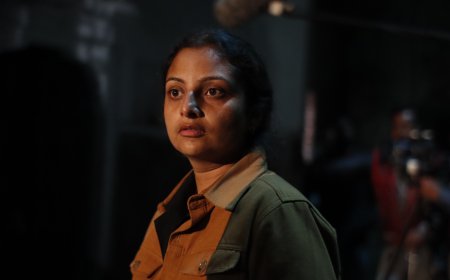
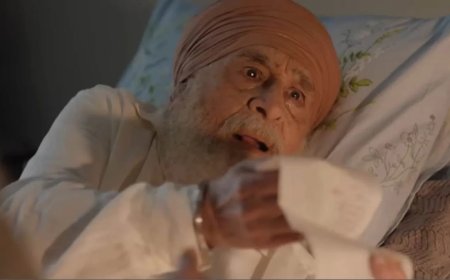
Rajshri Deshpande delivers a finely measured performance as Ambika, a woman performing an act of care out of love and loyalty towards her friend while carrying bottled-up grief and emotional burdens of her own. She internalises Ambika’s anxieties, allowing guilt, tenderness and restraint to emerge through small gestures rather than overt emotional displays. Rudra Patwardhan, as Dhruv, carries within him both the absence of his father and a secret that quietly shapes his behaviour throughout the journey. His performance is marked by withdrawal and carefully guarded silences, embodying a pain that reveals itself less through expression than through resistance.
What makes Distance resonate is its recognition that grief rarely isolates itself within individuals. It leaks across relationships, reshapes bondings and creates unexpected fault lines. The revelation that surfaces near the film’s conclusion does not merely function as narrative payoff. Instead, it reframes what came before, exposing how people can remain strangers even while carrying versions of the same wound. Its refusal to arrive at neat emotional closure ultimately gives the narrative much of its power.
Distance had its world premiere at this year’s New York Indian Film Festival.
What's Your Reaction?