











Review: In Our Nature

There is something quietly unsettling about the idea that human beings have become strangers to the natural world. In Our Nature, a 60-minute documentary directed by James Parker, this estrangement becomes the starting point for an inquiry into loneliness, social fragmentation, and the diminishing place of nature in contemporary education. Instead of approaching environmental consciousness solely as a matter of conservation, Parker considers what our relationship with the natural world might reveal about the ways we live with one another.
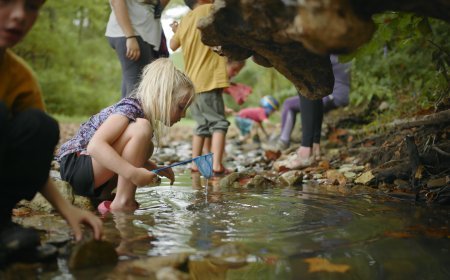
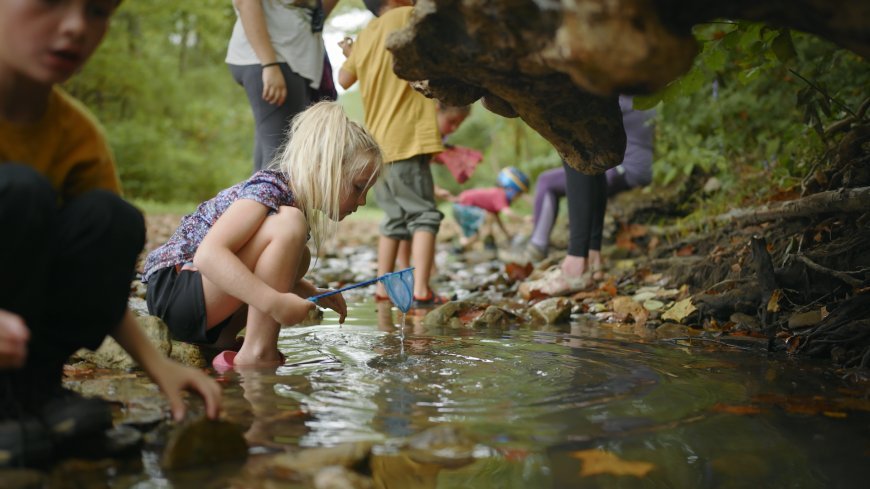
Moving across three distinct settings, Parker examines how nature-based education can foster connections that conventional institutions and social structures have struggled to sustain. On Chicago's South Side, Quilen and Hannah Blackwell run a flower-farm social enterprise, transforming vacant lots into growing spaces while creating employment opportunities for young people. In rural Kentucky, Red Oaks Forest School brings children and families into an outdoor learning environment that seeks to transcend cultural and political differences. In San Antonio, educator Jason Stout works with military families through TAPS (Tragedy Assistance Program for Survivors), a national nonprofit organisation, using experiences in nature to help those coping with bereavement find a measure of connection and belonging.
These stories give the documentary its most persuasive material. The flower farm, in particular, offers a tangible example of how environmental work can also become a form of community building. What might otherwise remain neglected urban land acquires a social purpose, bringing people together through the shared labour of cultivation. Similarly, the forest school's attempt to keep environmental education outside the familiar machinery of political disagreement raises an important question: why should a child's relationship with the natural world become a matter of ideological allegiance?
Tina Brouwer, the school's executive director, speaks about the difficulties of teaching environmental subjects in a politically charged climate. Her observations point to an increasingly troubling tendency to turn even basic questions of ecological responsibility into cultural battlegrounds.
The interviews provide much of the documentary's intellectual framework. Author Richard Louv, whose work has examined children's diminishing contact with nature, discusses how indoor comforts and technological conveniences have gradually altered childhood experiences. His remarks suggest that the problem extends beyond screen addiction or a lack of outdoor activity. We have become less accustomed to physical and emotional discomfort, and perhaps less equipped to negotiate the demands of relationships and communities.
Other contributors, including educators and conservationists, connect this estrangement to questions of mental health, physical wellbeing, and political division.
The segment involving TAPS introduces a more intimate dimension. Through the experiences of military families dealing with loss, the documentary considers nature as something other than a recreational escape. Nonetheless, it offers a perspective on grief that human institutions cannot always provide.
Yet In Our Nature occasionally resembles an extended educational presentation, with its contributors articulating variations of an argument the documentary has already established. Its three strands are engaging, but Parker does not always find a sufficiently distinctive cinematic language to connect them. The documentary's hopeful closing reflections, meanwhile, leave little room for ambiguity.
Still, its underlying proposition deserves consideration. Access to nature should not be a privilege determined by geography or income, any more than environmental education should be restricted by political affiliation. Parker reminds us that ecological responsibility is inseparable from our responsibility towards one another. The documentary may be more convincing in its intentions than in its execution, but its central question lingers: what have we lost by moving so far away from the world that sustains us?
What's Your Reaction?