




























She Listens Alone (2026)

There is something inherently unsettling about intimacy conducted through a screen. A stranger can sit in your home without ever crossing the threshold, and a professional relationship can acquire an unsettling familiarity without either person leaving their chair. She Listens Alone, an independent psychological thriller directed by Sean O. McGuiness, builds its premise around precisely this unease, examining the fragile boundary between empathy and intrusion in an age when so much of human connection happens remotely.
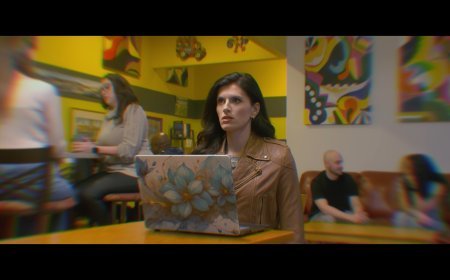
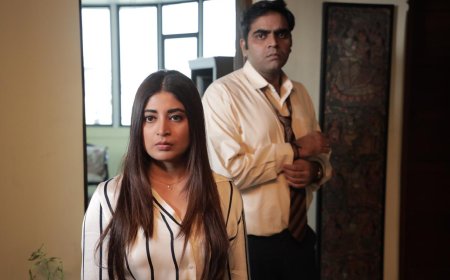
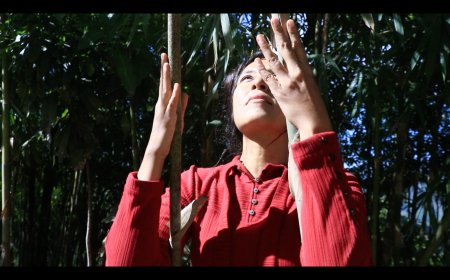
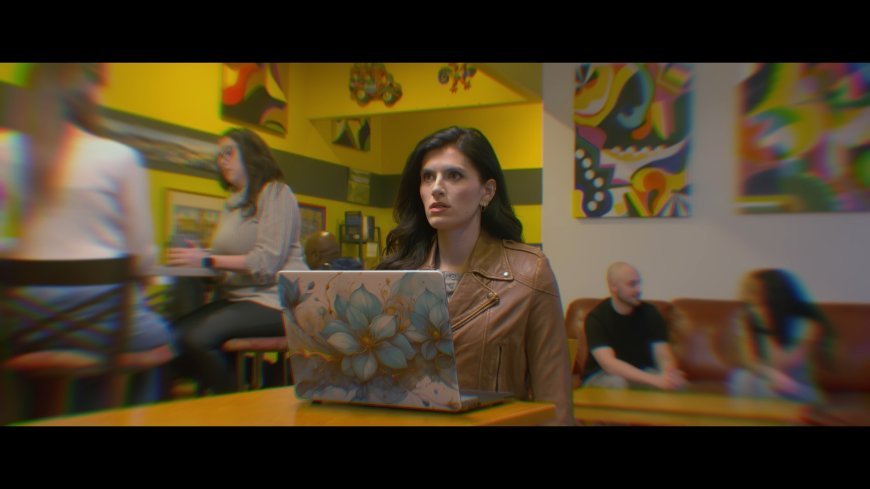
Sabrina Nolan (Alivia Levie) is a virtual therapist whose work requires her to listen to other people’s problems while her own life grows increasingly solitary. Her boyfriend, Mike (Forest Quaglia), runs an antique store with Jessica (Jessica Chelsea Vale). During one of her sessions, Sabrina meets Andrew (Wyatt Tithof), a troubled young client who gradually begins to show signs of improvement. At Andrew’s insistence, Sabrina gives him her phone number, stipulating that he should contact her only in an emergency. On Mike’s birthday, Andrew asks Sabrina to meet him at a pub, but she refuses. Later, when Sabrina discovers that Mike is cheating on her with Jessica at his birthday gathering, she is hurt and angry. In an impulsive decision, she accepts Andrew’s invitation. What begins as an emotionally understandable response to betrayal gradually alters the nature of their relationship, as Andrew’s interest in Sabrina becomes increasingly personal and obsessive.
Andrew’s gratitude becomes fixation. His messages grow increasingly personal; information that he should not possess begins to surface; and the reassuring distance provided by the screen starts to disappear. What had seemed like a controlled, professional environment becomes a source of vulnerability. The film’s most effective idea is contained in that reversal. Technology that makes Sabrina feel safely removed from her clients can also give an obsessive stranger a way into her private life.
McGuiness is clearly interested in the contradictions of Sabrina’s profession. Empathy is her defining quality, yet it is precisely her willingness to understand another person that leaves her exposed. The film also recognises how easily contemporary loneliness can turn digital contact into a substitute for more complicated forms of human connection. These are timely concerns, particularly when therapy, friendship and social interaction increasingly take place through the same glowing rectangle.
She Listens Alone works comfortably within the conventions of the psychological thriller, using the familiar premise of an apparently benign online relationship taking an unsettling turn. The film makes effective use of the screen as both a point of connection and a source of vulnerability, gradually tightening the sense of unease as Andrew’s interest in Sabrina becomes more intrusive. The narrative approach keeps the focus on the psychological dimensions of obsession, loneliness and misplaced empathy rather than relying heavily on conventional thriller spectacle.
Ryan Sweeney’s cinematography makes useful use of enclosed interiors and the visual separation imposed by screens, while Paul Stamper’s editing maintains a reasonably taut rhythm. Sabrina is also a more interesting protagonist when the film allows her to be fallible. Her professional lapse feels less like a plot device than a natural extension of her instinct to help, a quality that Alivia Levie captures with a measured performance, allowing Sabrina’s vulnerability to emerge without ever becoming overly emphatic.
Ultimately, She Listens Alone is a competently made indie thriller with a recognisable contemporary anxiety at its centre. Its depiction of a screen becoming less a barrier than a doorway has real potential, but the film does not quite exploit that idea with enough psychological or formal imagination. It remains a decent, occasionally unsettling watch, even if its familiar mechanics keep it from becoming the penetrating study of loneliness and obsession it seems to want to be.
What's Your Reaction?