































Review: Small Clouds (2025)

Shubham Sumit’s Small Clouds is a quietly affecting coming-of-age drama about childhood intimacy, the first stirrings of adolescent awakening and the difficult distance that growing up can create. Rather than treating adolescence as a clean break from childhood, the film finds something more unsettled in that transition. It is interested in the gradual realisation that the games, affections and private worlds that once seemed permanent may not survive unchanged.
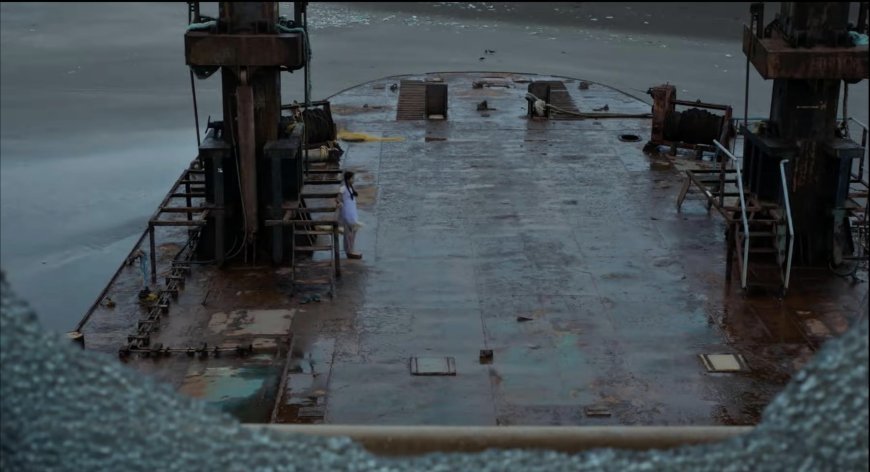
At the centre are Sibbu (Sneh Dhavale) and Jiji (Vaishnavi Raut), siblings who retreat into an imaginative world aboard a broken, abandoned ship. They turn its wreckage into an unexplored island, christening it Jibu Island as though they have discovered a place beyond the reach of the ordinary world. The conceit is simple but evocative. The ship becomes a metaphor for their childhood itself—once capable of carrying them elsewhere, now stranded between what they were and what they are becoming. Their invented geography gives them a space in which the rules of the adult world do not apply, even as that world slowly begins to intrude.
Sumit is particularly perceptive about the small disturbances that signal an uneasy awakening into adolescence. The older boys who bully Sibbu represent one familiar rite of growing up, but the film avoids turning them into conventional antagonists. Their presence is part of the social world Sibbu is beginning to encounter, one in which childhood companionship is no longer the only source of belonging. In one telling moment, Jiji joins the older boys in a game of blind man’s buff. She is genuinely happy, and Sibbu is happy to see her happy—until something shifts almost imperceptibly in his expression. A trace of possessiveness or jealousy enters the frame. Sumit does not explain it, and simply lets the feeling linger. The film is filled with such fleeting moments, through which the filmmaker assuredly captures the subtle emotional dislocations that accompany the loss of childhood innocence.
That restraint is central to the narrative. The film trusts gestures and glances more than dialogue to register emotional change. Jiji placing a decorative flower in her hair and examining herself in the mirror becomes an understated image of self-awareness. Nearby, the father finishes shaving and warns Sibbu not to play with the razor. The moment carries a quiet thematic resonance: the children are beginning to encounter the rituals and objects of adulthood before they fully understand what they signify. The family’s circumstances add another layer of stillness to this process. Their mother is bedridden, creating an atmosphere in which childhood exists alongside a muted awareness of fragility. Sibbu and Jiji move between playfulness and aggression, tenderness and vehemence, sometimes within the same emotional space. Their closeness is never presented as uncomplicated. The film understands that childhood relationships can contain contradictory impulses—affection, rivalry, dependence, resentment—without requiring them to be neatly resolved.
Ranadhir Biswas’ cinematography gives these tensions an appropriately tactile quality. His close framing repeatedly confines the characters within the image, making their physical proximity feel both intimate and strangely isolating. The misty seascapes, rain-soaked backyards and weathered textures of the landscape create a serene surface beneath which something more unsettled is taking shape. The setting is beautiful without becoming picturesque. Its quietness often feels like an extension of the characters’ inner isolation.
Complementing the visuals, Sanjuli Khare’s production design lends the interiors a lived-in, weathered quality, making the spaces inhabited by Sibbu and Jiji feel like extensions of their private world.
Piyush Jambhulkar’s sound design is equally important to the film’s atmosphere. The recurring sounds of the sea and wind give the bucolic surroundings an almost hypnotic rhythm. Rather than filling the silences, the soundscape deepens them, allowing the environment to become an aural presence in its own right.
Ali Mazin’s editing maintains the film’s unhurried rhythm, giving moments room to breathe without overstating their emotional significance. His measured cuts mirror the gradual shifts in the siblings’ relationship, giving silences, gestures and fleeting expressions enough space to register.
The two child actors, Sneh Dhavale and Vaishnavi Raut, give natural, finely calibrated performances as the siblings, capturing the intimacy, playfulness and friction of their changing relationship.
What makes Small Clouds linger is its refusal to define precisely when childhood ends. Sumit does not treat growing up as a dramatic rupture, but as an accumulation of tiny departures that gradually reshape a relationship. In the end, Sibbu and Jiji are still suspended between childhood and whatever comes next, unaware that the world they have created together is already becoming a memory.
Small Clouds has won the Silver Conch for Short Fiction (National Competition) Film at the 19th Mumbai International Film Festival, held in 2026.
What's Your Reaction?