















Review: One Day in Sedona (2026)

Something is reassuring about the prospect of two strangers meeting by chance and discovering, over a long conversation, that they have more in common than either could have anticipated. It is a premise Richard Linklater explored with considerable sensitivity in his Before trilogy, where the pleasures of romance emerged less from conventional plot mechanics than from the gradual intimacy of conversation.
Writer-director Monique Sorgen’s One Day in Sedona, an independent romantic drama, revisits that territory with a pair of middle-aged characters whose encounters with grief, divorce and the uncertainties of the future make them receptive to an unexpected connection. It may not possess the philosophical depth or formal inventiveness of Linklater’s films, but it offers an amiable variation on the pleasures of two people talking their way towards one another.
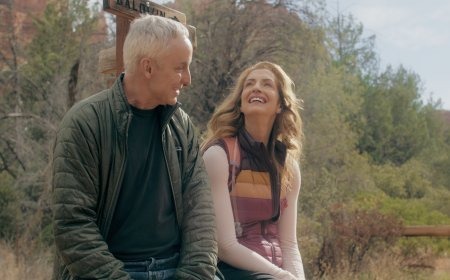
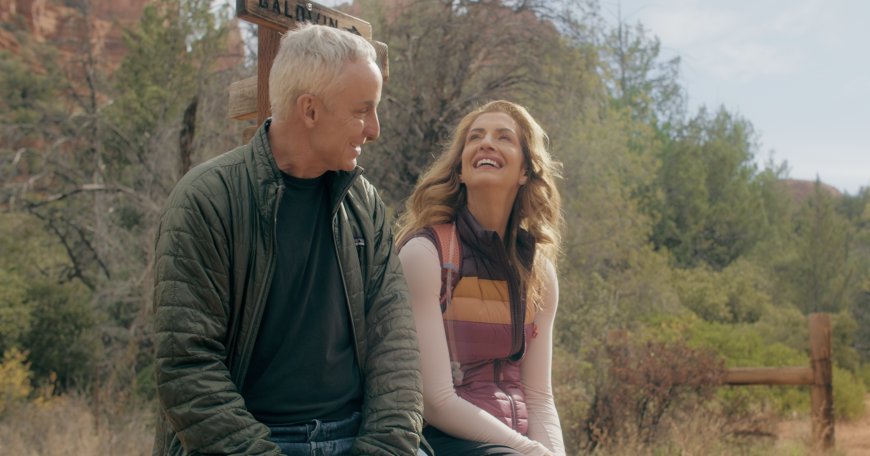
Set against the striking red-rock landscapes of Sedona, Arizona, the film brings together Julie and Will, both in their fifties and at turning points in their lives. Julie is mourning her father, a civil rights lawyer whose commitment to social justice has left her wondering how she might honour his legacy. Will, meanwhile, is struggling to find his footing after the end of his marriage. Their meeting at a hiking trailhead is unremarkable enough: he has forgotten to bring water, and she obliges. What begins as an awkward exchange develops into a shared walk, allowing the strangers to discuss their disappointments, convictions and hopes without the usual pressures of a first date.
The film’s principal appeal lies in the easy rhythm of these exchanges. Julie and Will tease each other, disagree, flirt and occasionally stumble into more intimate territory than either might have intended. Their dialogue has a conversational looseness that makes their growing attraction plausible, even when the writing occasionally draws attention to its own cleverness. The humour is particularly welcome, preventing discussions of bereavement, political anxiety and personal responsibility from becoming oppressively earnest. Both characters are old enough to recognise the complications of relationships, yet neither has entirely abandoned the possibility of being surprised by another person.
Their conversations span civil rights, gender inequality, parenthood, artificial intelligence and the impermanence of life, with Julie’s observations on the unequal distribution of domestic and emotional labour lending the film a contemporary edge. The writing is most engaging when personal experiences expose the contradictions in even progressive attitudes, though some exchanges feel more like talking points than genuine discoveries. Julie’s belief that her deceased father communicates with her through signs adds a spiritual dimension, counterbalancing Will’s scepticism and allowing the film to explore how people seek meaning after loss without insisting on rational explanations. Sedona’s reputation for spiritual energy complements this search for emotional renewal, although its striking landscape occasionally feels more like a backdrop for personal revelations than a fully realised setting.
The performances are central to making this modest conceit work. Alysia Reiner brings warmth, wit and emotional candour to Jules, while Wallace Langham gives Will an appealing mix of awkwardness and vulnerability. Together, they suggest people who have lived complicated lives beyond the limits of the screenplay. Their chemistry rests less on grand declarations than on small shifts in attention, playful challenges and tentative disclosures through which strangers begin to trust each other. The film understands that attraction in middle age can involve not simply desire but also the relief of being heard without having to explain every aspect of oneself. Cinematographer Avi Kaye complements their performances with an appreciation for Sedona’s striking red-rock landscapes, lending the film visual appeal while occasionally allowing the scenery to do more emotional work than the drama itself.
There is, inevitably, a limit to how much a single hike can accomplish. The film occasionally mistakes the discussion of difficult subjects for a deeper examination of them, and its contrivances are easier to accept than to forget. Nevertheless, its uncomplicated faith in conversation gives it a certain charm. One Day in Sedona is not a reinvention of the romantic drama, nor does it approach the emotional complexity of its most obvious influences. It is a pleasant, thoughtful diversion that finds something worth celebrating in the possibility of beginning again, even when life has already taken several unexpected turns.
What's Your Reaction?