


























Review: Khoabjomin (A Mouse and A Man, 2026)

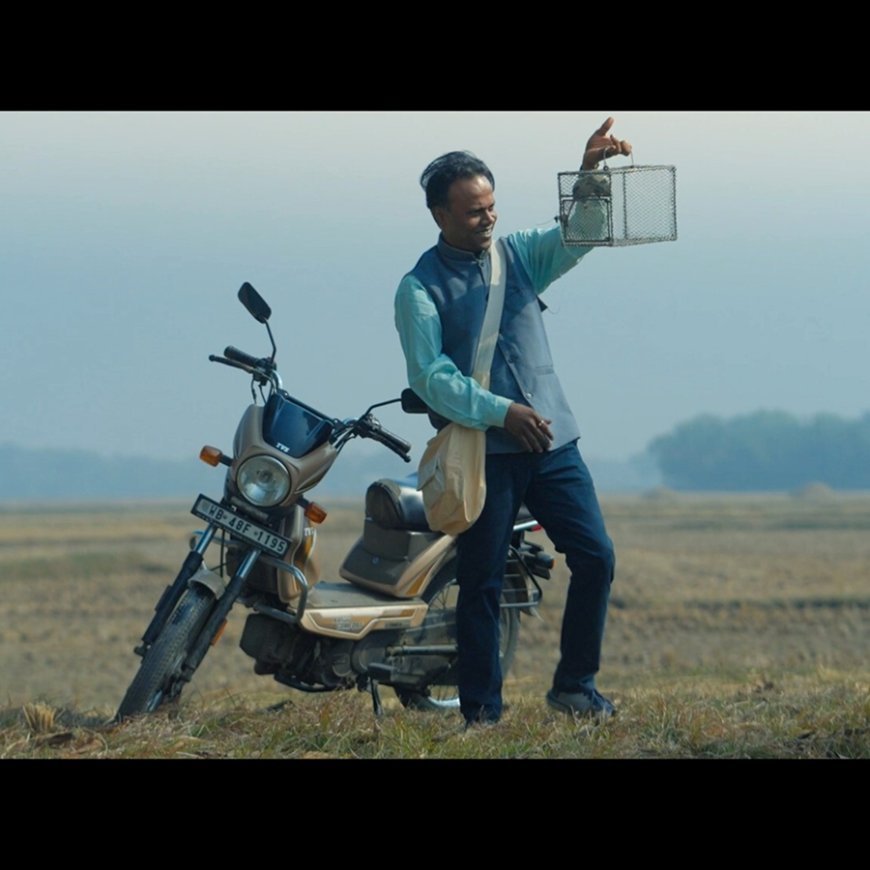
In Sahadeeb Das’ Khoabjomin (A Mouse and A Man), set in a West Bengal village in 2019, the desire for a better life is measured not only by what a man cannot afford but also by the ordinary comforts he watches others enjoy.
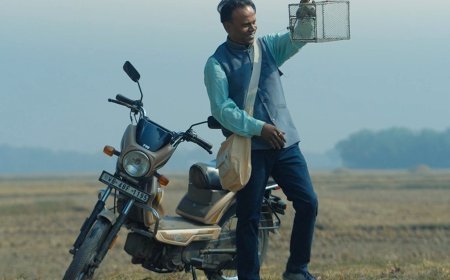
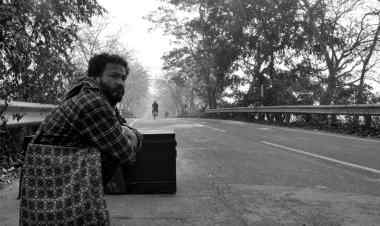
The protagonist, a farmer, lives with the daily indignities of financial insecurity. His son’s tutor has stopped teaching the boy because the fees remain unpaid. To settle the debt, the farmer must turn to a rice trader for money, entering a cycle of obligation from which there seems to be no easy escape. Nearby, another debtor is being hounded by a private microfinance institution. The village’s economic order is held together by transactions that promise relief while deepening dependence.
Against this backdrop, the farmer becomes fixated on the village postmaster, whose comparatively secure existence offers an enticing alternative to his own. The difference between the two men appears deceptively small. One has a regular job; the other struggles to sustain his household. Yet this distinction separates not merely their incomes but their possibilities. The farmer imagines himself clean-shaven, neatly dressed, eating rice with fish, and performing the unremarkable duties of a post-office employee. Even paying for his son’s picnic outing, an expense he cannot comfortably meet in his present circumstances, belongs to this imagined life. His longing is less for wealth than for the freedom to stop calculating the cost of every small pleasure.
An effective visual counterpart to this predicament is a mouse that has infested the farmer’s house. Its restless movements and inability to escape its surroundings gradually acquire significance beyond that of a domestic nuisance. The animal becomes an uneasy reflection of a man whose life is circumscribed by debts, obligations, and diminished expectations. The parallel is not exact, and that is precisely where the film locates its tension. The farmer and the postmaster inhabit the same village, but their circumstances afford them radically different degrees of security. The farmer sees the postmaster’s regular salary, neatly kept appearance, and freedom from the daily anxiety of poverty as attainable signs of a better life, though these ordinary comforts remain out of his reach.
Das’s concerns remain grounded in the specific textures of rural Bengal. His attention extends beyond the protagonist’s immediate distress to the public sounds that accompany it. Announcements summon voters to a meeting; television news reports on the Saradha chit fund scandal; the news of a farmer’s suicide enters the surrounding atmosphere; a song associated with a death ceremony carries its own intimation of loss. Das, who also serves as the sound designer, utilises these sounds so they coexist without becoming explanatory commentary. Together, they form a social landscape in which private hardship is inseparable from wider anxieties about money, political life, and survival.
Koushik Kar gives a convincing dual performance as the farmer and the postmaster, differentiating the two men without exaggerating the distance between them. Their physical proximity underscores the film’s central paradox: the life the farmer desires is not beyond imagination, yet remains stubbornly beyond his reach.
Khoabjomin’s most affecting insight lies in the relationship it draws between aspiration and confinement. The farmer’s dream is neither grand nor unreasonable. That he must experience it as a fantasy reveals the depth of the inequality surrounding him. Like the mouse in his house, he can sense the possibility of another existence without finding a clear passage into it.
Khoabjomin received the Second Best Film award in the Short Fiction Competition at the 18th International Documentary and Short Film Festival of Kerala.
What's Your Reaction?