






































Review: Brotherhood: A Cinematic Musical (2026)

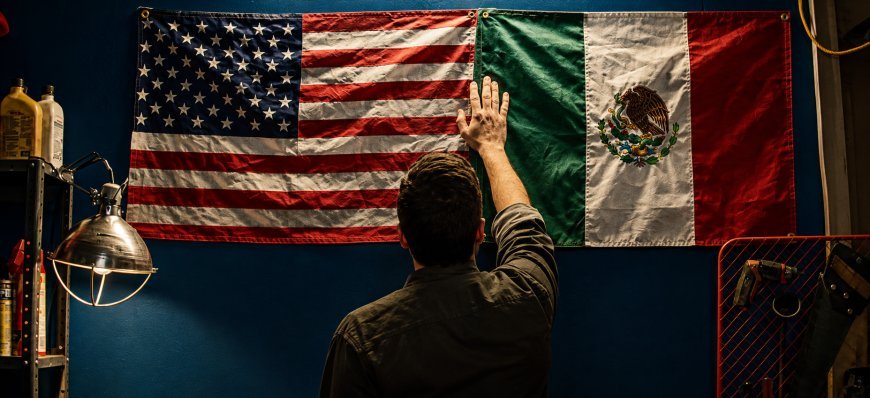
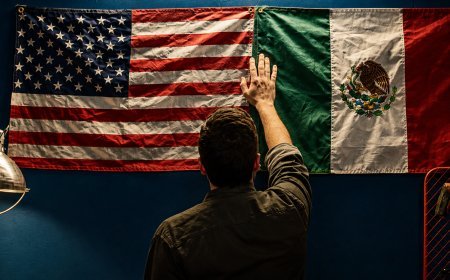
Ross Boothe’s Brotherhood: A Cinematic Musical arrives at a moment when immigration in the United States has become increasingly entangled with political rhetoric, public anxiety, and competing ideas of national identity. It attempts to reconcile the ideals of liberty, compassion, and fraternity with the increasingly hostile attitudes toward immigrants. Its intentions are earnest, even admirable, though its narrative treatment does not always match the emotional weight of the issues it seeks to address.
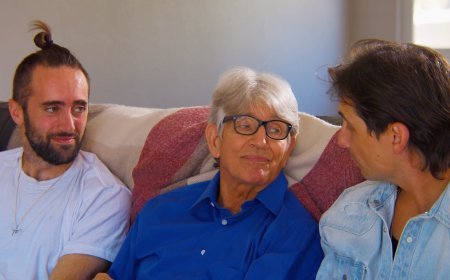
The film follows two neighbours, Jon (Casey Elliott), an American citizen, and Fabian (Mauricio Martínez), a Mexican immigrant whose asylum application has kept him in legal limbo for more than a decade. Fabian, who now runs a restaurant, fled Mexico after discovering his uncle’s involvement with a drug cartel, an association that put his family’s lives at risk. Having crossed the border, he and his family were left navigating the exhausting machinery of immigration appeals, interviews, and court proceedings. Their uncertainty is set against Jon’s relatively secure existence, though his understanding of the country he calls home is shaped by a markedly different set of convictions.
Boothe establishes this contrast early, during a Fourth of July celebration, where children sing patriotic songs as the community gathers to mark the occasion. Fabian speaks with gratitude about the opportunities America has offered him, while Jon’s conversations with his wife, Cami (Charlotte Hemmings), reveal a growing disillusionment with the country and its direction. The film gradually brings their perspectives into confrontation with the prejudices embedded in everyday life. At a supermarket, Fabian’s wife Nubia (Gabriela Bañuelos) is reprimanded for speaking Spanish; at school, Fabian’s daughter Sofia (Paulina Reyes) is excluded from a weekend gathering because one of her classmates' fathers disapproves of her association with immigrants. These incidents are familiar, but they give the film’s larger argument a tangible setting.
Jon’s transformation is perhaps the film’s most consequential narrative thread. Initially indifferent to Fabian’s predicament, he begins reconsidering his position after witnessing the consequences of hostility toward immigrants. Cami’s pointed observation that the question is not what she cares about, but what Jon does not, becomes an important moral challenge. His eventual willingness to testify at a council meeting and help secure Fabian’s release marks a shift from passive sympathy to civic responsibility. Fabian, meanwhile, articulates the film’s central belief: liberty and justice should not remain privileges confined to a particular nationality.
The musical format, built around sixteen original songs, gives the film its distinctive identity, though the numbers vary in effectiveness. The compositions carry a certain sincerity, occasionally compensating for the limitations of their staging. Oscar Ignacio Jiménez’s cinematography makes effective use of saturated colours, aerial imagery, and considered framing, while editors Andy Matthews and Aaron Tharp maintain a rhythm that serves both the musical passages and the quieter dramatic exchanges. Mauricio Martínez, Casey Elliott, Gabriela Bañuelos, and Charlotte Hemmings, alongside younger cast members Paulina Reyes and Oakley Thacker, lend the story a personable quality.
Brotherhood: A Cinematic Musical makes a sincere effort to bring its message of compassion, solidarity, and shared humanity to the screen. While it does not always find the most effective means of expressing its ideas, the film remains reasonably engaging, with an uncomplicated but meaningful message and a humane perspective that lends it considerable warmth.
What's Your Reaction?