





























Review: Zero Bulb (2025)

There is, in Zero Bulb, a studied restraint in pacing, a choice that initially feels like inertia but gradually reveals itself as method. Set on the night of Kojagiri, when devotees stay awake to welcome Goddess Lakshmi, believed to bless the wakeful with prosperity, the short film centres on two women in a Goan village. Festivity lingers just beyond their threshold, carried in the soft hum of the night, yet never quite enters their home. What unfolds instead is something inward with a slow, deliberate excavation of memory, absence, and the fragile possibility of connection.
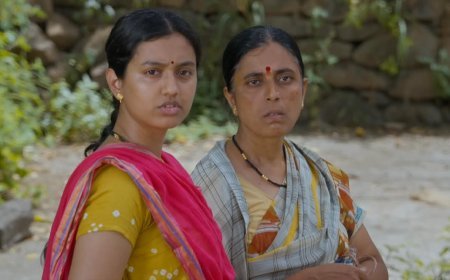
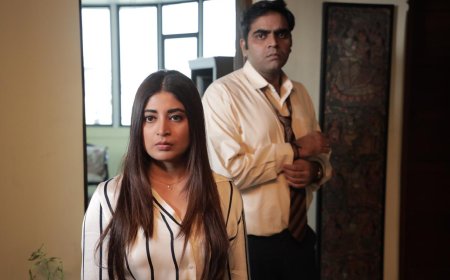
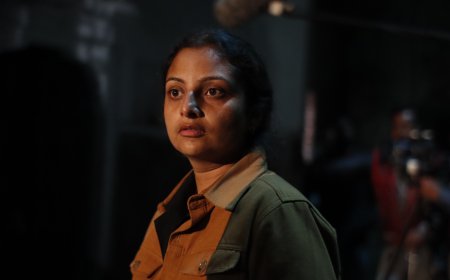
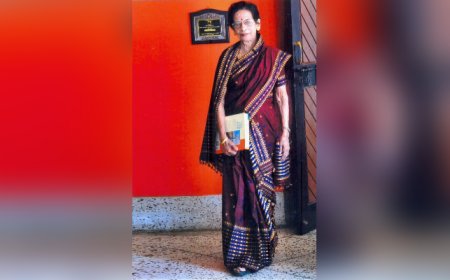
The film opens with a nocturnal car ride. Tarka (Tarka Bhende), a young woman, looks out at the passing roads, remarking off-screen how unfamiliar they now seem, roads she once knew intimately. It is a simple observation, one that stealthily establishes the film’s emotional terrain, where a world is altered not by geography but by time and estrangement. This sense of dislocation lingers in the house she shares with Sudha (Anjani Shridhar Kamat), her elderly mother-in-law. The night stretches unbroken as the two women occupy the same space, the passage of time casting a dim, wavering light, as if the film itself resists illumination. Yet within this subdued visual field, something begins to stir.
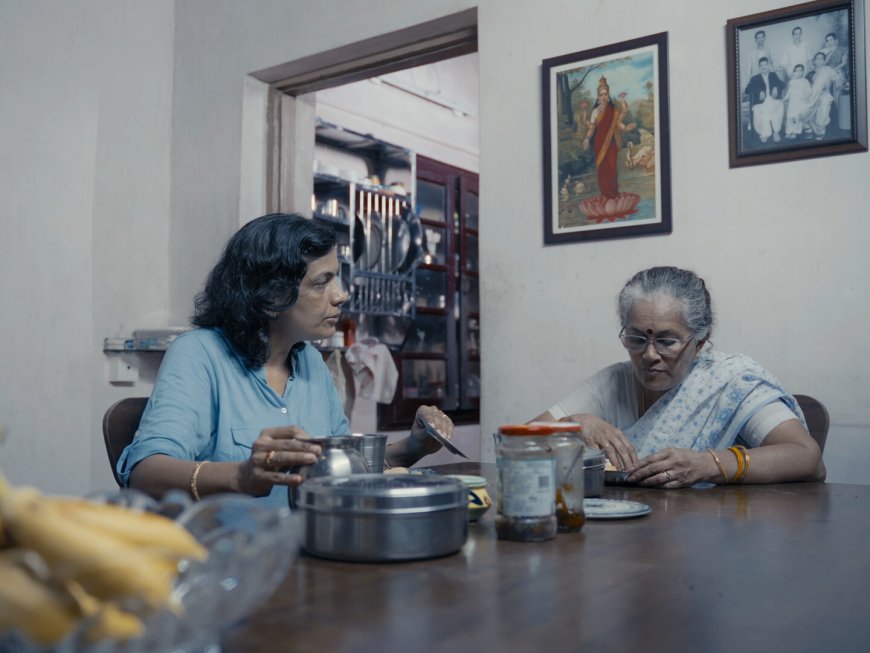
At the dinner table, the film locates its most telling exchange. As Tarka serves Sudha, the conversation turns to Devidas, the absent male figure. Tarka’s resignation—her insistence that he is not worth waiting for—is met with Sudha’s persistent faith in waiting itself. It is not hope, exactly, but habit, perhaps even compulsion. Sudha admits that nothing has changed despite her years of waiting. And yet she continues to wait, as though the act of waiting has become inseparable from her sense of self. The dialogue, spare and unadorned, carries the weight of two distinct yet overlapping disappointments. The film deepens this sense of inheritance through Sudha’s recollection of her childhood, marked by the early loss of both parents. Her memory does not arrive as revelation but as residue, an emotional condition that seems to have shaped her capacity for endurance. It also suggests a deepened tolerance for absence. In this way, the narrative gestures toward a lineage of quiet suffering, passed not through explicit instruction but through lived example.
As the night advances and the belief lingers that the goddess Lakshmi might wander in search of those who remain awake, the conversation between Sudha and Tarka acquires a tentative warmth. When Tarka asks what Sudha would do if the goddess were to visit, the answer is disarmingly simple. She would serve her tea and offer a blessing for everyone’s well-being. Then, almost as an afterthought, she wonders whether anyone is waiting for the goddess herself. It is a gently subversive moment. The question shifts the axis of longing, turning attention away from human desire toward a more universal condition of neglect and yearning.
Made with zero-budget ingenuity and unfolding in real time, Zero Bulb does not seek to resolve its tensions. Instead, it lingers within them, attentive to small, almost imperceptible shifts as two lives long estranged begin to acknowledge each other. Its slowness may test one’s patience, but it is also its moral centre. For in that duration lies the possibility of noticing what would otherwise remain unseen.
Zero Bulb premiered at the International Film Festival of India (IFFI) in the Special Goan Section 2025.
What's Your Reaction?