

































Review: Ghar (2025)

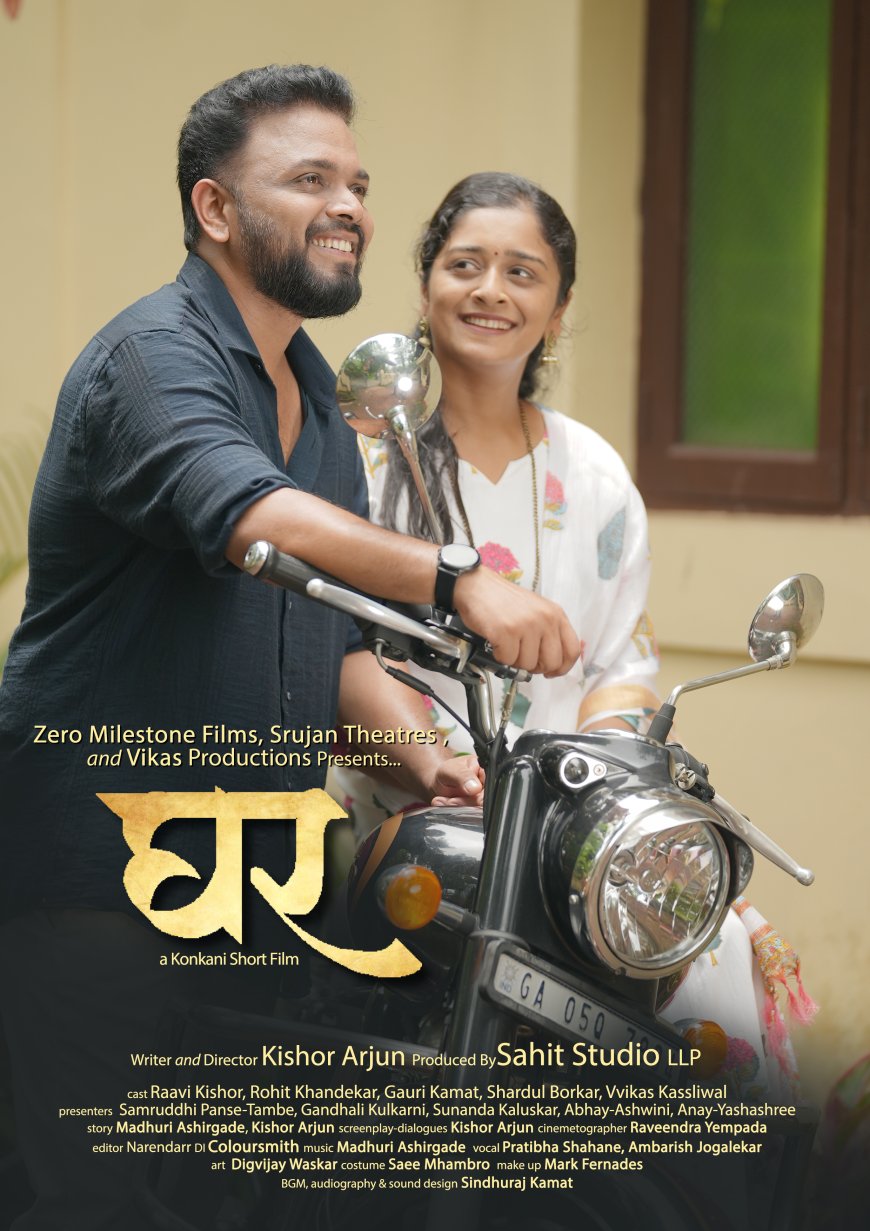
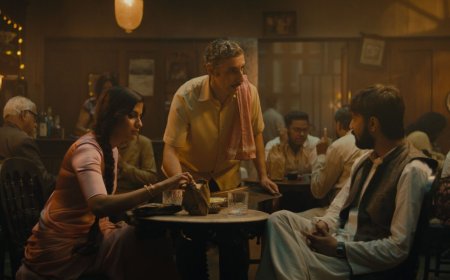
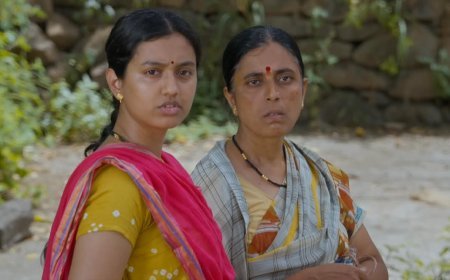
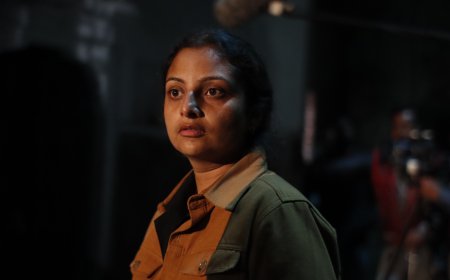
In Ghar, directed by Kishor Arjun, the question of how one continues after loss is approached with a melodramatic thrust. Set within a modest Goan household, this Konkani short follows Raji (Raavi), a young widow rebuilding her life with her son, alongside a mother-in-law (Gauri Kamat) whose grief lingers in quieter, unspoken ways.
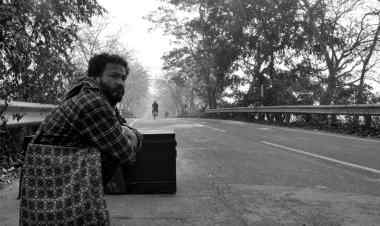
The narrative is set in motion by the arrival of a long-forgotten insurance policy, a device that feels somewhat convenient but opens up emotional fault lines within the household. It is through this development that the film introduces Sam (Rohit Raghuvir Khandekar), a well-meaning presence who represents the possibility of companionship and renewal. His role, while integral to the film’s dramatic trajectory, is drawn in broad, reassuring strokes, leaving little ambiguity in how the audience is meant to receive him. The film seems less interested in complicating his presence than in positioning him as a gentle counterpoint to Raji’s hesitation to turn a new leaf in her life.
Where Ghar remains engaging is in its attentiveness to the everyday rhythms of domestic life. There are moments when the film observes rather than insists—when grief is registered in silences, in small gestures, in the routines that continue despite emotional rupture. The interactions between Raji and her mother-in-law, who has also lost her husband a few years back, carry a lived-in quality that hints at a more textured understanding of shared loss. The domestic space itself is used with sensitivity, where the house functions as both a refuge and a repository of memory.
At times, however, this sensitivity gives way to a more expressive emotional register. Scenes that might have unfolded with greater restraint are instead shaped through familiar cues, making the feelings more immediately accessible, if occasionally less nuanced. This lends the film a somewhat soapy texture, where certain emotional beats feel guided rather than gradually uncovered. The background score, too, appears to support this approach, gently steering the viewer towards the film’s intended emotional responses. Raji’s dilemma to reconcile the memory of her late husband with the possibility of a new relationship is inherently compelling. In making it accessible, the film also renders its emotional arc somewhat predictable. One begins to anticipate not only what will happen, but how it will be framed. Even so, Ghar is not without its merits. Its sincerity is difficult to dismiss, and there are fleeting instances where it gestures towards a more nuanced exploration of grief and renewal. The presence of the mother-in-law, in particular, suggests an intergenerational dimension to loss that the film only partially explores, but which adds a layer of quiet complexity when it does surface.
Ultimately, Ghar is a film that seeks to move its audience, and it does so with conviction, if not always with subtlety. It may not fully escape the pull of sentimentality that defines much of its texture, but it retains a certain emotional clarity in its intentions. What lingers, perhaps, is not so much the specifics of its narrative as the sense of a film caught between observation and emphasis, and reaching for depth, even as it occasionally settles for the familiar.
Ghar was screened at the International Film Festival of India (IFFI) in the Special Goan Section 2025.
What's Your Reaction?