
























Review: This Is Our City (2026)

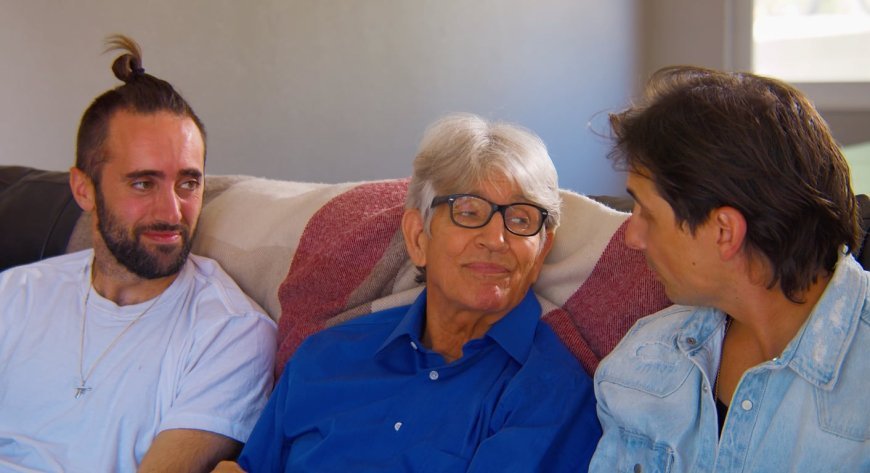
Joseph Galizia’s This Is Our City opens with a quote attributed to an Al Capone descendant: “Organised crime is a lot like sex. It is wild, it is dangerous, and no one knows where it is going.” It is an appropriately unserious declaration for a film about men who mistake their own incompetence for criminal genius.
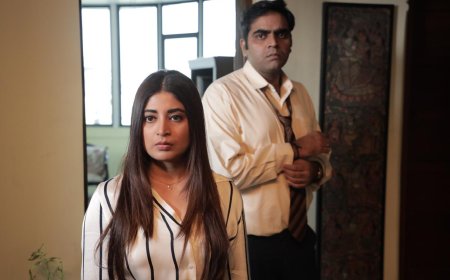
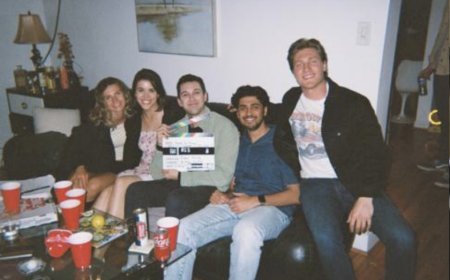
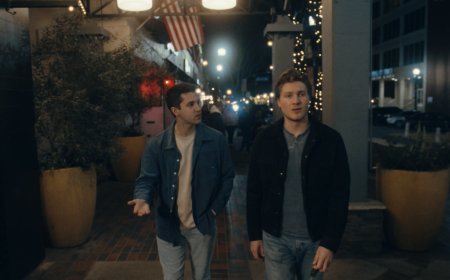
Bill Galanarri, the son of a mob boss, wants to make a name for himself by hiring a film crew to document his life and that of his brother Frankie. He imagines the footage will eventually make its way to Hollywood. What he doesn’t know is that the crew consists of undercover FBI agents, whose access to the family’s operations could bring the entire criminal enterprise down.
The premise lends itself to a mockumentary, with characters occasionally addressing the camera and offering their own versions of events, often in the conviction that they are more interesting, dangerous or consequential than they actually are. Bill’s ambitions are particularly misplaced. He wants to project the authority of a gangster, but his insecurity repeatedly betrays him. Frankie, meanwhile, is less interested in the responsibilities of the family business than in finding ways to avoid them. Their conversations, peppered with profanity, misplaced bravado and sudden bursts of indignation, are meant to expose the gap between the brothers’ self-image and their actual abilities.
There is something inherently comic about watching men who take themselves so seriously struggle to maintain even the appearance of competence. Bill’s attempts to establish authority over his crew frequently dissolve into petty arguments, while his declarations of loyalty and family pride sit uneasily alongside his questionable decisions. The film finds some amusement in this contradiction, although it returns to it so often that the mockumentary format gradually begins to feel less like a source of comic surprise than a device for extending the same joke.
The dialogue is deliberately crude, and the characters’ inability to recognise their own absurdity is central to the humour. But the distinction between irreverence and repetition is not always maintained. Scenes that might have worked as brief interruptions of gangster posturing are stretched into prolonged exchanges, with absurd situations doing much of the work that sharper writing might have done. The performances, including those by Eric Roberts, Drew Lynch, Adam Marcantoni, Max Fabian and Ashley McCauley, rarely give these situations enough variation to sustain their comic momentum.
As an independent production, This Is Our City is free to embrace an unpolished aesthetic. But low production values alone do not necessarily lend a film authenticity; here, the uneven visual and technical execution occasionally makes the deliberate amateurism difficult to distinguish from the limitations of the production itself. Galizia’s film has a workable comic premise and an evident affection for the foolishness of its characters, but its humour is more sporadic than sustained. The gangsters may be convinced they are running the city. The film, however, never quite establishes that it knows what to do with them.
What's Your Reaction?