




















Review: Bhintila Paath (Virtue, 2026)

Shekhar Bapu Rankhambe’s Bhintila Paath (Virtue) turns a superstitious belief into a wry examination of morality, inherited beliefs, and the difficulty of distinguishing genuine goodness from its outward appearance.
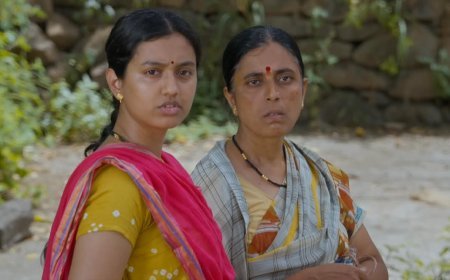
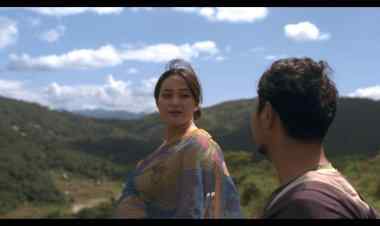
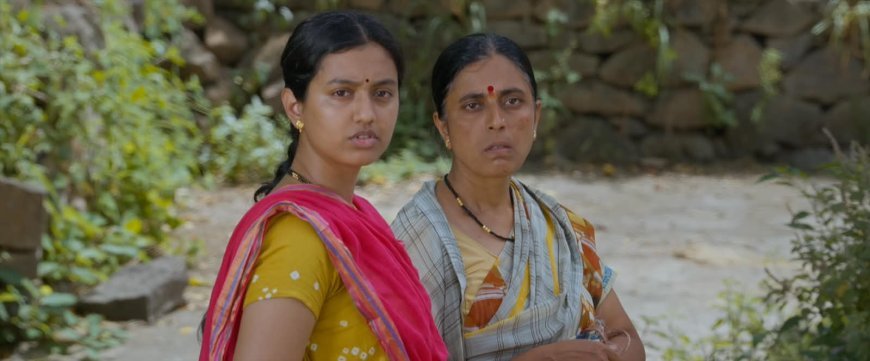
Set in rural Maharashtra, the short film follows Sulochana, an elderly woman determined to ensure that her pregnant daughter, Ankita, gives birth to a well-mannered child. According to an entrenched superstition, Ankita must sit with her back against a wall to prevent anyone of bad character from passing behind her. Instead, someone virtuous must pass behind her, as that person’s character is believed to shape the child’s disposition. What appears to be a harmless inherited custom gradually takes on a more troubling significance.
Rankhambe approaches the premise with an unforced comic sensibility. Sulochana’s conviction is so complete that questioning the ritual seems almost beside the point. She is not interested in whether the superstition makes sense. She is concerned with carrying it out properly. Her persistence generates a succession of awkward and amusing situations as she searches for someone worthy of passing behind her daughter. The humour arises less from ridicule than from the everyday absurdity of a belief sustained by generations of unquestioning adherence. The film understands that traditions often derive their authority not from reason but from the simple fact that they have endured.
The opening establishes this tension between familiarity and unease. A large wall, framed almost like the ramparts of a fort, introduces a landscape in which inherited customs appear to possess the solidity of architecture. An elderly woman’s lullaby carries across a series of static shots of village life, giving the setting a rhythm that feels at once intimate and ritualistic. The wall, meanwhile, becomes more than a physical object. It is the centre of Sulochana’s scheme, a boundary against which her anxieties about motherhood and moral character take shape. Rankhambe builds the narrative around this simple visual arrangement, as the absurdity of the situation emerges without overexplaining it.
Two exchanges involving Sulochana’s son, Balasaheb, bring the film’s underlying argument into focus. When his mother struggles to find a suitable person to pass behind Ankita, he suggests that Sulochana herself take the position. Her refusal exposes the contradiction at the heart of her belief, prompting Balasaheb to observe that she may deceive her family about her sincerity but cannot deceive herself. In another instance, he suggests that Ankita’s husband pass behind her, leaving her conflicted before she rejects the idea. Together, these moments reveal how an inherited superstition, seemingly harmless in principle, can expose moral
The film closes with Ankita singing a lullaby to her child, echoing the elderly woman’s song in the opening without repeating it. This parallel lends the ending a tenderness and suggests how inherited beliefs continue to pass from one generation to the next. The child has arrived, but the questions surrounding its future remain unresolved. The wall may provide the setting for an age-old custom, but it cannot determine the kind of person the child will become. That responsibility rests with those who raise the child, not with a stranger who happens to walk past.
Priyashanker Ghosh’s cinematography captures the rhythms of village life through compositions that complement the film’s understated storytelling, while Raj Sabale’s editing maintains an unhurried pace, facilitating the humour and underlying tensions to emerge naturally. Mandar Kamalapurkar’s sound design and music lend the film an evocative atmosphere, accentuating its understated comical aspects. Sakshi Gidde as Ankita and Tejaswini Karke as Sulochana deliver convincing performances, grounding the film’s unusual premise in recognisable family dynamics.
At the 18th International Documentary and Short Film Festival of Kerala, Bhintila Paath won the Best Film in the Short Fiction competition.
What's Your Reaction?