


































Review: Jāti (2026)

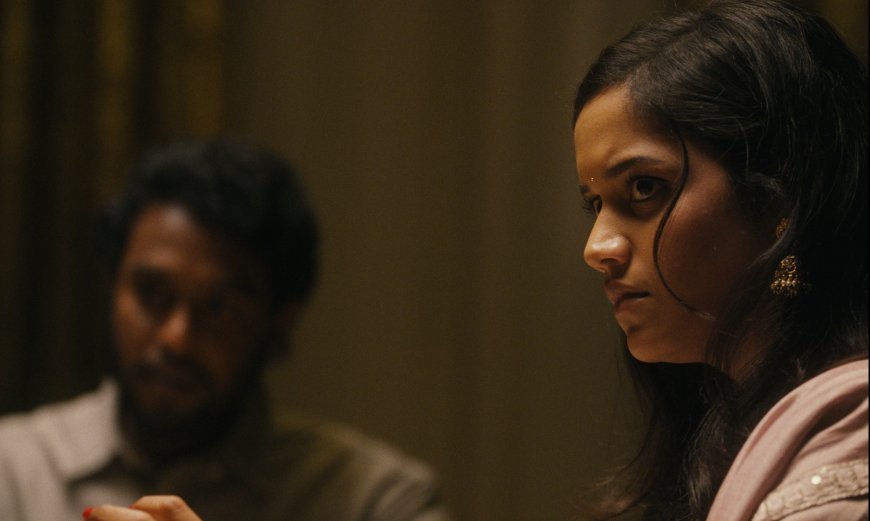
In Sarthwik Bollu’s short film Jāti, Sampath and Vani, a dominant-caste couple, travel to the United States to support their eldest daughter ahead of childbirth. Their visit takes an unexpected turn when their younger daughter, Amulya (Shavya Samala), introduces her boyfriend, Vinay (Shiva Gottimukkula), who comes from an oppressed-caste background. The film locates casteism not in the distant structures of Indian society but in the intimate arrangements of a family, where affection and discrimination coexist with unsettling ease.
Amulya fell in love with Vinay, a Dalit man from Telangana, when they were in college. He now works as a civil engineer in the United States. The couple's attempt to secure her parents' blessing exposes the limits of their apparent progress. For Sampath, marriage remains inseparable from caste identity, and his daughter's choice threatens a social order he has spent a lifetime accepting as natural.
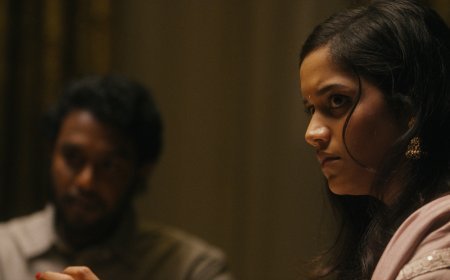
Bollu is particularly attentive to the contradictions within this household. Sampath's protectiveness towards Amulya initially suggests the tenderness of a concerned father. During dinner, when a utensil falls to the floor, he instinctively places a hand on the edge of the table as she bends to retrieve it. The sequence is at its most compelling when it allows small gestures to expose larger convictions.
Yet this paternal concern has its limits. When Amulya challenges his position on inter-caste marriage, he strikes her. The gesture exposes the conditional nature of his affection. He can be protective of his daughter so long as she remains within the boundaries he has prescribed for her. His attachment to her does not extend to respecting her autonomy.
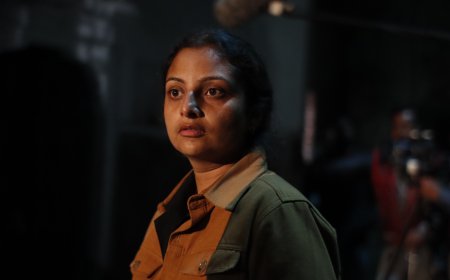
Vani's behaviour offers another revealing portrait of how caste prejudice becomes embedded in everyday conduct. Her insistence on serving Sampath water in a separate glass, and her reluctance to let him handle the water jar himself, turn an ordinary domestic exchange into an expression of inherited social codes. These gestures are not incidental details. They reveal how discrimination is maintained through habits that may appear too familiar to invite questioning.
The family's dining table, ostensibly a place of hospitality and togetherness, becomes a microcosm of social order in which caste hierarchies are reinforced, and Vinay's dignity is repeatedly tested. Here, love is acceptable only so long as it does not challenge inherited privilege.
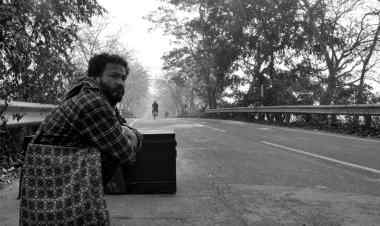
What gives the narrative its relevance is the distance between Vinay's geographical and professional mobility and the social prejudice that continues to shape how he is received. He has crossed an ocean and established a career, but neither achievement guarantees him acceptance within the family he hopes to join. The film's Texas setting is therefore more than a convenient backdrop. It underscores the persistence of social discrimination that cannot be left behind simply by moving elsewhere.
Mark Ragunton's cinematography makes effective use of the confined domestic setting. Close-ups register the characters' shifting expressions and the discomfort that settles between them, while the restricted visual space intensifies the sense of entrapment.
The editing by Bollu and Sachin Dheeraj sustains this unease through the measured accumulation of reactions and pauses, giving the dinner sequence an increasingly confrontational rhythm.
Shreyank Nanjappa's sound design is attentive to the textures of everyday life throughout the film. Seemingly mundane sounds, from the crunch of a fritter to water being poured into a glass, acquire an almost uncomfortable prominence, lending the domestic setting a palpable presence while subtly intensifying the underlying tension.
Shavya Samala brings conviction and emotional vulnerability to a young woman caught between her love for Vinay and her family's expectations. Bala Karri effectively conveys the authority, entitlement, and caste prejudice of a father unwilling to question his inherited beliefs. Shiva Gottimukkula lends the character quiet dignity, registering the humiliation and mounting frustration beneath his composure. Sangeeta Agrawal captures the contradictions of a mother whose affection for her daughter remains entangled with her deeply ingrained caste prejudices.
Jāti reminds us that casteism is sustained not merely by those who openly defend it, but also by the ordinary rituals through which prejudice is made to seem natural. In exposing its persistence across generations and continents, Bollu leaves us confronting a social inheritance that has plagued our society for centuries, adapting to changing times without relinquishing its hold.
What's Your Reaction?