
































Review: Bear Entanglement (2026)

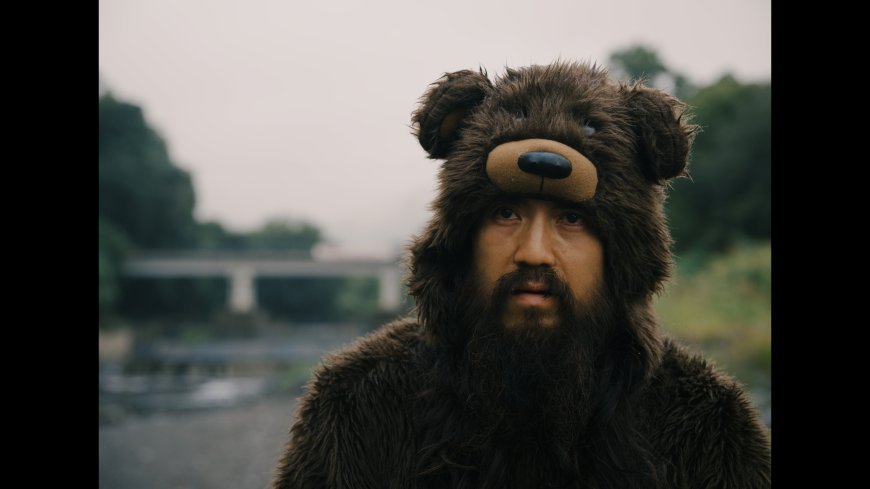
Ted Sharks’s Bear Entanglement begins with the threat of an animal encounter but gradually reveals a more disturbing preoccupation. The violence people inflict on one another when guilt, grief and the inability to acknowledge another person’s suffering become deeply entrenched. Set against the uneasy relationship between humans and wildlife in contemporary Japan, the film uses the figure of the bear not simply as a source of physical danger but as an unsettling metaphor for the emotional barriers people construct around themselves.
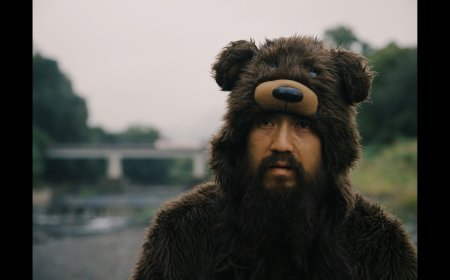
Satoshi (Yuki Osawa), a former master hunter, has withdrawn from his old profession, choosing a secluded existence with his wife, Sachi (Arisa Arisugawa). His reluctance to pick up a rifle again is rooted in a fatal hunting accident that remains buried in his past. Their carefully maintained domestic tranquillity is disrupted when Sachi encounters a bear at their home. The shock leaves her unable to speak, prompting Satoshi to return to hunting in an effort to restore the security of their life together. But a reported bear sighting leads him to an unexpected confrontation with Kazuhiko (Hico Oshiro), a solitary man wearing a bear costume. Beneath its almost comical appearance lies a history of profound loss. Kazuhiko is the widower of the woman Satoshi accidentally killed years earlier, and he has come seeking something that cannot be compensated for: an apology.
Sharks builds his narrative around three people whose responses to grief reveal markedly different emotional dispositions. Satoshi wants to distance himself from the past, treating his guilt as something that can be contained so long as it does not disturb his present existence. Kazuhiko, meanwhile, has been unable to rebuild his life after losing his wife, retreating into an isolated existence in the countryside, where his peculiar appearance becomes both a disguise and an expression of his alienation. His insistence on being acknowledged gradually assumes the proportions of an obsession. Sachi, initially presented as a withdrawn housewife, becomes the film’s most perceptive figure. As she discovers the circumstances surrounding her husband's past, her understanding of their marriage begins to change. Her eventual response to the two men's increasingly destructive confrontation suggests that survival sometimes requires the courage to abandon relationships that have become emotionally suffocating.
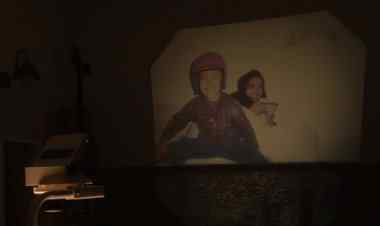
The storytelling shifts between these parallel trajectories, using flashbacks to revisit Satoshi and Sachi’s shared history while also recovering the tenderness of Kazuhiko’s relationship with his late wife. These recollections complicate the present-day conflict, revealing how a single incident can produce radically different experiences of loss. Sharks occasionally change the aspect ratio during the flashbacks, giving the shifts in time a distinct visual texture.
Cinematographer Daichi Mikasa’s compositions frequently depict characters as isolated, even when they occupy the same domestic space. This visual austerity complements a narrative that moves between psychological thriller and dark comedy. Kazuhiko’s bear costume, in particular, lends the film an absurdist quality, although its apparent eccentricity gradually gives way to something more tragic. The performances by Hico Oshiro, Yuki Osawa, and Arisa Arisugawa further enrich the film, bringing nuance to the characters’ emotional conflicts and reinforcing its unsettling atmosphere.
Yet Sharks' elaborate construction occasionally works against the material. The film's deliberate pacing becomes overextended, while the date-and-time title cards introduced towards the climax feel unnecessarily conspicuous, interrupting the psychological tension rather than sharpening it.
Still, Bear Entanglement finds an unusual dramatic vocabulary for examining the persistence of grief and the moral evasions through which people protect themselves. Its most troubling suggestion is that the beast one fears may have less to do with the wilderness outside than with the capacity for indifference within.
What's Your Reaction?