
















Review: Accounts of a Killing (2025)

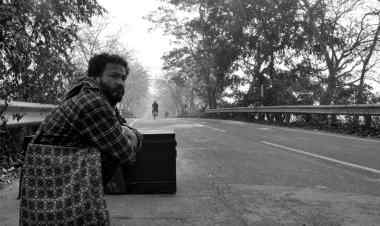
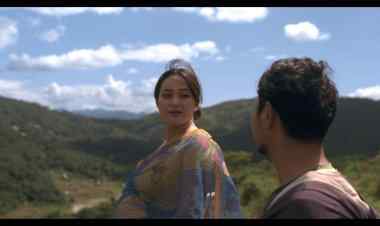
Ayan Mrinal’s Accounts of a Killing opens with white text against a black screen, introducing Khuldabad, a small town on the Deccan plateau that became known as the Valley of Saints after fourteen hundred Sufis made it their home and final resting place in the fourteenth century. The historical introduction is followed by a starkly different account of the town, that of a young man mysteriously found dead. “The following is an account of this valley, and of all that I saw and heard,” the intertitle declares, establishing the film as both a portrait of a place and an attempt to piece together the circumstances surrounding a death. The juxtaposition between Khuldabad’s spiritual inheritance and the unresolved killing that unsettles its present establishes an intriguing tension that runs through the film.
Arbaaz Ansari, a twenty-five-year-old resident of Khuldabad, a town in the Deccan, was found dead on Mahismal Road on February 20, 2020. The police record offers the bare particulars of a body bearing visible injuries, blood at the scene, a motorcycle lying nearby, and an investigation registered as an unnatural death. These details establish the circumstances in which Ansari was found, but they offer little understanding of how he died or who might have been responsible. Mrinal’s documentary drama begins in the space between this official account and the competing memories that have accumulated around it.
The film assembles testimonies from people who knew Ansari, witnessed the aftermath of his death, or have their own explanations for what happened. Their accounts rarely converge on a coherent narrative. A man recalls meeting Ansari during the protests against the Citizenship Amendment Act, shortly before his death. A woman speaks of their clandestine relationship, sustained by promises of a future together but eventually strained by his possessiveness and the intervention of her family.
A local mechanic questions whether the death could have been an accident, pointing to a fault in the motorcycle’s chassis. His explanation, however, gives way to more speculative possibilities, including the suggestion that Ansari might have fallen under the influence of supernatural forces or that someone had performed black magic on him.
Elsewhere, a witness reconstructs the afternoon of the killing through recollections of two gunshots, a crowd gathering, a body being carried away in a tempo, and a wall apparently covered in blood.
Yet the witness recalls something inexplicable. When he turned back after the body had been removed, the bloodstains had vanished. He recounts the incident not as a metaphor but as something he insists he witnessed.
Such moments complicate the film’s relationship with evidence. Rumours circulate that Ansari was killed by the police, that his death was an accident, or that drugs were involved. One account refers to a video in which two young men allegedly claim responsibility for the killing, while another remembers an unusually heavy police presence in the neighbourhood in the days preceding it. A friend insists that the police shot Ansari and recalls unsuccessful attempts to secure justice. Six years later, the investigation appears to have yielded little, while the people closest to the deceased have dispersed, leaving the town with its unresolved recollections.
Mrinal also allows religious belief, local folklore and contemporary political anxieties to enter this fractured archive. Stories of divine intervention during the violence of 1947–48, of spiritual figures appearing on a hillside amid gunfire, and of a drowned person returning to the surface after twelve years coexist with more immediate accounts of violence. Hindu devotional chants and Islamic invocations recur within the film's soundscape, bringing different traditions of faith and remembrance into proximity.
At one point, a public announcement warns of the increasingly precarious situation surrounding Waqf properties and calls for a gathering in opposition to the Waqf law. The announcement situates the film's testimonies within a wider climate of political unease, where anxieties over religious identity, property and belonging become part of everyday conversation. These passages are not simply diversions from the question of Ansari's death. They reveal how personal recollections become entangled with inherited beliefs and present-day concerns, as people reach for familiar stories and spiritual convictions to make sense of events that remain beyond their understanding.
The title Accounts of a Killing is tellingly plural. Mrinal is less interested in arriving at a definitive reconstruction than in examining the conditions under which a death is remembered, disputed, and gradually absorbed into a community's history. The film's fragments do not resolve into a single authoritative version; instead, their contradictions become the substance of its inquiry.
What emerges is not merely the portrait of a young man whose death remains unexplained, but that of a town negotiating the uneasy distance between testimony and truth. The most troubling absence is not simply an answer to how Ansari died, but an account of why, after all these years, justice remains so elusive.
Accounts of a Killing was recently screened at the Dharamshala International Film Festival, 2026.
What's Your Reaction?