




































Review: Màquina (2025)

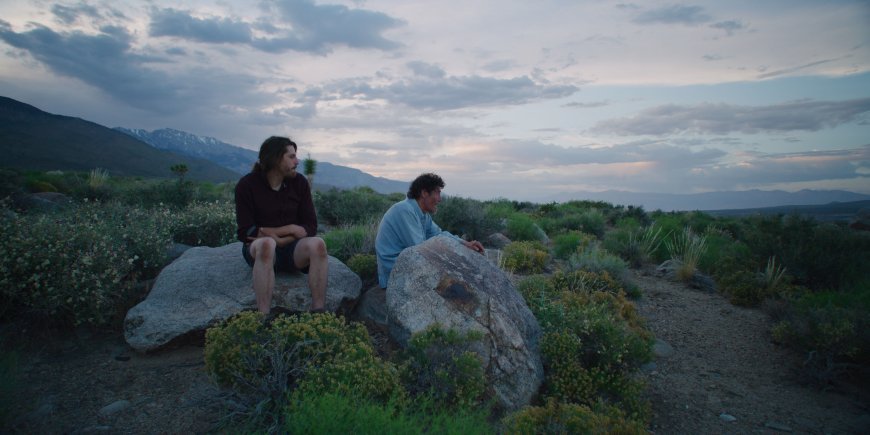
Joaquim Adrià Pujol’s Màquina begins with a definition of ibogaine, a psychoactive substance that has attracted interest for its potential use in treating substance dependence. The clinical framing is brief, but it establishes a question that the documentary will spend its duration complicating. What does it mean to seek recovery when addiction is entangled with the very relationships that might sustain it?
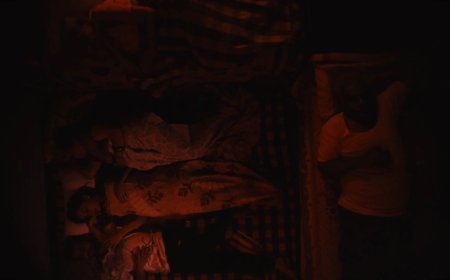
Pujol places himself inside a family dynamic shaped by years of drinking, resentment, dependence, and affection. His father, Xavi Pujol Berlanga, has reached a point where conventional attempts at addressing his alcoholism have given way to an experimental form of treatment. His son Marcel accompanies him, but the journey soon reveals that the harder passage may have little to do with reaching Colorado. Confined together in an aging Winnebago, father and son revisit old injuries, childhood memories, financial anxieties, and the complicated obligations that addiction imposes on those who live alongside it. The road provides movement, but the documentary's real terrain is the emotional distance between two people who love each other and are struggling to determine what, if anything, they owe one another.
Pujol’s gaze often assumes the position of a fly on the wall, observing the family’s uneasy exchanges without forcing them into a conventional documentary narrative. He stays close to his subjects, recording their arguments, awkward silences, digressions, and occasional moments of levity without imposing an interpretive framework upon them. There is something almost uncomfortable about the proximity. Early on, the filmmaker repeatedly asks whether his father minds being filmed, offering to put the camera away if it becomes intrusive. The exchange is revealing, and the act of documenting a family’s private suffering is itself a negotiation, one in which the filmmaker must reckon with his position as both participant and observer. The camera does not simply record the journey; it becomes another presence within the already complicated family dynamic.
Xavi and Marcel are not presented as figures in a straightforward narrative of redemption. Their relationship is marked by an uneasy coexistence of affection and resentment, tenderness and exasperation. In one conversation, Xavi recalls how his own father acknowledged his success in raising children while seeming indifferent to his professional and artistic accomplishments. The remark exposes an old wound, but it also reveals how easily recognition can become another source of grievance.
Elsewhere, Marcel describes growing up conscious of his parents’ financial difficulties, having learned to minimise the cost of his upbringing. Such recollections suggest that the consequences of addiction extend beyond the person drinking, shaping the emotional habits and responsibilities of those around them. The documentary is attentive to these inherited burdens without reducing either man to a diagnosis. Even the documentary’s occasional comic diversions, including a conversation about adopting abandoned donkeys in Death Valley, feel like necessary interruptions in a journey otherwise weighed down by difficult disclosures.
The prospect of treatment introduces a more troubling dimension. As concerns emerge about Xavi’s physical vulnerability and the risks associated with ibogaine, Marcel confronts the possibility that an intervention he helped set in motion could result in his father’s death. His uncertainty about whether Xavi is pursuing recovery for himself or for his family exposes the limits of love as a motivating force. The treatment may offer an opportunity to confront the trauma underlying addiction, but it cannot absolve either man of the work that follows. Nor does the documentary present the experience as a miraculous cure. Its interest lies less in the medical procedure than in the emotional reckoning it makes possible.
By the time Marcel insists that he can no longer take responsibility for another person’s choices, the distinction between caring for someone and attempting to control their life has become central to the film. His withdrawal from the conversation is not an uncomplicated assertion of independence; it is accompanied by guilt, loneliness, and the fear of abandonment. The emotional force of the documentary resides in this unresolved tension. Its subjects may begin to recognise the patterns that have governed their lives, but recognition is not the same as transformation. Its meditative quality emerges from the willingness to remain with contradictions that cannot be easily reconciled. These include the desire to help and the need to let go, the persistence of love alongside the exhaustion it produces, and the possibility of healing without any assurance that it will last.
Màquina ultimately understands recovery not as a destination reached at the end of a road, but as a difficult, ongoing negotiation between the past one carries and the life one might still make.
What's Your Reaction?