


































Review: American Warrior

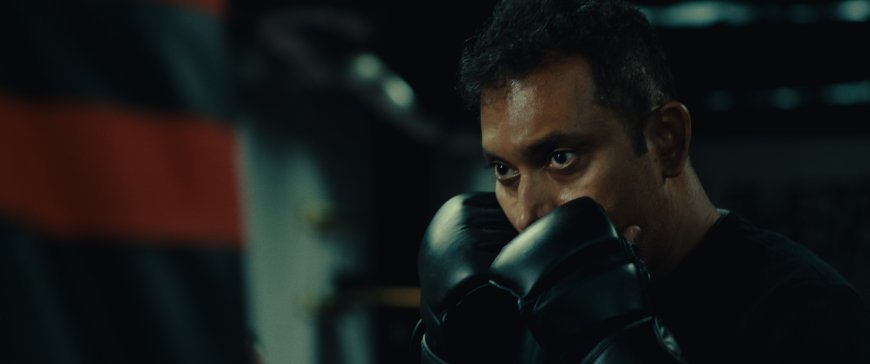
In Gustavo Martin’s American Warrior, a chance encounter at a convenience store becomes the unlikely beginning of a personal reckoning. Jai (Vishy Ayyar), a forty-five-year-old Indian-American immigrant and former convict, intervenes in an attempted robbery, using his mixed martial arts training to restrain the assailant until the police arrive. Someone records the incident, and the footage soon circulates online. For a man who has spent years trying to remain unnoticed, sudden visibility brings an unfamiliar set of possibilities, along with expectations he may not be prepared to meet.
Jai works nights as a janitor at an MMA gym in Chicago. His past, marked by a prison sentence for fraud, has left him estranged from much of his family. His physician sister, Priya (Suleka Mathew), remains one of the few relatives willing to maintain a connection with him. At a family Diwali gathering to which she invites him, Jai encounters a form of rejection that is less openly hostile than quietly dismissive. The film recognises how estrangement can persist through gestures, silences, and the awkwardness of being present where one is no longer quite welcome.
The viral video changes Jai's circumstances. Marcella (Verónica Falcón), the gym's commercially astute owner, sees an opportunity in the sudden attention and offers to sponsor him in a high-stakes MMA tournament. Jai must return to serious training and reconnect with his former trainer and friend, Dennis (Danny Trejo), while confronting the physical demands of a sport unforgiving even to younger competitors. The tournament offers the familiar promise of an underdog narrative, but the more interesting question is what Jai hopes to recover through it. Recognition, after all, is not quite the same as self-respect, and neither necessarily leads to forgiveness.
The film's treatment of accidental fame provides a contemporary entry point into an otherwise familiar story of second chances, examining how an ordinary act can acquire a life of its own once it finds its way onto social media. Jai's newfound popularity is imposed upon him by strangers who have decided that a brief recording tells them something definitive about his character. The attention allows him to reconsider his place in the world, but also threatens to reduce that process to a readily marketable story of redemption.
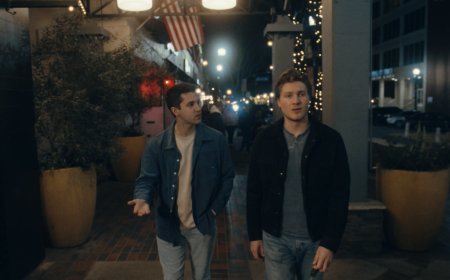
His relationship with Sarah, a receptionist at the gym, introduces a quieter dimension to this struggle. Their eventual romantic involvement reveals that she, too, carries the weight of a difficult past. Their connection suggests the possibility of companionship between two people who recognise something familiar in each other's vulnerabilities.
Cinematographer Derek Fisher and editor Christopher Cibelli establish a visual and rhythmic contrast between the physical intensity of MMA training and the subdued atmosphere of Jai's personal life. The action sequences are energetic, while the family and romantic scenes unfold at a more measured pace. This balance lends the film a degree of tonal coherence, even if some emotional transitions remain predictable.
Ayyar provides the film with a credible centre. He conveys Jai's guardedness without making it an excuse for emotional opacity, and his physical presence lends the training sequences conviction. At forty-five, Jai is not the conventional young athlete whose ambitions are simply waiting to be realised. His return to competition is inseparable from the disappointments of his earlier life.
American Warrior revisits familiar comeback territory, finding some distinction in its portrayal of an Indian-American man seeking to rebuild his life. Though its treatment of redemption is somewhat conventional, Jai's journey carries a modest emotional appeal. Ultimately, the fight is less about winning a tournament than reclaiming his self-respect and making peace with his past.
What's Your Reaction?