
























Review: Jilipibalar Bondhura (Friends of Jilipibalar, 2025)

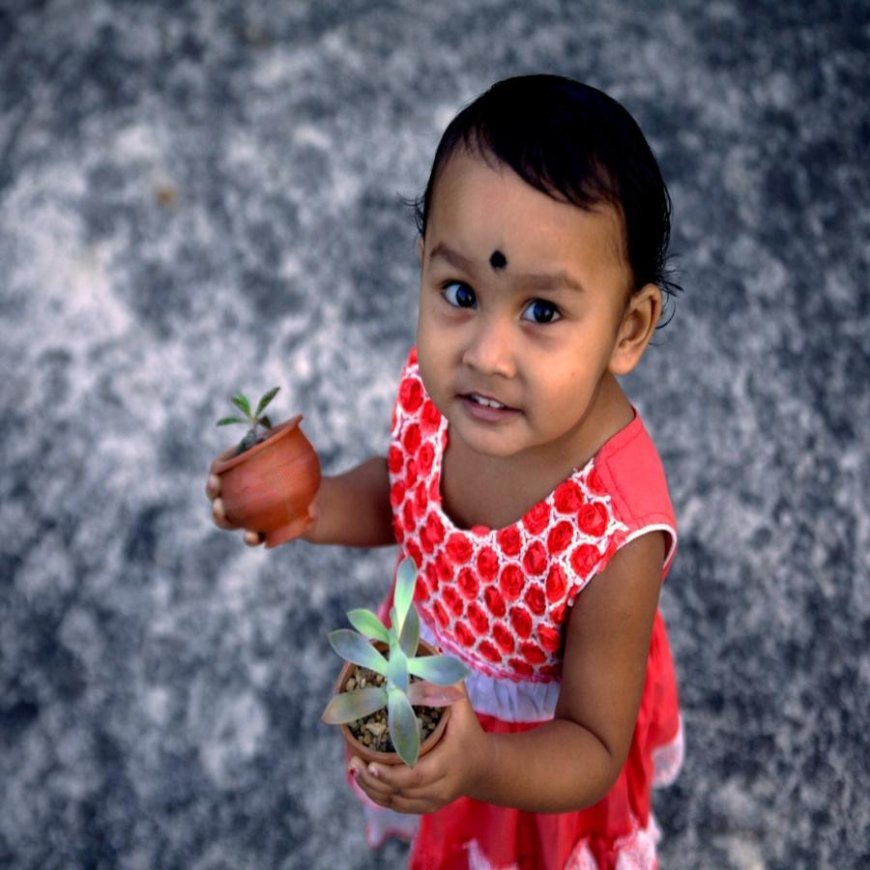
In Debalina Majumder’s Jilipibalar Bondhura, a toddler’s curiosity becomes a way of seeing a city’s slow estrangement from the natural world.
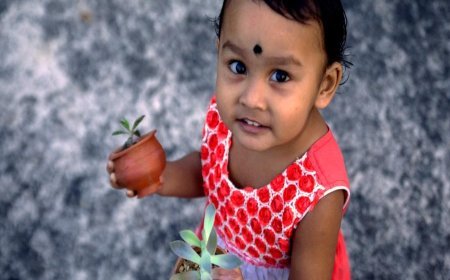
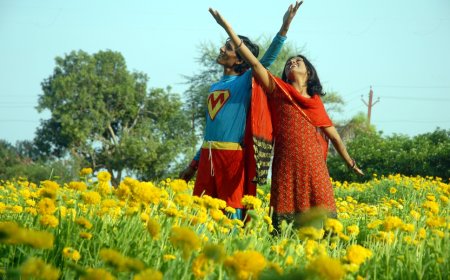
The protagonist, Jilipibala, also known as Simran, is a young child who is learning to identify the trees, birds, and animals around her South Kolkata home. She approaches her surroundings as a place of inexhaustible possibility. At the centre of this world stands a giant tamarind tree, planted by Parul Mukhopadhyay, a woman revolutionary who arrived in Calcutta as a landless refugee from East Bengal. The tree carries a history that extends beyond its immediate ecology. Its roots belong to a neighbourhood shaped by displacement, where the struggle for rehabilitation was inseparable from the search for cultural acceptance and a place to call home.
A casual conversation about a colocasia plant and a coconut tree gives way to questions about birds and a story about a tiger that once roamed the area. The exchange follows the child’s associations rather than any predetermined line of inquiry. These moments are more than charming illustrations of childhood; they suggest a form of attention open to possibilities that the adult world has already ruled out.
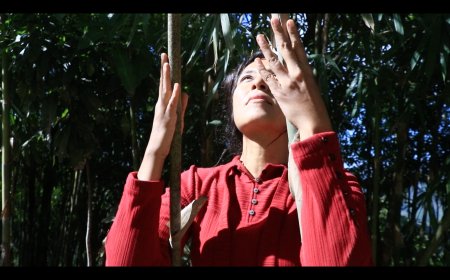
As both director and cinematographer, Majumder turns her camera towards the life gathered around the tree’s branches. Barn owls, flamebacks, flycatchers, tailorbirds, barbets, crows, cats, and monkeys populate an ecosystem with which Jilipibala is gradually becoming familiar. The documentary’s quiet strength lies in watching her establish relationships with these inhabitants without distinguishing between the ordinary and the extraordinary. Her questions are frequently tentative, her answers sometimes fanciful. But her engagement with the world is unselfconscious. She does not yet possess the habit of treating non-human life as background to human activity.
Through Sabyasachi Paul’s sound design, the familiar sounds of neighbourhood life are increasingly overwhelmed by the din of building work and the blows of axes against the tree. The destruction of the tamarind tree unfolds alongside Jilipibala's play, creating a disquieting contrast between the rhythms of childhood and the violence of urban transformation. As branches are chopped away and trunks fall towards the neighbourhood pond, sand and stone arrive for construction. Through Rafina Khatun’s editing, these acts of destruction acquire a cumulative force, revealing a landscape being reordered to accommodate development at the expense of the intricate relationships that once sustained it.
When one of the workers tasked with cutting down the trees explains that insects have infested the upper branches and that the tree interferes with the internet connection, his justification reduces a living ecosystem to a practical inconvenience. Jilipibala’s response, “Destroy it! Destroy it!”, is unsettling, though Majumder leaves open whether the child understands what she is witnessing. The tree’s destruction, however, threatens a more permanent loss: the world through which she is learning to understand her place in it. The narrative avoids turning its ecological concerns into a simple argument, even as the contrast between childhood’s imaginative freedom and the material pressures of urban development exposes the limits of innocence. The neighbourhood emerges as more than a collection of buildings and roads; it is a living network of creatures, shared sounds, and histories embedded in the landscape.
By following Jilipibala’s growing familiarity with the creatures around her, Majumder’s documentary reflects on the cost of destroying the habitats that make such relationships possible. What is at stake is not merely a child’s access to the natural world, but the future of a city that increasingly leaves little room for other forms of life.
Jilipibalar Bondhura won Best Short Documentary at the 18th International Documentary and Short Film Festival of Kerala.
What's Your Reaction?