





























Review: Embers (2024)

Sruti Visweswaran's Embers is a personal meditation on memory, inheritance, and the fragile traces left behind by those who shaped us. Working through a collage of archival footage, landscapes, personal testimony, and poetic reflection, she crafts a deeply personal yet resonant meditation on grief, not merely for departed loved ones but for an entire way of being in the world.
The film opens with a striking invocation: "Where I come from, turning eighty is auspicious, marking the witnessing of a thousand full moons." The accompanying reflection, that what matters is not how often moonlight touches a life, but how many darknesses one crosses before reaching that light, establishes the film's central preoccupation. It is an inquiry into endurance, the accumulation of experience, and the emotional landscapes that remain after loss.
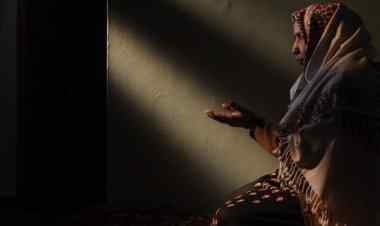
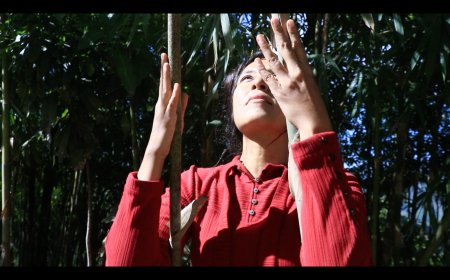
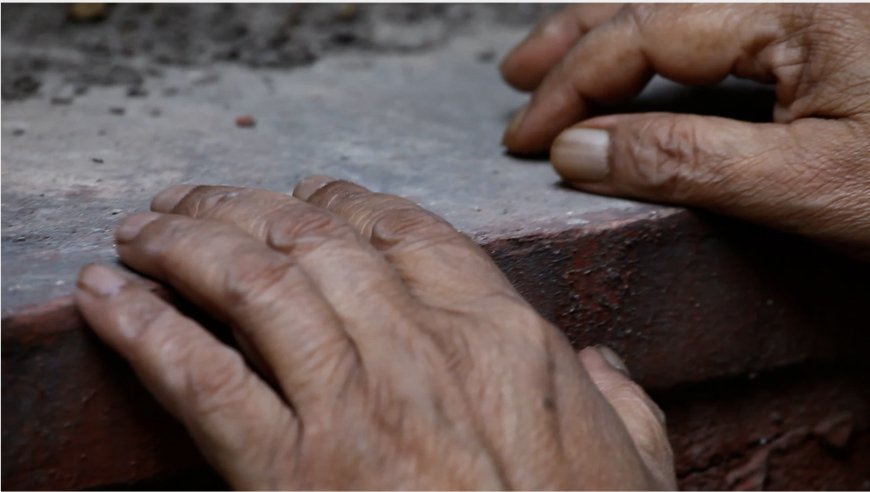
The first image, a close view of the trunk of an ancient tree standing steadfast within a forest, functions as both metaphor and anchor. Like memory itself, the tree bears the marks of time while remaining rooted. Throughout the film, nature becomes an extension of family history and collective consciousness. A voice speaks of the forest as a single entity, a vast interconnected family, an ancient soul whose individual parts cannot be separated from the whole. Images of Visweswaran's grandparents participating in a Hindu ritual are not presented as historical documents but as living fragments of memory. Their gestures, preserved on aging film, acquire an almost sacred quality. Elsewhere, a wrinkled old man gently caresses the walls of a deserted house, his touch transforming the abandoned structure into a repository of feeling. These moments are not explained; they are allowed to linger, inviting viewers to contemplate the emotional residue embedded in places and objects.
Visweswaran's approach is deliberately associative. The film drifts between personal recollection, landscape imagery, and poetic narration. Over images of the ocean, a poem speaks of waiting to reach the sea after a shipwreck, a metaphor that encapsulates the film's understanding of grief as an unfinished journey rather than a destination. The ocean, like the forest, becomes a space where individual stories dissolve into something larger and more enduring. One of the documentary's most compelling strands involves an elderly man who describes finding solace among trees after experiencing trauma. His reflections on resilience, patience, and the strength he derives from the forest provide a counterpoint to the film's more abstract passages. In these moments, Embers briefly grounds its philosophical concerns in lived experience, suggesting that healing often emerges through renewed relationships with the natural world.
The film becomes most vulnerable when Visweswaran recalls suffering an absence seizure after alighting from a bus. She remembers neither the moment of collapse nor the period of unconsciousness, only the sensation of returning. The anecdote resonates far beyond its immediate context. It mirrors the film's larger exploration of memory itself, and its gaps, ruptures, and sudden reappearances. Just as the filmmaker cannot fully access that lost moment, memory yields only fragments, impressions, and traces.
Visweswaran assembles these fragments with remarkable sensitivity. The sound design and imagery rarely seek narrative clarity; instead, they create an emotional texture through which viewers can navigate their own memories and losses. At times, the film's abstraction may feel elusive, particularly for audiences seeking a more structured account of the filmmaker's personal history. Yet this very openness is also its strength. Embers refuses easy conclusions, recognising that grief rarely unfolds in orderly patterns.
Quietly profound and visually evocative, Embers transforms personal mourning into a meditation on belonging, resilience, and the invisible threads that bind individuals to families, communities, and landscapes. Like the embers of its title, the film glows gently rather than burns brightly, illuminating the persistent warmth of connections that survive long after their apparent disappearance.
What's Your Reaction?