


























Review: Khooh Waala Ghar (Room in the Farm, 2025)

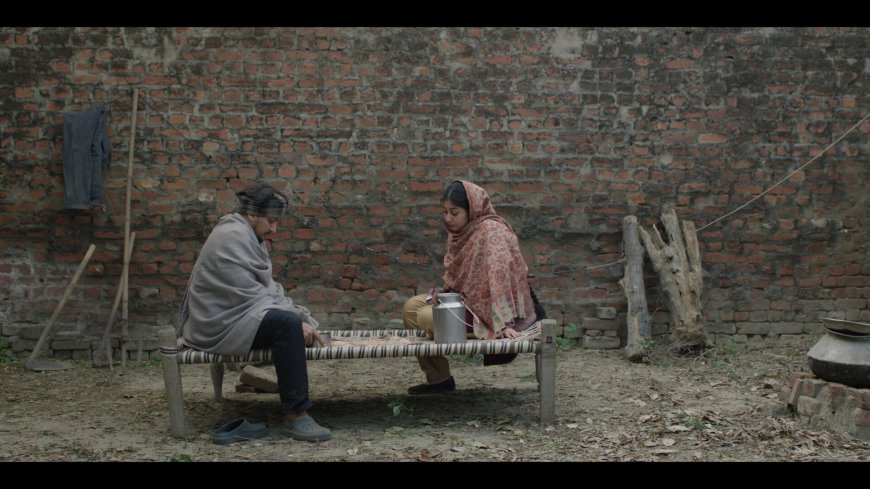
In Jasmine Kaur Roy and Avinash Roy's short film Khooh Waala Ghar (Room in the Farm, 2025), Nihal, a young farmer trapped in a cycle of debt inherited from his father, clings to a small parcel of land despite mounting evidence that the struggle has already been lost. As he does so, the strain begins to seep into his relationship with Reet, his newlywed wife.
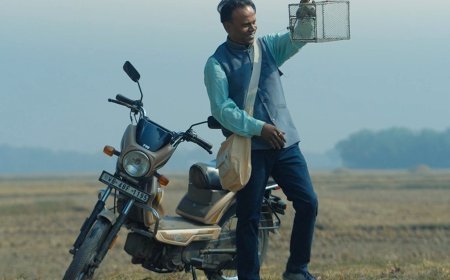
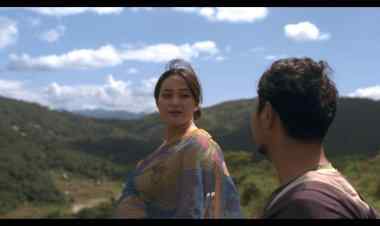
The film's governing metaphor is a dilapidated house overlooking an agricultural landscape, a space that has become both a refuge and a prison for Nihal. Weathered and seemingly abandoned, it sits amid open fields like a relic from another era. Nihal retreats there rather than return home to Reet. The crumbling structure seems to preserve a world that no longer exists. It offers shelter from creditors, family expectations, and the uncomfortable realisation that the values instilled in him may no longer provide a viable way forward. The house resembles a haunted space, though the ghosts here are not supernatural. They are the accumulated burdens of memory, obligation, and grief. The screenplay by Avinash with dialogues by Jasmine sketches the larger social milieu with a light touch. In one scene, Nihal and a helper spray pesticides across the fields while nearby land is being prepared for sale. The moment captures a countryside caught between competing futures. We observe cultivation on one side, and development on the other. Around him, the countryside is changing. Fields once meant for cultivation are giving way to industrial development. Land that once promised sustenance is increasingly treated as an asset awaiting liquidation. Yet the two directors are less interested in economic arguments than in the emotional residue such transformations leave behind.
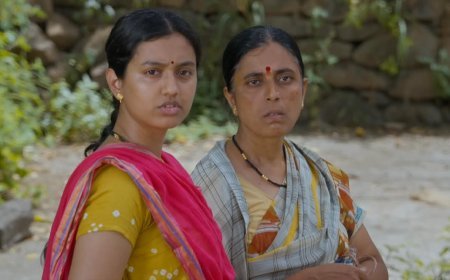
At the centre of the story is the marriage between Nihal and Reet. As the film begins, Reet arrives at the farm carrying a meal, a seemingly dutiful gesture traditionally assigned to wives. She wants Nihal to accompany her to her sister's wedding the other day. It is a seemingly ordinary request that gradually gives way to disappointment. Nihal's reluctance feels less like indifference than a form of withdrawal. Public celebrations require a confidence he no longer possesses. His financial failures have become inseparable from his sense of self. He emerges as a figure shaped by the acts of his predecessor. Before taking his first sip of alcohol, he sprinkles a portion into the air in tribute to his ancestors, continuing a ritual passed down by his father. Later, he sings of his attachment to the soil. These moments illuminate the emotional logic behind his detachment. His devotion to the land is not merely economic but spiritual. He is bound up with family history and identity. The tragedy is that the very inheritance he seeks to honour is contributing to his undoing.
Rather than rely on contrived confrontations, the film finds drama in quieter forms of disappointment and accommodation. Reet is disappointed, even hurt, particularly when she discovers Nihal passed out after a night of drinking. Yet their exchanges never descend into melodrama. It remains attentive to the subtler injuries of everyday life. The couple's conversations retain a tenderness that persists despite frustration, and their affection survives in gestures rather than declarations. One of the film's most revealing moments arrives when Nihal travels to town to buy a gift for his wife. He returns with a miniature Taj Mahal, a monument built in memory of an emperor's beloved wife. The object carries an obvious symbolism, yet the film handles it with restraint. The couple's love is neither imperial nor grand, and the significance of the gift lies in its modesty. It is an earnest attempt at connection, and therefore all the more moving. Thus, the film observes a community confronting economic and cultural change through the intimate language of marriage, memory, and place. Its turmoil emerges from the quieter struggle to preserve affection when the future offers little certainty.
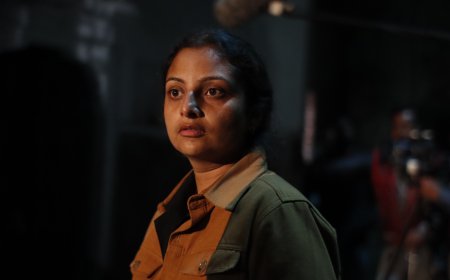
Sachin Gadankush's cinematography contrasts the mist-covered openness of the fields with the enclosed interiors of the room where Nihal and Reet negotiate the terms of their relationship. The landscape stretches outward, while the frame repeatedly returns to confined spaces, suggesting lives hemmed in by circumstances beyond their control. Jasmine Kaur Roy, who also edits the film, allows scenes to unfold at an unhurried pace, trusting silence and observation to carry meaning. Vivek Sachidanand's sound design and Meghdeep Bose's understated score complement this approach, grounding the film in the textures of rural life rather than finding our empathy for the characters. Much of the film's effectiveness rests on the performances of Guru Bamrah and Vrinda Malhotra. Bamrah plays Nihal as a man trapped by debt and inheritance, while Malhotra brings quiet dignity to Reet, whose patience never slips into self-effacement. Together, they create a relationship that feels genuine and lived-in.
Khooh Waala Ghar unfolds on a small scale, yet its concerns extend beyond the fate of a single couple. The result is a film that understands how private lives absorb the pressures of history.
Earlier this year, Khooh Waala Ghar won the Grand Jury Prize for Best Short Film at the 2026 Indian Film Festival of Los Angeles (IFFLA). The film was also recently screened at the New York Indian Film Festival.
What's Your Reaction?