































Review: Demon Dancer: Sua/Nara (2026)

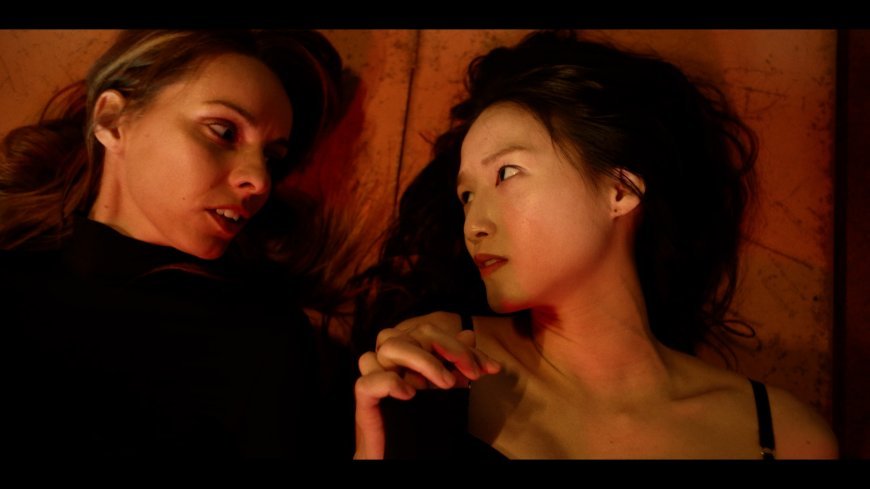
In Demon Dancer: Sua/Nara, a ballerina’s pursuit of revenge takes an increasingly supernatural turn, as the discipline of classical dance becomes a means of inflicting violence. Directed by Attila Korosi, the independent feature combines martial-arts action, demonic possession and psychological horror in a nonlinear narrative about grief and retribution. Its central conceit is striking, even if the film’s meandering storytelling occasionally leaves its more imaginative elements struggling to cohere.
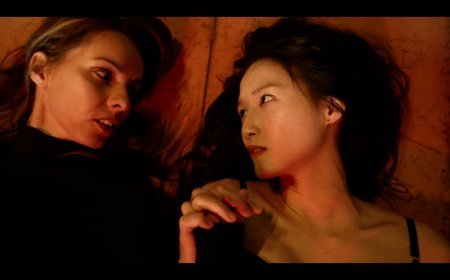
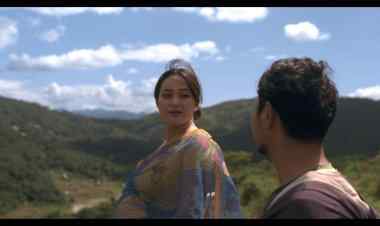
The film opens with Sua (Jiyeon Han), a Korean ballerina, being mercilessly tortured almost to death. As her consciousness begins to slip away, fragments of memory reveal the circumstances that brought her to this point. Having been forced to kill her husband to save him from a demonic curse, she turns to the same dark forces in search of justice. By inviting the demon Nara into her body, Sua acquires a dangerous ally, though their partnership also threatens to blur the distinction between vengeance and self-destruction. The resulting journey moves between supernatural intrigue and elaborate confrontations, with Sua attempting to discover the source of the curse.
Korosi’s film draws visibly on anime-inspired aesthetics and fantasy-action traditions, favouring heightened imagery and dramatic transformations. Its combat sequences treat the human body as both an instrument of grace and a weapon. The juxtaposition of ballet and martial arts offers the film its most distinctive visual idea. Sua’s training becomes a process of adapting the precision of dance to the demands of supernatural combat.
However, the difficulty lies in the film’s supernatural mythology, which remains insufficiently defined. The rules governing possession, visibility and the demons’ ability to sense one another shift in ways that make certain encounters difficult to follow. The training sequences establish the mechanics of Sua’s transformation more clearly than the screenplay establishes its consequences. The nonlinear structure initially lends the story an air of mystery, but its revelations do not always compensate for the confusion created along the way.
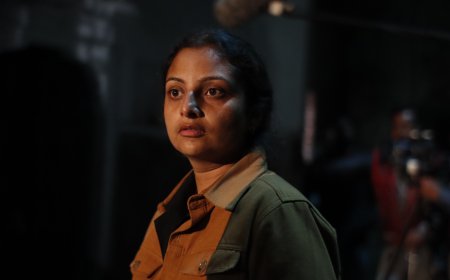
Jiyeon Han brings physical agility and emotional conviction to her portrayal of Sua, making the character’s grief and growing obsession legible even when the story grows tangled. Anita Korosi, as Nara, provides a contrasting presence, injecting the film with an unpredictability that complicates the protagonist’s struggle for control. Their performances give some texture to a relationship that might otherwise function chiefly as a device for staging increasingly elaborate fights.
Cinematographer Gareth Taylor’s camera angles and movements, particularly in the subjective perspectives, lend several encounters a visceral immediacy. The use of VFX also has an appealingly grotesque quality, suggesting considerable resourcefulness within the limitations of independent production. The action is often more assured than the narrative that connects it.
Still, Demon Dancer: Sua/Nara has an evident appetite for genre experimentation. Its combination of dance, horror and hand-to-hand combat occasionally produces arresting moments, even when the larger story falters. The film does not fully realise the possibilities of its central premise, and its visual ambition sometimes exceeds its narrative control. Yet Korosi’s willingness to pursue an unconventional fusion of forms gives this modest independent production a measure of distinction. What remains is an uneven but intermittently engaging revenge fantasy, one whose physical inventiveness is more persuasive than its mythology.
What's Your Reaction?