






















Review: Kangbo Aloti (The Lost Path, 2025)

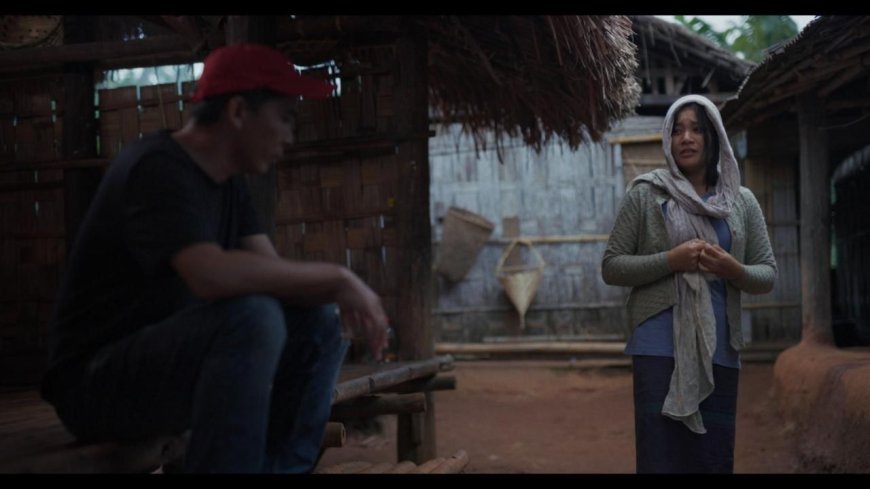
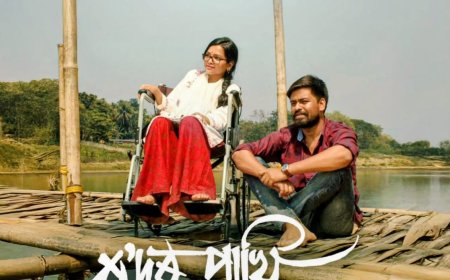
Khanjan Kishore Nath’s Karbi feature film Kangbo Aloti (The Lost Path, 2025) follows a young man caught in the throes of a profound dilemma: whether to pursue change through violence or through education. Forced to choose under mounting pressure, his journey opens a window into a world that feels at once unfamiliar in its particulars and unmistakably close in its emotional truths.
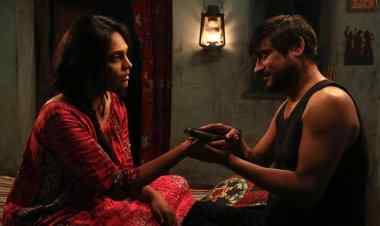
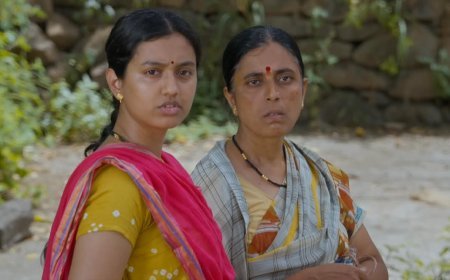
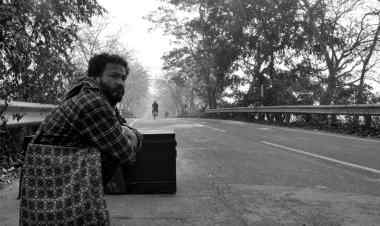
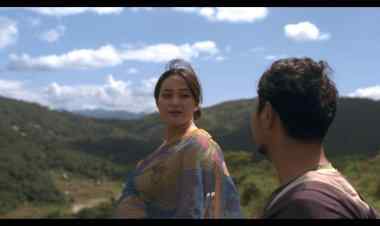
Set in a remote village in Karbi Anglong, the film follows Longsing, a young member of the extremist group Karbi Liberation Tiger Force. He is tasked by his commander to infiltrate a village, win the trust of its people, and persuade them to support the organisation. He follows the order and stays with Hemri’s family by claiming to be his nephew. Though Hemri remains uneasy about sheltering someone associated with a militant group. As Longsing settles into the rhythms of village life, he meets Birensing, the settlement’s only schoolteacher. Their interactions slowly reshape his worldview, drawing him toward a path very different from the one he was sent to walk.
Nath’s Kangbo Aloti unfolds with the unhurried clarity of a parable, yet its emotional stakes feel rooted in the everyday fractures of a community caught between fear and possibility. On the surface, it is the story of a young man embedded within a militant outfit, but beneath that lies a patient study of how belief is shaped and reshaped by the people we allow into our lives. Longsing’s entry into the village sets up a dynamic that is as tense as it is recognisable. The film resists the urge to sensationalise this premise. Instead, it lets the drama emerge from suspicions held quietly, glances exchanged carefully, and the uneasy balance of hospitality and doubt.
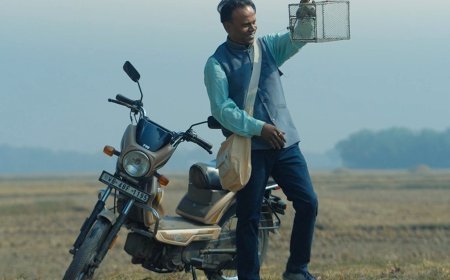
What distinguishes the film from the usual militant narratives is its refusal to moralise. Nath is less interested in rendering judgment than in tracing the contours of a young man caught between inherited anger and a new, unexpected clarity. The film does not rush toward resolution. Instead, it allows the audience to experience the slow unravelling of a life built on borrowed convictions. It is in this atmospheric stillness that the film finds its most compelling thread: Longsing’s encounter with Birensing, the village’s lone teacher. Birensing is not a man of grand speeches or arguments. His influence emerges through routine, his commitment to the children, his faith in education, and his belief that change, however incremental, is built through patience rather than force. Their conversations are understated but transformative, staged with a delicacy that speaks to Nath’s confidence as a storyteller. The film understands that life-altering shifts often happen not through confrontation but through proximity.
As Longsing begins to see the village not as a target but as a community held together by its own fragile ambitions, Kangbo Aloti becomes a story about the reclamation of agency. The violence he once viewed as a duty is gradually revealed for what it truly is. His lived experience within the village becomes a detour from a life he could still choose. In the end, it is less about extremism than about the possibility of stepping away from it. It asks what happens when someone raised in the echo of violence encounters a gentler philosophy, and whether that encounter, however fleeting, is enough to alter a destiny.
Visually, the film is grounded in the textures of the landscape. The dense greens, the quiet interiors, the sense of distance shape both geography and emotion. Parashmooni Borah’s cinematography mirrors Longsing’s transition, shifting from watchful, composed frames to those that feel more open, as if reflecting the widening of his inner world. Debajit Gayan’s sound design deepens this atmosphere, attentive to the silences, the rustle of the forest, and the pulse of a community on edge. The performances by Harmony Bay and Rajib Kro anchor the film with an unforced naturalism, lending the characters a lived-in, emotional credibility.
Quietly observed and deeply humane, Nath’s film stands as a reminder that the most radical act in a world of conflict might simply be the decision to choose another path.
Kangbo Aloti won the Special Jury Award in the Indian Language Films category at the 31st Kolkata International Film Festival.
***
What's Your Reaction?