





























What Is Your Name? (2025)

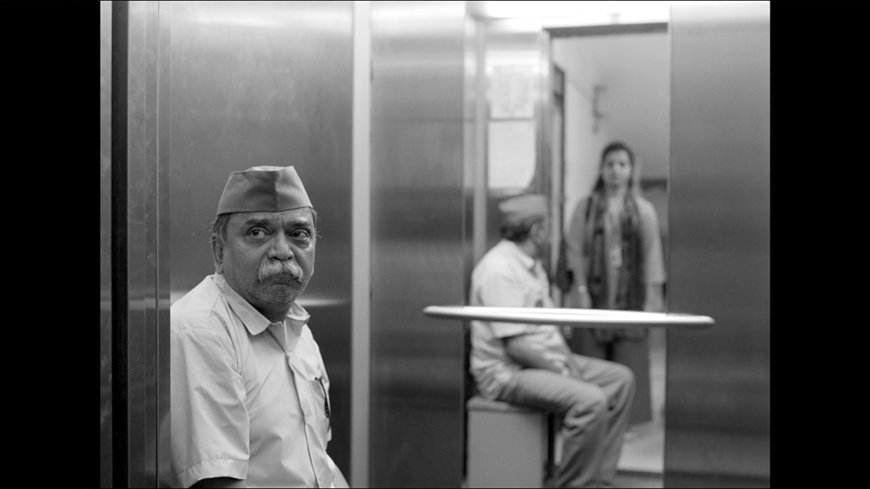
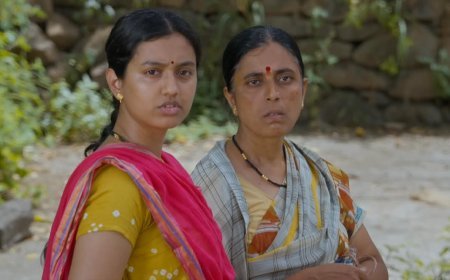
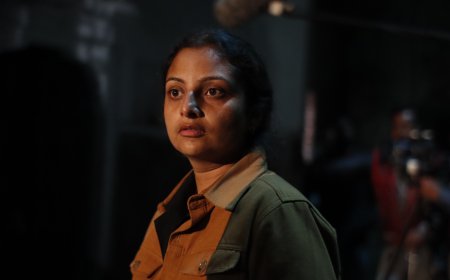
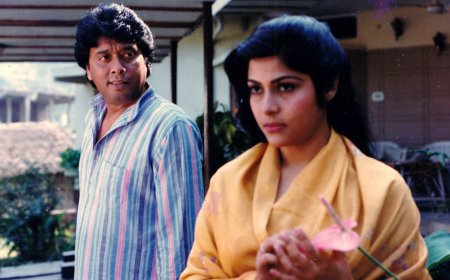
What Is Your Name?, a short film directed by Alok Rajwade, begins with a situation that establishes the relationship between the two principal characters and the system in one compact gesture. Seema’s (Ipshita Chakroborty Singh) arrival from Uttar Pradesh immediately situates her as an outsider entering the maximum city not with dreams of glamour, but with the practical urgency of employment. By allowing Seema to use the lift despite official instructions, the liftman, Kaka (Shashank Shende), becomes the film’s first agent of quiet transgression. This early breach of protocol signals an act of defiance. Progress within the system is rarely achieved through strict adherence to its rules. The scene also establishes an ethical ambiguity that will recur throughout the film.
The workplace appears orderly, even benign, yet it quickly reveals itself as a space governed by unspoken hierarchies. Remarks are exchanged lightly, rituals are observed routinely, and belonging is measured through codes that need not be explained to those who already understand them. The film unfolds almost entirely within this logic, following a young protagonist whose entry into salaried government work marks not an arrival, but a negotiation. The restriction regarding the working of the lift on her very first day is not merely a logistical inconvenience. It operates as a structural metaphor. The office being located on the thirteenth floor makes physical ascent compulsory, while institutional rules simultaneously prevent it. The city promises upward mobility, yet places barriers at the very point of entry.
Small gestures, such as obscuring personal details by turning an identity card face down, become methods of self-containment. These are not signs of denial so much as strategies of endurance. A slogan associated with Dalit political assertion is repeatedly addressed by a man positioned far lower in the institutional ladder. Though the words themselves carry a history of resistance, their public articulation provokes discomfort rather than solidarity. The film refuses to frame them as moral failures. Instead, it situates them within a larger question: what does it cost to be legible in spaces that demand conformity as the price of stability? Such mirroring is the film’s most incisive gesture. It understands that injury is not defined solely by intent, and that truth, when delivered without attention to vulnerability, can wound as deeply as prejudice.
A turning point arrives when an act of political assertion is deemed unacceptable within the institution. The response is swift and procedural, exposing the limits of tolerance in spaces that pride themselves on neutrality. The protagonist is forced into an ethical dilemma: whether to speak and risk precarity, or remain silent and retain security. It leaves her suspended between two demands—self-protection and self-assertion—and forces her to choose. At the centre of this fragile equilibrium is a daily encounter that unsettles the protagonist in unexpected ways. The film astutely recognises that for those who have learned to survive by discretion, even affirmation can feel like a threat.
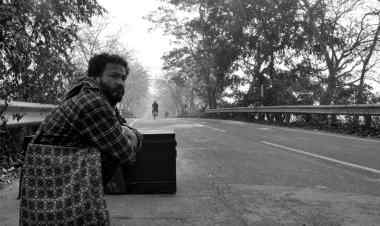
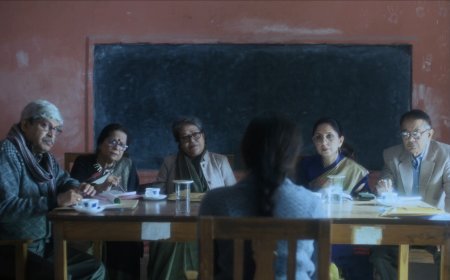
The visual economy is spare, avoiding melodrama or symbolic excess. The ordinariness of the setting is precisely the point, and it is in such neutral spaces that inequality is most efficiently maintained. Niteesh Jangid’s cinematography, composed in a lettered box aspect ratio and rendered in a restrained monochrome palette, reinforces a sense of compression and moral enclosure. Aniket Kale’s editing maintains a measured rhythm, allowing moments to breathe even as events unfold with quiet inevitability. Anmol Bhave’s sound design works in near-invisibility, heightening tension through absence rather than over-emphasis. The performances anchor the film’s restraint. Shashank Shende brings an understated authority to his character, while Ipshita Chakroborty Singh conveys Seema’s inner conflict with a controlled intensity that resists easy display.
What Is Your Name? resists the comfort of declaration. It treats identity not as a destination, but as an ongoing risk. One shaped by timing, power, and consequence. Its political intelligence lies in recognising that the journey from silence to voice need not be aggressive. By allowing this tension to remain unresolved, the film earns its moral seriousness and quiet force.
What Is Your Name? screened at the 14th edition of the Dharamshala International Film Festival, held in 2025.
What's Your Reaction?